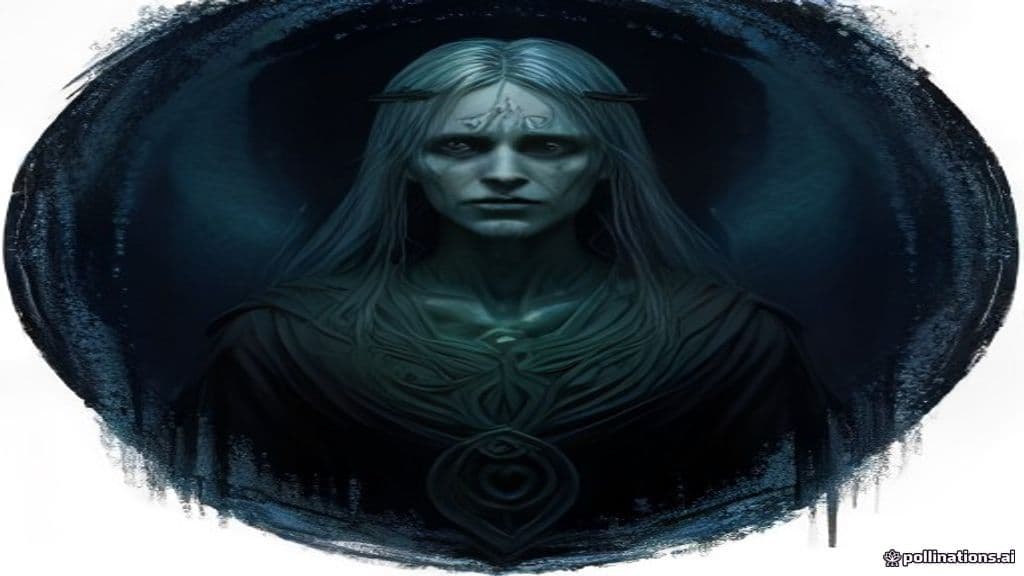
In modern summaries of the Irish mythic corpus Ecne is presented as a member of the Tuatha Dé Danann and as the personified quality 'wisdom' (Old Irish ecna, ecne). Genealogical summaries in available secondary material describe Ecne as 'the daughter of all three'—the three brothers Brian, Iuchar and Iucharba—who themselves are sons of Tuireann/Delbáeth by his daughter Danand; this complex parentage places Ecne within a network that also includes the goddess Ana/Anu, to whom Ecne is generally presumed to be a grandson or descendant. The same genealogical cycle ties Ecne indirectly to the tale in which the three fathers kill Cian, father of Lugh, and which leads to Lugh's revenge in the narrative tradition summarized as Oidheadh Chlainne Tuireann ('The Fate of the Children of Tuireann'). These details come from modern summaries and secondary accounts rather than from a single surviving medieval narrative focused on Ecne.
The cited sources do not preserve a clear physical description or consistent iconography for Ecne. Surviving summaries and glosses treat Ecne primarily as an anthropomorphized quality (wisdom) rather than as a vividly depicted figure; sources vary in gender attribution, with general modern summaries calling Ecne a 'god or goddess' of wisdom and a nineteenth-century writer (James Bonwick) describing Ecne as female and associating the figure with poetry. Beyond these glosses there is no provided material describing clothing, symbols, animal forms, or other visual attributes.
Ecne's primary, attested attribute is the embodiment or personification of wisdom and learning: the name is glossed in Old Irish as 'Wisdom' (ecna, ecne) and modern summaries call Ecne the god or goddess of wisdom. The sources supplied do not record specific mythic feats, magical powers, or narratives of actions performed by Ecne; instead Ecne appears in genealogical contexts. A later secondary source (James Bonwick) reports Ecne as a female figure associated with poetry, indicating at least some tradition or interpretation that links Ecne's domain to poetic knowledge, but this poetic association is not corroborated by further primary material in the supplied notes.
Community Record
- [1]Ecne. Wikipedia, 'Ecne' (accessed via provided research notes)wiki
- [2]Ecne (Wikidata). Wikidata entry Q16966707 for Ecne (used for label/gloss information)other
- [3]Irish Druids and Old Irish Religions (James Bonwick, cited in notes). James Bonwick, Irish Druids and Old Irish Religions (as cited in research notes) — reports Ecne as female and associates Ecne with poetryfolk