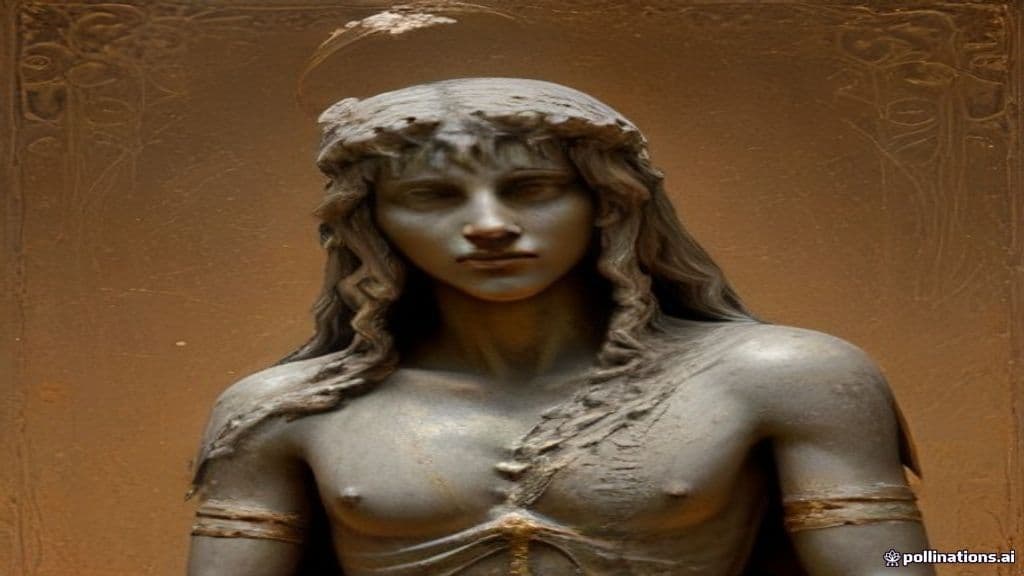
The sources present Elagabal/El‑Gabal as an Emesene manifestation of a Baal‑type god: a mountain god associated with the sun. The deity's name as rendered in Roman sources has been Latinized as Elagabalus and etymologically linked to Semitic roots (ilāh 'god' + jabal 'mountain'), producing the meaning often given as 'God of the Mountain.' The cult was tied to a hereditary high priesthood in the Emesene dynasty; one holder of that priesthood later became emperor and carried the cult's central baetyl to Rome, where the cult was promoted and syncretized with Greek and Roman solar deities (notably Helios and forms of Sol) in the early third century CE.
In the cited material the primary material representation of the deity is a cult‑stone or baetyl which functioned as the god's focus in Emesa and was brought to Rome by the emperor/priest. The provided sources do not record consistent anthropomorphic iconography for Elagabal; the baetyl is emphasized as the principal cult image in the historical record summarized in these notes.
Ancient literary and historical sources cited do not ascribe specific miracle‑style powers to Elagabal in the way later miracle narratives do; instead the deity's potency is attested through cultic and political effects—its capacity to be syncretized with Helios and Roman solar cults and to be elevated in status by imperial authority. Roman accounts report that during the emperor's religious program Elagabal was promoted above traditional deities (the sources state he was placed above Jupiter), demonstrating the cult's potential for political‑religious influence rather than recorded supernatural interventions in the provided sources.
Weaknesses
- otherNone recorded in the supplied sources
Wards
- otherNo specific wards or apotropaic practices against Elagabal are recorded in the cited material
Community Record
- [1]Elagabalus (deity) — Wikipedia. Wikipedia, 'Elagabalus (deity)'wiki
- [2]Elagabalus — Wikipedia. Wikipedia, 'Elagabalus'wiki
- [3]Herodian, History of the Roman Empire, Book 5. Herodian of Antioch, History of the Roman Empire, Book 5 (translation/summary cited)literary
- [4]Elagabalium — Wikipedia (Elagabal temple in Rome). Wikipedia, 'Elagabalium'wiki
- [5]Numismatic references to Elagabalus (coins). WildWinds, coin listings and references for Elagabalusother