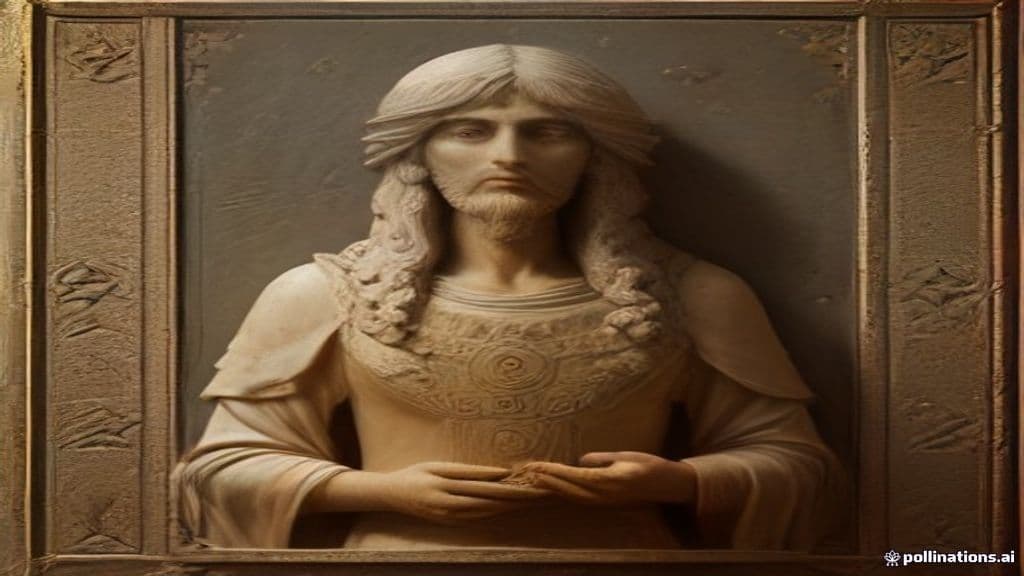
The name Elyon appears in Israelite scripture and in Levantine inscriptional and mythographic materials as a designation of the ‘upper’ or supreme divine principle rather than as a single fixed biography. In the Hebrew Bible the compound ʼĒl ʽElyōn occurs in Genesis 14:18–20 where Melchizedek is called priest of ʼĒl ʽElyōn and blesses Abram, attesting a priestly and honorific function for the name. Deuteronomy 32:8 (in its textual variants, including the Dead Sea Scrolls and Septuagint readings) and comparative study with Ugaritic material have given rise to an interpretive tradition in which ʽElyōn is implicated in the allotment of nations to divine sons (the seventy), a cosmological ordering attested in Northwest Semitic thought. Non-biblical Levantine evidence such as the Sefire I treaty inscription may preserve a pairing or formula (ʼl wʽlyn / Ēl wa-ʽElyōn) suggesting either two aspects of a high god or a compound theonym in northern Syria. In Phoenician euhemeristic genealogy as quoted via Philo of Byblos in Eusebius, a figure Elioun (‘the Most High’) is placed among primeval generations; this is a later literary tradition that treats divine names as ancestral figures rather than a direct biblical testimony. Scholarly debate remains over whether Elyon began as a distinct high god later equated with the God of Israel or functioned from the outset chiefly as a title applied to Israel’s deity.
The supplied textual and inscriptional sources do not furnish an iconographic or anthropomorphic description of Elyon. In the Hebrew Bible and in Levantine inscriptions Elyon functions as a name or epithet — a theological designation of height and supremacy — and is not accompanied in the cited materials by detailed physical attributes, cult-statue descriptions, or standardized imagery. References instead appear in literary, poetic, and treaty contexts (e.g., Genesis 14; Psalms; Deuteronomy 32; Sefire I; Philo of Byblos as quoted in Eusebius) where Elyon is invoked verbally rather than depicted visually.
Texts that employ Elyon attribute to the name roles proper to a supreme or upper god: sovereignty and supremacy in poetic and cultic language (numerous Psalms and Balaam’s oracle in Numbers 24:16 use ʽElyōn as an exalted divine title), cosmological agency in some readings (Genesis 14 pairs ʼĒl ʽElyōn with a maker formula, and certain commentators see an echo of a ‘maker of heaven and earth’ tradition), and political/cosmic ordering in interpretive readings of Deuteronomy 32:8 where ʽElyōn is implicated in fixing the boundaries of nations and (in comparative reconstructions) allotting nations to divine sons or tutelary deities. The name thus functions to express divine transcendence, the ordering of peoples, and—in some contexts—creative authority. The sources stress that Elyon may be an epithet of the Israelite God (Yahweh) in many biblical passages while in other Levantine texts Elyon appears as a high divine figure that can stand in relation to Ēl or to a divine assembly; scholarship records multiple plausible readings rather than a single settled catalogue of powers.
Weaknesses
- otherNo weaknesses attested in provided sources
Wards
- otherNo wards or protective rites against Elyon attested in provided sources
Community Record
- [1]Elyon (Wikipedia). Wikipedia, 'Elyon' article (entries summarizing biblical occurrences, Sefire inscription discussion, Philo of Byblos citation).wiki
- [2]Wikidata: Elyon. Wikidata entry for 'Elyon' (identifier and linked data).wiki
- [3]Sefire inscriptions and Levantine comparative notes (as summarized). Summary of Sefire I treaty inscription and the possible reading 'ʼl wʽlyn' as presented in the Elyon Wikipedia entry.other
- [4]Genesis 14:18–20; Deuteronomy 32:8; Numbers 24:16; Psalms; Isaiah 14:13–14 (as cited in survey). Survey of biblical passages where ʽElyōn appears, as collected and discussed in the referenced Wikipedia article.literary
- [5]Philo of Byblos via Eusebius (Sanchuniathon material summarized). Summary of Philo of Byblos' account (as quoted in Eusebius) describing Elioun in Phoenician genealogies, presented in the Elyon Wikipedia entry.literary
- [6]Abarim Publications: Elyon (meaning and etymology). Discussion of etymology and semantic range of עֶלְיוֹן (Elyon) emphasizing 'upper/uppermost' sense and limits of English translation.other
- [7]Hermeneutics StackExchange: Why is 'Elyon' Translated as 'The Most High'?. Discussion of translation choices and semantic nuances of 'Elyon' as presented in the provided research notes.other