Origin
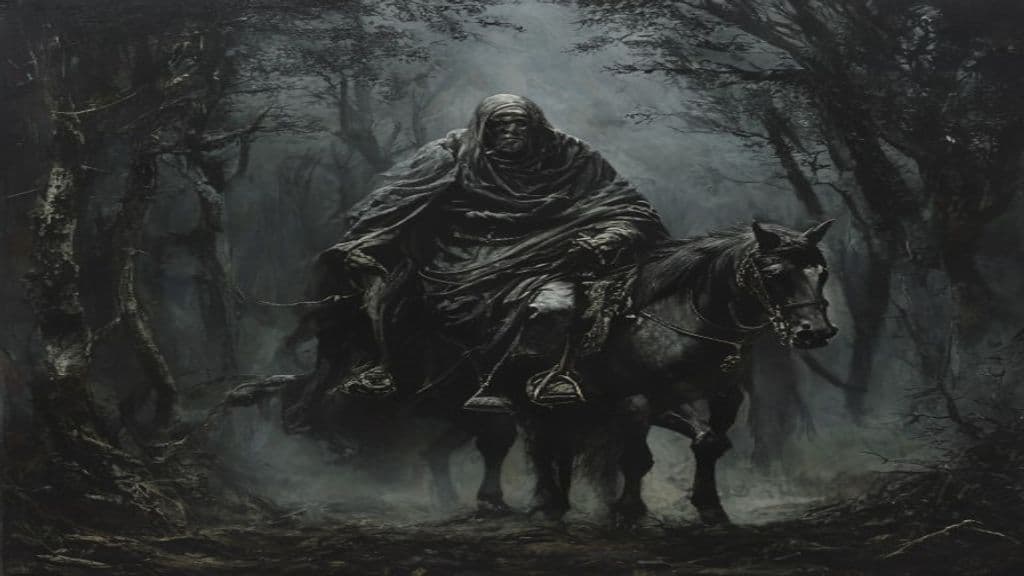
The Erlking entered German literature through Herder's 1778 translation of a Danish ballad, then was immortalized in Goethe's 1782 poem. A father rides through a stormy night with his sick child; the child sees and hears the Erlking calling him, promising games and flowers. The father sees only mist and rustling leaves. When they reach home, the child is dead.
Appearance
To children he appears as a beautiful, elderly figure in a crown and flowing robes, beckoning warmly. To adults he is invisible, or at most a wisp of fog among the trees.
Abilities
Could perceive and target the weak and the dying. Visible only to those he chose, especially children. His touch caused immediate death. Could move faster than a galloping horse.
Weaknesses & Wards
Weaknesses
- conditionReaching shelter before he claims the child
Wards
- ritualSpeed — outride him before he claims his quarry
- symbolSacred herbs carried on children at night
Community Record
Sources
- [1]Erlkönig. Goethe, Johann Wolfgang von. 1782. 'Erlkönig.' Poem.literary
- [2]Deutsche Mythologie. Grimm, Jacob. 1835. Deutsche Mythologie. Frankfurt.folk
well-documented