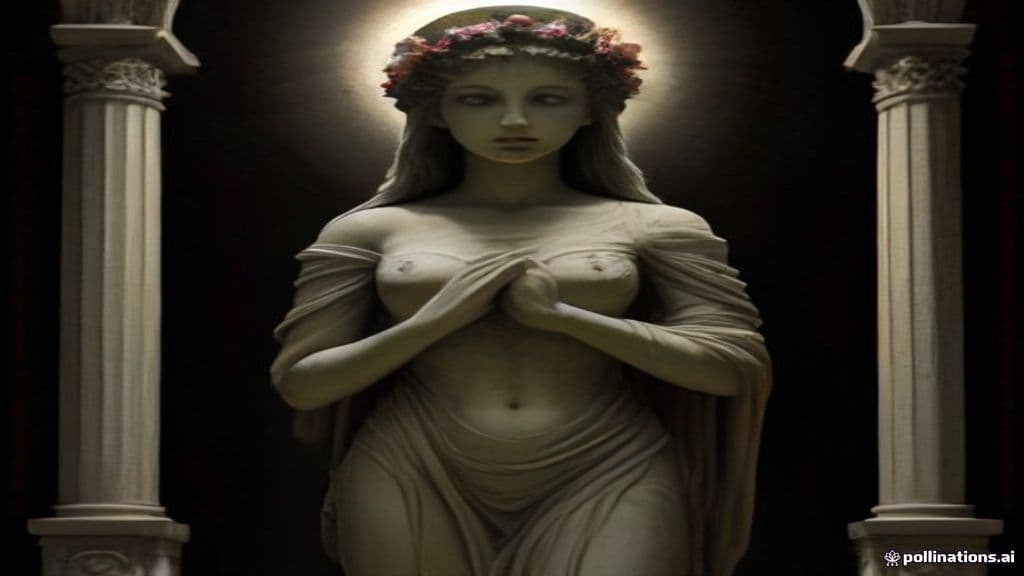
The assembled sources do not provide a narrative myth of Flora's birth or genealogical origin. In the Roman religious framework cited, Flora is a named divine personification whose cult and identity are integrated into civic religion: she is listed among deities for whom a flamen is attested and is associated with temple dedication(s), including a local temple site at Cerreto Sannita that later was overlain by a church according to some historians.
The supplied materials do not record a consistent or detailed iconography or physical description for Flora. Sources identify her functionally as the goddess of flowers and spring but do not provide attested apparel, attributes, or visual markers in the excerpts provided.
Sources characterize Flora functionally: she presides over plants, flowers, springtime, and the fertility of vegetation. Evidence in the notes emphasizes her role as a cultic patron of vegetative growth and seasonal renewal rather than records of specific mythic acts or miraculous narratives.
Community Record
- [1]Flora (Wikipedia). "The word 'flora' comes from the Latin name of Flora, the goddess of plants, flowers, and fertility in Roman mythology. The technical term 'flora' is then derived from a metonymy of this goddess at the end of the sixteenth century."wiki
- [2]Flora (mythology) (Wikipedia). "Flora, Latin: Flora, is a Roman goddess of flowers and spring. She was one of the twelve deities of traditional Roman religion who had their own flamen, the Floralis, one of the..."wiki
- [3]Temple of Flora (Cerreto Sannita) (Wikipedia). "According to some historians, the name, fiore, or, flore, derives from, Flora, the deity to whom the temple was dedicated. Over the centuries, the Church of Madonna della Libera was built over the remains of the temple."wiki
- [4]Flora: The People’s Goddess — Working Classicists. Discussion noting Flora's important position in Roman cultural life and cultic presence despite relative neglect in some later treatments.other