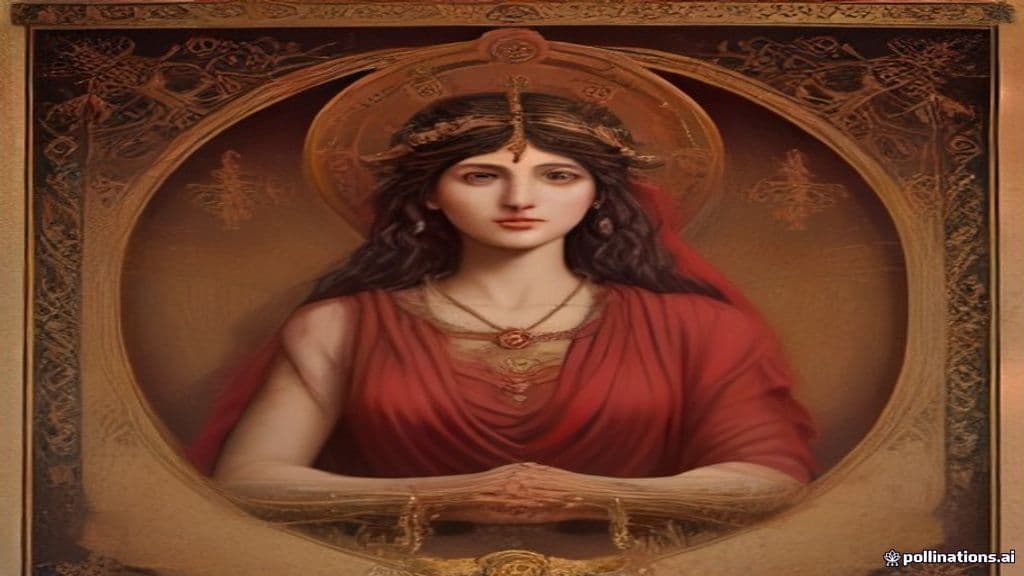
Fortuna is a native Roman divine personification rather than a single mythic genealogical figure in the surviving sources. Her name (Latin Fortūna) has been suggested in modern scholarship to derive from Vortumna—'she who revolves the year'—a proposed etymological link that emphasizes turning and cyclical change rather than a simple everyday sense of luck. Over time Roman practice produced multiple epithets and localized cult-forms (for example Fortuna Primigenia at Praeneste and Fortuna Annonaria associated with the grain supply), indicating that Fortuna functioned as a polyvalent divine agency embedded in both private and public religion.
Classical iconography frequently associates Fortuna with a gubernaculum (ship's rudder) and a cornucopia (horn of plenty), and literary sources link her to a wheel or ball (the Wheel of Fortune) that symbolizes her power to raise and lower human status. Some representations in later tradition and occasional classical references show her veiled or blind, but this is not universal in ancient imagery; local cult images varied, and the sanctuary of Fortuna Primigenia at Praeneste likely employed its own distinctive cult statuary.
Fortuna's principal agency is over change: she bestows prosperity and can just as readily remove it, the Wheel of Fortune motif illustrating her power to elevate and to bring down. Under the epithet Automatia she is described as self-moving and unpredictable. Roman authors also link her effects to moral and civic conditions: a lack of virtus in leaders or citizens is treated as inviting ill-fortune, so her apparent caprice is often interpreted as reflecting human conduct. Fortuna also operated a divinatory function in certain cult contexts; notably the Temple of Fortuna Primigenia at Praeneste used a practice in which a small boy selected one of various futures written on oak rods.
Weaknesses
- conditionWithdrawal of favor by lack of virtus
- conditionSusceptibility to civic ritual correction (e.g., temple dedication as response to crisis)
- otherCapriciousness (her unpredictability can work against petitioners; epithet Atrox Fortuna describes harmful fortune)
Wards
- ritualPublic cult and temple dedication
- otherPersonal amulets and engraved gems (often depicting Fortuna, sometimes paired with Bonus Eventus or Isis-Fortuna)
- conditionCult observance and maintenance of virtus (moral/civic conduct)

Bonus Eventus
Bonus Eventus is the Roman divine personification of a 'Good Outcome', originally attested within agricultural ritual contexts and later represented more broadly in public religion, imperial imagery, and private amulets as an embodied principle invoked for success and favorable results.
Tyche
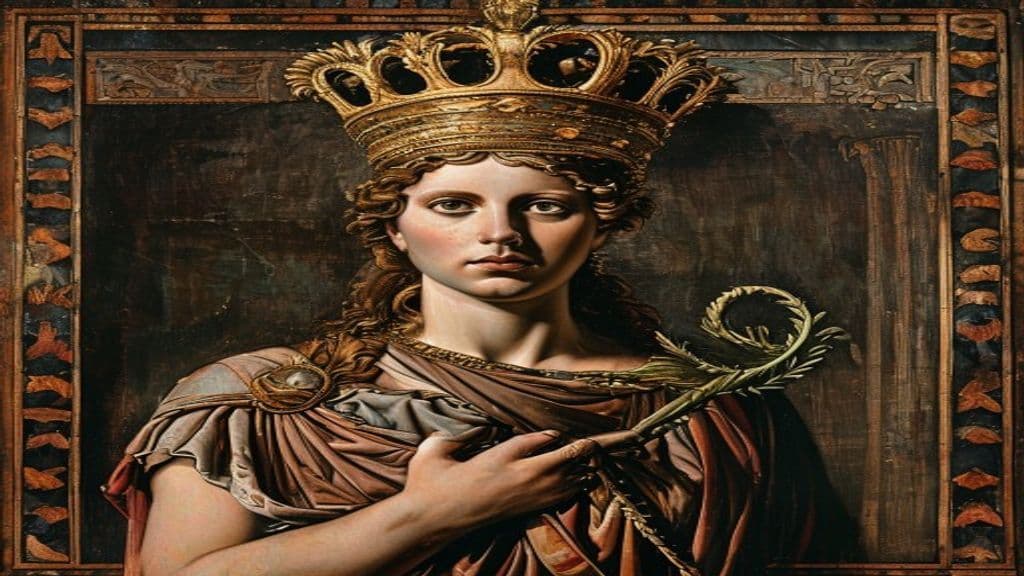
Tyche (Greek Τύχη, Túkhē) is the personified deity of luck, fortune, and the collective prosperity or destiny of a polis. Originating in Classical Greek religion, she becomes especially prominent in the Hellenistic period as an explanatory and civic principle for unpredictable events and continues to appear in Roman iconography (often parallel to Fortuna).
Community Record
- [1]Fortuna — Wikipedia. Wikipedia contributors. 'Fortuna.' Wikipedia, The Free Encyclopedia.wiki
- [2]Wikidata entry: Fortuna Düsseldorf. Wikidata: Q151747 (Fortuna Düsseldorf) — noted as non-relevant to the deity in source-use statement.other
- [3]Fortuna Eruditis Favet (Miraheze wiki archive). Fortuna Eruditis Favet mirror (archive listed among provided materials); used only to note non-relevance beyond naming.other