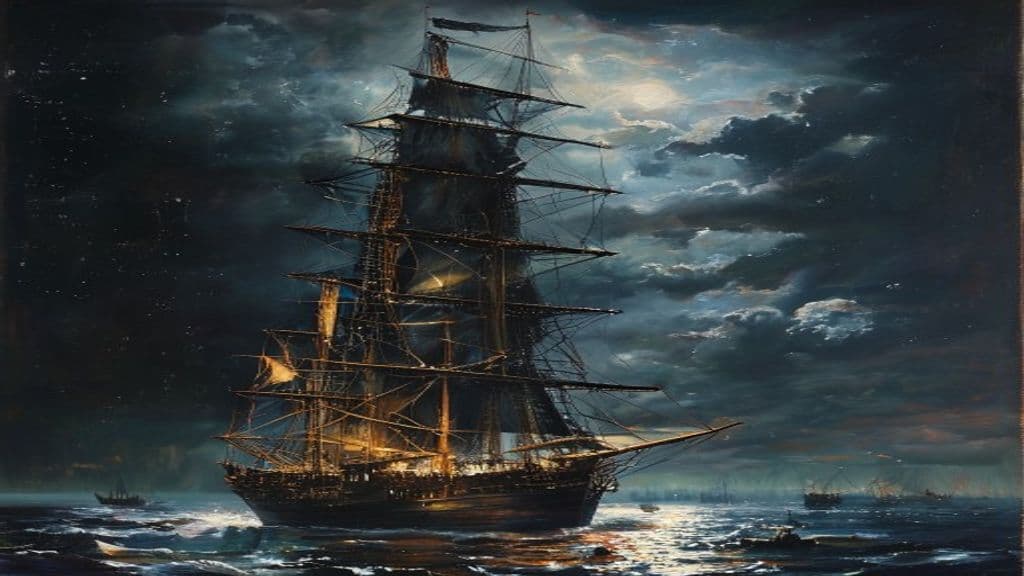
The tale as recounted in novelty and popular media presents Frank 'Lucky' (or 'Lucks') Tower as a stoker/fireman or shipboard worker who improbably survived the sinkings of RMS Titanic (15 April 1912), RMS Empress of Ireland (28 May 1914), and RMS Lusitania (7 May 1915). The story appears in mass‑market curiosity outlets (e.g., Ripley’s) and later in maritime anecdotal literature (e.g., cited in treatments of U‑20), but contemporary documentary checks find no evidence that any one person was involved in all three disasters and no matching crew list entries for a Frank Tower on those voyages. The legend likely conflates or amplifies separate factual survivorship cases (for example, a passenger named Frank Tower did survive the Lusitania, and other individuals such as William Clark or Violet Jessop are documented survivors of multiple incidents), producing a singular mythic survivorship figure.
Source material provides no consistent physical description. Retellings identify Tower variously by shipboard role (stoker, fireman, or passenger) but do not record height, clothing, facial features, or other biographical appearance details. The absence of descriptive detail in published summaries is consistent with the figure's status as a circulated anecdote rather than a documented person.
As a folkloric motif, the 'ability' attributed to Frank Tower is repeated survival of separate maritime disasters—presented as uncanny good fortune. Specific anecdotal behaviors in retellings include a rumored utterance when the Lusitania was struck (reportedly shouted 'Now what?!'), but sources mark such lines as rumor. Researchers and reference entries emphasize the story's legendary status and the lack of archival corroboration, treating the supposed survivals as narrative claims rather than verified abilities.
Bloody Mary
A mirror-associated apparition invoked by chanting a female name in dim or candlelit conditions. Originating in catoptromantic divination practices, the figure functions in modern youth-lore and urban legend as an ambiguous ghost/witch who may reveal future information or enact violent harm on participants.
Candyman
A modern urban-legend ghost figure originating in Clive Barker’s short story and adapted into a film franchise; Candyman is a named, summoned presence bound to a violent historical death and sustained by stories, belief, and traumatic community memory. In the films he is most commonly invoked by speaking his name repeatedly into a mirror and appears as a violent, hook‑handed apparition tied to histories of racial injustice in an urban housing setting.
Mothman
A modern American folkloric figure originating from a cluster of 1966–67 sightings around Point Pleasant, West Virginia. Described in press reports and later retellings as a large humanoid or winged creature with notable eyes, the Mothman legend has been variously interpreted as misidentified wildlife, hoaxing/sensationalism, or a paranormal omen linked in some retellings to the Silver Bridge collapse.
Four Perils (Sì Xiōng)
The Four Perils (四凶; Sì Xiōng) are a set of four malevolent figures in ancient Chinese literature—Hundun, Qiongqi, Taowu, and Taotie—recorded variously as monstrous creatures inhabiting mythic mountains, moral exemplars of vice, or eponymous lineal ancestors used in historiographic critique. Accounts differ across sources, so each name functions simultaneously as a beast in mytho-geography and as a symbol of disorder or vice in moral-historical texts.
Four Symbols (Sì Xiàng)
A set of four mythological creatures in Chinese cosmology—Azure Dragon, Vermilion Bird, White Tiger, and Black Tortoise‑Snake—serving as celestial asterisms and directional guardians integrated into ritual, astrological, and state symbolism.
Fox spirit
A widespread class of mythical beings associated with foxes (often represented by red-fox imagery in many traditions) characterized by cunning, shapeshifting, trickery, and ambiguous moral roles; prominently attested in East Asian folklore and present in modern literature and media as romantic, vengeful, or matchmaking figures.
Foxfire
A natural bioluminescent glow produced by certain fungi on decaying wood, historically observed and variously mythologized as "fairy fire" or likened to will-o'-the-wisp; treated in the provided sources as a biological/phenomenal phenomenon rather than an intentional spirit.
Francesca da Rimini
Francesca da Rimini was a late 13th‑century Italian noblewoman whose adulterous affair with Paolo Malatesta and subsequent murder by her husband Giovanni Malatesta became a lasting literary and artistic theme; most famously she appears as a speaking soul among the lustful in Dante Alighieri's Inferno (Canto V).
Frankenstein (the creature / creation)
A sapient humanoid created by Victor Frankenstein in Mary Shelley's 1818 novel by assembling human remains and animating them through an unorthodox scientific experiment. In the original text the family name 'Frankenstein' refers to the creator, but cultural usage often applies the name to the created being itself.
Frankish Paganism
A polytheistic tradition that evolved among the Franks until the 7th century, influenced by Germanic and Greco-Roman components. (Note: - Remove "Minor Spirit" power tier (inconsistent with polytheistic tradition and influence from Greco-Roman components) - Summary should include Frankish paganism's decline and eventual replacement by)
Frau Holle
Frau Holle (also Hulda, Holda, Holla, Perchta/Berchta and regional variants) is a persistent Germanic folkloric female figure associated with household arts (spinning and linen-making), nocturnal spirit-processions of women, and a winter/snow motif (the Grimm tale of shaking featherbeds). She appears across medieval canonical texts and later folklore, where she functions as a domestic protector/teacher, a leader of nocturnal female companies, and an agent of moral reward and punishment.
Fravashi
Avestan fravashi (frauuaši / fravashi) is the Zoroastrian immaterial personal principle associated with individuals and with groups (ancestors/heroic worthies); treated in the Avesta (notably Yasht 13, the Frawardin Yasht) as cosmic assistants in creation, ongoing sustainers of natural and celestial order, and guardians who are invoked in cult and year‑end rites.
Community Record
- [1]Frank Tower — Wikipedia. Wikipedia contributors. "Frank Tower." Wikipedia, The Free Encyclopedia.wiki
- [2]Frank Tower — Wikidata. Wikidata entry Q1444321: Frank Towerwiki
- [3]Clive Cussler, The Sea Hunters (citations referencing the tale). Mentioned in maritime‑anecdote literature (e.g., citations to Frank Tower in works discussing U‑20); cited in research notes supplied.other
- [4]Ripley's Believe It or Not (anthologized novelty media). Referenced in research notes as an outlet that circulated the Frank Tower anecdote.folk
- [5]Archive material and research notes. Archive item cited in the provided research notes.other