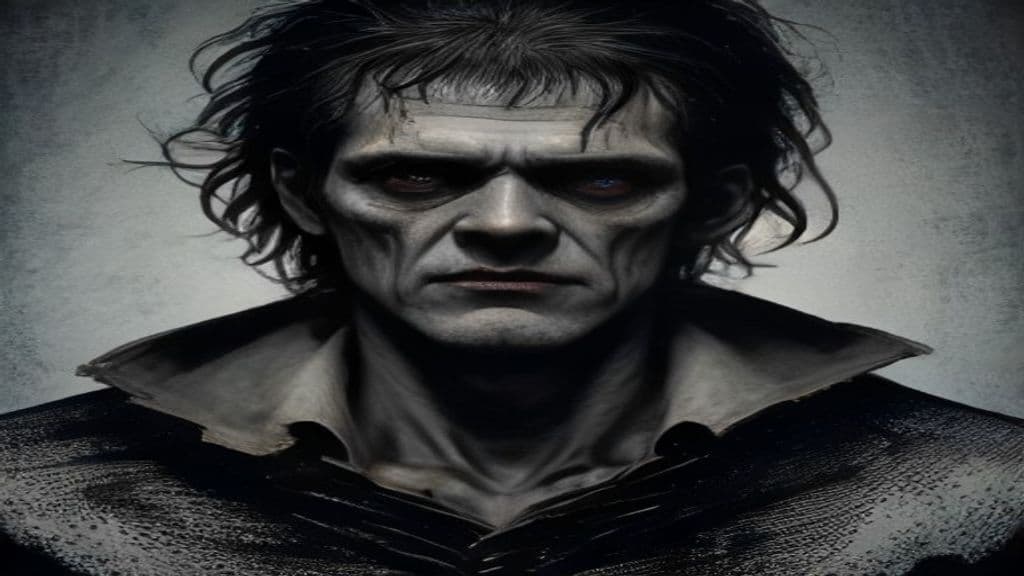
In Mary Wollstonecraft Shelley's 1818 novel Frankenstein; or, The Modern Prometheus, Victor Frankenstein, a student at Ingolstadt, assembles human corpses and animates them by means of an unorthodox scientific experiment (framed in the novel against contemporary discourse on chemistry and galvanism). The created being is newly conscious and sentient; the narrative frames the event as a consequence of scientific hubris and evokes the Prometheus myth as thematic context. The novel emphasizes that the parts were taken from death (charnel houses and graves are mentioned in sources summarizing the text) and that the creation raises moral questions about responsibility of a maker toward its creation. Over time popular culture has often conflated the creator's surname 'Frankenstein' with the creature itself.
Shelley's novel repeatedly describes the being as a large, grotesque humanoid assembled from disparate human parts. Textual summaries stress that the creature is humanoid, constructed from corpses, and perceived by other characters as frightening; later film and stage adaptations developed additional iconic imagery, but the primary text limits description to a physically imposing and unsettling man-like composite.
In the novel the creature is sapient: it becomes newly conscious, learns language by observing a family, reads literature (notably Paradise Lost), and communicates fluently. It demonstrates human-like learning, moral awareness, and the capacity for self-reflection and grief. The creature is physically capable of rescuing a drowning child and also of lethal violence: it murders Victor's brother William, indirectly causes Justine's execution, kills Henry Clerval, and murders Elizabeth in revenge when Victor refuses to create a companion. The creature articulates demands, reasons about its condition, and plans future action (including an expressed intention to destroy itself at the end of the narrative).
Weaknesses
- conditionsocial rejection and loneliness
- conditiondependence on creator for companionship (requests a female companion)
- othermoral anguish and capacity for remorse (affects decisions and final self-destructive intention)
Wards
- conditionavoidance and concealment by humans (flight, hiding)
- otherarmed civilian or mob response (shooting / violent repulsion observed in incidents)
Community Record
- [1]Frankenstein; or, The Modern Prometheus (Project Gutenberg, Mary Wollstonecraft Shelley, 1818). Mary Wollstonecraft Shelley, Frankenstein; or, The Modern Prometheus (1818). Project Gutenberg edition.literary
- [2]Frankenstein — Wikipedia. Frankenstein — Wikipedia article summarizing the novel, its themes, and cultural reception.wiki
- [3]Frankenstein (1931 film) — Wikipedia. Wikipedia entry on the 1931 Universal Pictures film, cited in sources as an example of later cultural representation.wiki
- [4]Frankenstein — Forgotten Futures / game page. Summary and notes on Frankenstein and related adaptations; cited among secondary sources on reception.other