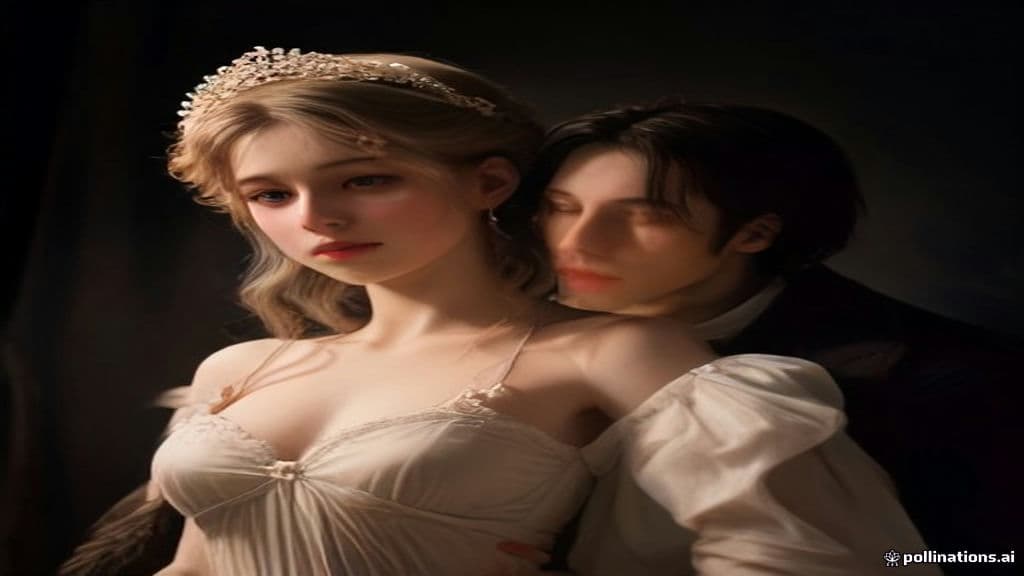
Frédégonde is presented in the supplied materials as a mid‑6th‑century Merovingian queen who rose to prominence by becoming the wife of Chilperic I of Neustria. Later historiographical summaries and popular retellings characterize her as having obtained Chilperic's repudiation of his earlier wife and as being implicated in the death of rivals (for example Galeswinthe). The corpus of sources supplied here is dominated by later adaptations and summaries — eighteenth‑ and nineteenth‑century novels (e.g., the 1775 roman historique Frédégonde et Brunéhaut), a 1789 dialogue staging historical queens “aux enfers,” nineteenth‑century illustrations, and musical theater (the operetta Chilpéric and the 1895 opera Frédégonde) — which dramatize and embellish the historical record rather than provide new primary medieval testimony.
The supplied sources do not provide a consistent contemporary physical description; visual representations are artistic reconstructions typical of nineteenth‑century popular imagery of Merovingian royalty. Illustrated captions cited include Gustave Demoulin's scene “Fredegonde trying to kill Rigonthe” (Les Françaises Illustres, 1889) and a colored Pellerin engraving; these portray her in period costume as imagined by later artists. A modern gallery note emphasizes her reputed elegance and concern for dress, noting anecdotes such as architectural features designed to display her train — a character detail from later commentary rather than a documentary physical description.
Within the supplied materials Frédégonde's 'abilities' are political and social: she is repeatedly associated with ruthless ambition, intrigue and alleged crimes at the Merovingian court. Encyclopedic summaries describe her as "notorious for her many crimes" and narrate her role in courtly conflict, repudiation of a rival queen, and implicated deaths. Dramatic and musical treatments (the operetta Chilpéric, the 1895 opera Frédégonde) emphasize these traits for theatrical effect — portraying her as a figure who attracts royal attention, causes rivalries, and engages in manipulative or violent actions. No supernatural powers are ascribed to her in the provided corpus.
Community Record
- [1]Frédégonde (Wikipedia: opera and general entry). Wikipedia entry for Frédégonde; notes the 1895 opera and summarizes historical reputation.wiki
- [2]Frédégonde et Brunéhaut, roman historique (1775). Monvel, Frédégonde et Brunéhaut (1775) — eighteenth‑century historical novel featuring Frédégonde and Brunéhaut.literary
- [3]Antoinette d'Autriche ou dialogue entre Catherine de Médicis et Frédégonde, Reines de France, aux enfers (1789). 1789 dialogue staging Catherine de Médicis and Frédégonde "aux enfers," an example of late‑eighteenth‑century imaginative treatment.literary
- [4]Chilpéric (operetta) synopsis (Wikipedia). Operetta Chilpéric: synopsis describes Fredegonde as a laundress discovered by Chilperic who takes a fancy to her and brings her to court.wiki
- [5]Look and Learn: Fredegonde trying to kill Rigonthe (illustration). Gustave Demoulin illustration captioned "Fredegonde trying to kill Rigonthe" (Les Françaises Illustres, 1889).other
- [6]Axis Gallery: Frédégonde – commentary. Gallery note describing later reputations of Frédégonde, including remarks on her reputed elegance and concern for dress.other
- [7]Genealogical and encyclopedic summaries (various). Encyclopedic note summarizing Frédégonde's reputation, marriage to Chilperic I, and alleged crimes; dates and details differ across sources.other
- [8]Archive: Merovingian genealogical material (selection). Genealogical/historicizing materials listing Merovingian royals among whom Frédégonde is situated; used for contextual placement within Merovingian dynasty.other
- [9]Look and Learn: La reine Fredegonde, femme de Chilperic 1er (engraving). Colored Pellerin engraving and later visual depictions treating Frédégonde as a popular nineteenth‑century image of the queen.other