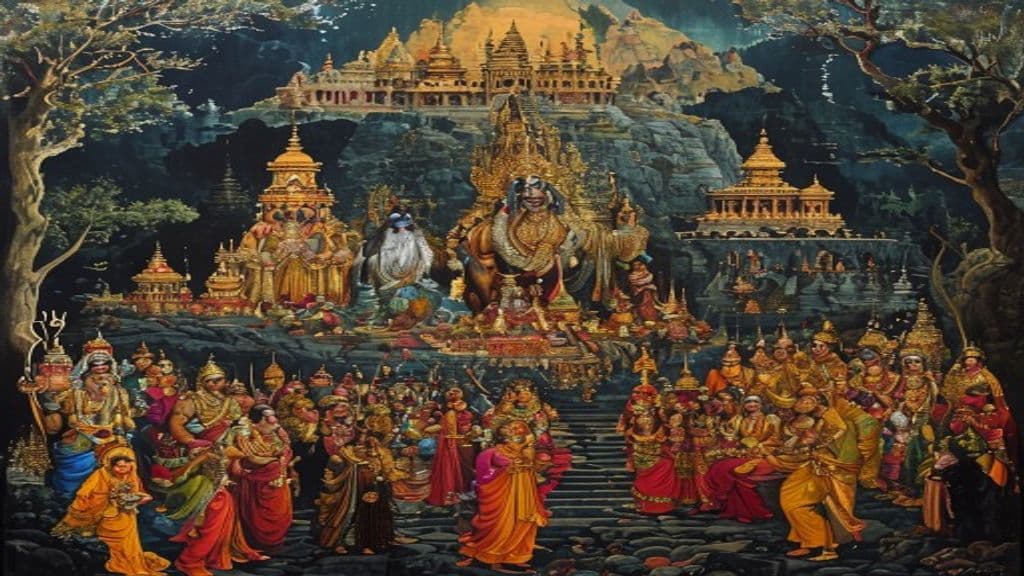
The provided sources do not offer a single cosmogonic origin tale for the ganas as a class. Puranic narrative material cited in the sources records that, in a Shiva Purāṇa episode, Ganeśa was restored to life and thereafter appointed by Śiva as leader of the ganas (hence the titles gaṇeśa/gaṇapati, 'lord/leader of the ganas'); beyond such narrative assignments of leadership, the excerpts treat the gana primarily as an institutional/lexical category rather than advancing a unified creation myth (Shiva Purāṇa; Wikipedia).
The cited material does not provide consistent or detailed physical descriptions of individual ganas. Sources record their residence on Mount Kailash and their status as Śiva's attendants or a constituted troop; Buddhaghosa's commentary refers to 'palaces of the ganadeva-puttas,' implying a divine, palace-associated status in some traditions, but no uniform corporeal portrayal is given in the provided excerpts (Wikipedia; Buddhaghosa citation as reported in the notes).
In the available texts the gana are described and discussed primarily in social and institutional terms: as a troop or company attached to Śiva (Shiva Purāṇa; Wikipedia), as a category addressed in Vedic ritual contexts (Rigveda usage applied to the Maruts as a 'separate troop' receiving sacred praises and rites), and in the Mahābhārata (Śānti Parva, ch.108) as a subject of discussion regarding their strength, defense against disunion, subjugation of enemies, and forging of friendships. The sources emphasize organizational, attendant, and cultic functions rather than enumerating specific magical powers or abilities.
Weaknesses
None recorded.
Wards
- ritualprescribed offerings to ganas (Cilappatikaram)
Ganesha
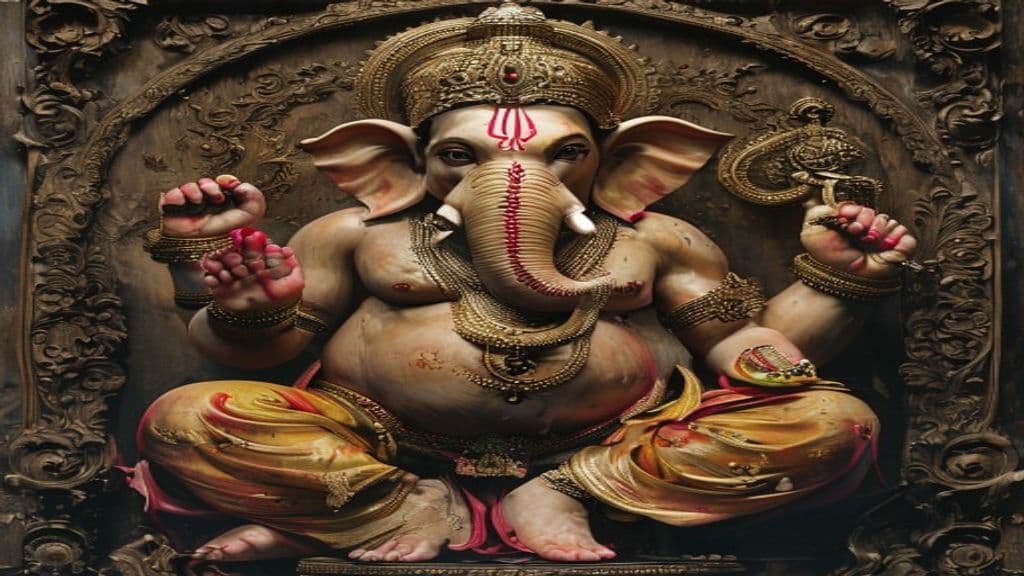
Ganesha (Gaṇeśa), also called Ganapati or Vinayaka, is a widely revered Hindu deity identified by an elephant head who functions as remover of obstacles, patron of arts and learning, and god of beginnings; he is son of Shiva and Parvati and head of the gaṇas in many traditional accounts.
Maruts
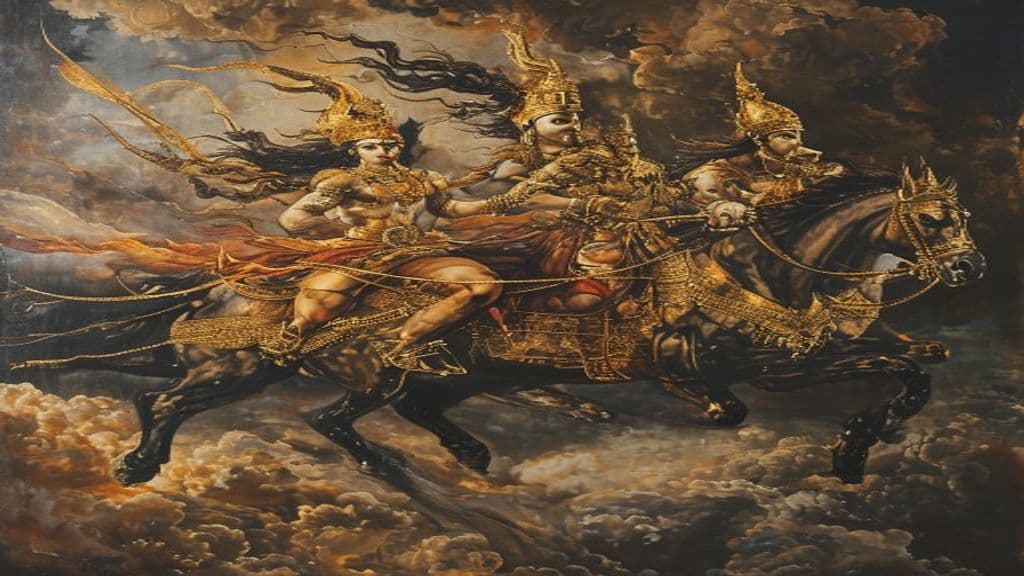
A troop of Vedic storm-deities portrayed as violent, young warrior-gods associated with thunder, lightning, cloud-splitting and rain; they act as a martial retinue attendant to higher gods (notably Indra) and are variably described as offspring of Rudra and Prisni or, in later tradition, born from Diti.
Galtxagorri (Galtzagorris)
Galtxagorri (also spelled Galtzagorris in the cited tourism material) are described in the supplied source as tiny elfin beings from Basque mythology who are presented in a local Zarautz tourism experience where they are hidden around the town's historic monuments for families to find.
Gamayun
Gamayun (Russian: Гамаю́н) is a prophetic, wisdom-bearing bird of Russian folklore, normally depicted as a large bird with a woman's head that "spreads divine messages and prophecies" and "knows everything of all creation, gods, heroes, and man." She is placed in the mythic geography on an island in the east near paradise and is presented as a symbol of wisdom rather than a hostile creature.
Gambo (cryptid)
Gambo is the name applied in modern cryptozoological and popular accounts to a carcass discovered on Bungalow Beach, The Gambia, in 1983; treated in sources as a globster or candidate sea‑serpent and discussed within the 'prehistoric survivor' paradigm of cryptozoology.
Gamigin
Gamigin (also Samigina, Gamygin/Gamygyn) is a Goetic spirit attested in late-medieval to early-modern demonological grimoires (notably The Lesser Key of Solomon and Johann Weyer's Pseudomonarchia Daemonum). Described as a marquis who commands legions, he is reported to teach liberal arts and to compel certain souls (drowned and those in purgatory) into airy bodies to answer questions; in Thomas Rudd's tradition he is opposed by the Shemhamphorasch angel Ieuiah.
Gamma Corps
Fictional Marvel Comics gamma-irradiated supersoldiers assembled as military units. Two distinct iterations appear in Hulk-related storylines: the original Gamma Corps (World War Hulk tie-in) and a later Gamma Corps: Black roster tied to Dark Reign-era plots.
Gamora
Gamora is a fictional character created by Jim Starlin for Marvel Comics (first appearing in Strange Tales #180, June 1975). In Marvel continuity she is presented as the adopted daughter of Thanos, an elite warrior and assassin described as one of the last members of her species and who appears across numerous cosmic storylines and film adaptations.
Gancanagh
A male member of the Irish little people traditionally portrayed as a seductive, fairylike 'love-talker' who courts and harms human women; depicted variously as a leprechaun-like little man and in poetic sources as an incubus-like handsome seducer.
Gandalf
Gandalf is a central protagonist in J. R. R. Tolkien's legendarium (The Hobbit; The Lord of the Rings). Within that fictional cosmology he is one of the Istari — incarnated Maiar spirits — sent to Middle-earth to oppose Sauron; he functions primarily as a guiding counselor who also acts directly in exceptional combat or magical need and bears the Elven Ring Narya.
Gandharva
A class of non-human celestial or semi-celestial beings in Indic religions associated principally with music, song, dance, fertility, and an escort/guardian role for liminal arrivals (such as Soma or beings). In Hinduism they are minor deities and musicians of the devas; in Buddhist cosmology they are a low rank of devas and the term (gandhabba in Pāli/commentary) is also used doctrinally for a sentient intermediate state between death and rebirth.
Ganesha
Ganesha (Gaṇeśa), also called Ganapati or Vinayaka, is a widely revered Hindu deity identified by an elephant head who functions as remover of obstacles, patron of arts and learning, and god of beginnings; he is son of Shiva and Parvati and head of the gaṇas in many traditional accounts.
Gann mac Dela
Gann mac Dela is a legendary early Irish figure — one of the five sons of Dela of the Fir Bolg — portrayed in medieval pseudo‑historical sources as a founder king who, with his brothers, divided Ireland and briefly served as joint High King. He is presented as a dynastic/ancestral ruler within the Fir Bolg cycle rather than as an independent supernatural being.
Ganthet
Ganthet is one of the Guardians of the Universe, an ancient, non‑human member of the custodial order that founded and manages the Green Lantern Corps and its power system. Unlike many Guardians, he is repeatedly depicted as emotionally open and empathetic, acting as mentor, technician, and occasional dissident (notably co‑founding the Blue Lantern Corps with Sayd and at times renouncing or being separated from full Guardian rank).
Community Record
- [1]Gana (Wikipedia article). Wikipedia: 'In Hinduism, the Gaṇas are attendants of Shiva and live on Mount Kailash.'; 'Ganesha was chosen as their leader by Shiva; the deity's title is gaṇeśa or gaṇapati, meaning, "lord or leader of the ganas".'; definitions of gaṇa; citations to Rigveda, Mahabharata, Cilappatikaram and Buddhaghosa noted in the article.wiki
- [2]Rigveda, Mahabharata (Shanti Parva), Shiva Purana, Cilappatikaram and Buddhaghosa (as cited in secondary summary). Summarized references within the Wikipedia article reporting: Rigvedic use of 'gana' for troops (Maruts); Mahabharata Śānti Parva ch.108 discussion of the ganas' strength and social-political behavior; Shiva Purāṇa narrative of Ganesha's investiture as leader; Cilappatikaram prescribing offerings for eighteen kinds of ganas; Buddhaghosa mentioning palaces of the ganadeva-puttas.literary
- [3]Wikidata entry for Gana. Wikidata item linked to the gana concept and cross-references used by the Wikipedia article.other
- [4]Archive mentions cited in research notes (contextual references). Archive link included among the supplied research notes; used here only as part of the provided source list (no direct claims about ganas are taken from this item).other