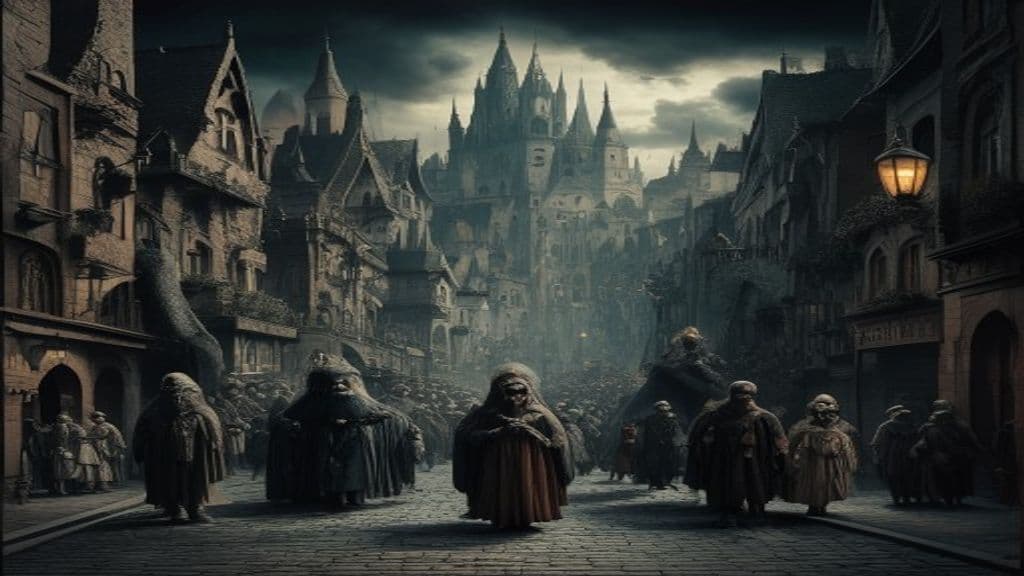
The provided documentary descriptions place the gegants within La Patum de Berga, a communal representation associated with the Corpus Christi day; the documentary metadata describes La Patum as a tradition that comes from the 14th century and lists gegants among its participatory figures. The sources do not provide a mythic creation story for the gegants beyond their role in this long-standing civic festival.
Sources list 'gegants i gegantes' among other parade characters (capgrossos, nans, àliga, dimonis) and describe them as 'giants' and 'giantesses' used in the procession. While no detailed visual description, materials, or costume specifics are given in the supplied texts, their repeated pairing with capgrossos and other oversized festival figures indicates they are large, anthropomorphic parade effigies present in the streets and small squares during the festival.
The documentary sources describe the gegants as participants in the choreographed performances and processions of La Patum (appearing in streets and plaçetes full of people and sharing the program with jumps and staged elements). The sources do not attribute supernatural powers or independent agency to the gegants; their described role is performative within the festival.
Gegants de Sants
Gegants de Sants refers to the tradition of large parade effigies (gegants) appearing in Catalan neighbourhood festival culture, especially in Barcelona's festa major context such as the Sants neighbourhood; they are civic, performative figures rather than supernatural beings.
Gegants de Sitges
Gegants de Sitges are large processional figures employed in Sitges' civic festival life, notably within the town's Festa Major; they function as symbolic, ceremonial effigies rather than supernatural beings and participate in public processions, choreography, and spectacles.
Gegants de Torrelles de Foix
Gegants de Torrelles de Foix are processional giants — large anthropomorphic effigies — associated with the town of Torrelles de Foix in Catalonia. Sources identify them as crafted, parade-used figures tied to civic and festive performance rather than autonomous supernatural beings; documentation available in the supplied notes is minimal.
Gegants de Viserta
Gegants de Viserta are processional giants (large human-made effigies) associated with Monistrol de Montserrat in Catalonia. They belong to the Catalan tradition of gegants and function as civic ritual figures carried in public festival processions rather than as supernatural beings.
Gegants de l'Esquerra del Ter
A set of processional giants (gegants) associated with Girona and the Ter river region, used as large effigies in public processions and local festivals. The term denotes material, performative figures rather than supernatural beings.
Gegants de la Barceloneta
No information about a folkloric or ceremonial entity called "Gegants de la Barceloneta" is present in the supplied source. The only provided source discusses the Algherese (Alguerese) dialect of Catalan and does not describe the Barcelona "gegants" tradition or any specific figures from La Barceloneta.
Gegants de la Plaça Nova
Gegants de la Plaça Nova refers to the tradition of civic festival giants (gegants) associated with Catalan popular celebrations; the provided source places related festival practices within the broader context of Catalonia's observances such as Saint George's Day but does not give specific details about these particular giants.
Gegants de la Sagrada Família
Gegants de la Sagrada Família are a set of traditional Catalan festival giants (gegants) associated with the Sagrada Família neighbourhood in Barcelona. They function as civic/folk parade figures used in popular celebrations, part of the broader Catalan tradition of giant puppets appearing in festivals and public events.
Gegants de les Cabanyes
Gegants de les Cabanyes are processional giant effigies associated with the locality Les Cabanyes in Catalonia. They belong to the Catalan tradition of gegants—large humanlike figures used as civic and festival effigies in public processions—rather than being described as supernatural beings.
Gegants del Casc Antic
Gegants del Casc Antic are the neighborhood 'gegants' (festival giants) paraded during the festa major of Barcelona's Casc Antic (Ciutat Vella). They are civic, performative figures used in street celebrations that embody local identity for the barrios of Sant Pere, Santa Caterina and La Ribera (El Born).
Gegants del Pi
The corpus supplied does not document a supernatural being named 'Gegants del Pi.' The materials instead refer to two cultural referents: the Pi de les tres branques, a named dead pine tree near Berga with political-cultural significance, and the Catalan festival tradition of gegants (large processional figures). No source in the set ties these into a single mythic entity.
Gegants del Raval
Processional giants associated with El Raval neighbourhood in Barcelona; civic festival effigies paraded during the Festa Major del Raval and other Barcelona street festivals. Sources treat them as part of popular festa-major culture rather than as supernatural beings.
Community Record
- [1]La Patum De Berga (nova restauraion: gener 2025) - Archive entry. Documental sobre la ciutat de Berga i la representacif3 de la Patum, una tradicif3 que ve del segle XIV. Estampes de la poblacif3 i la diada de Corpus Christi: els carrers i placetes plens de gom a gom, capgrossos, gegants i la patum al davant.other
- [2]033. La Patum De Berga - Archive entry. Listing of festival elements: 'El salt dels cavallets i el salt de les maces, e0ngels i dimonis, la guita gran i la guita xica, els nans vells, l'e0liga, gegants i gegantes, els nans nous, el salt dels diables, el salt dels plens, castells de focs artificials i final apotef2sic.'other
- [3]Gegants de la Ciutat (Wikipedia link provided in notes — unrelated). Provided in research notes but noted as unrelated and not used for substantive claims about gegants.wiki