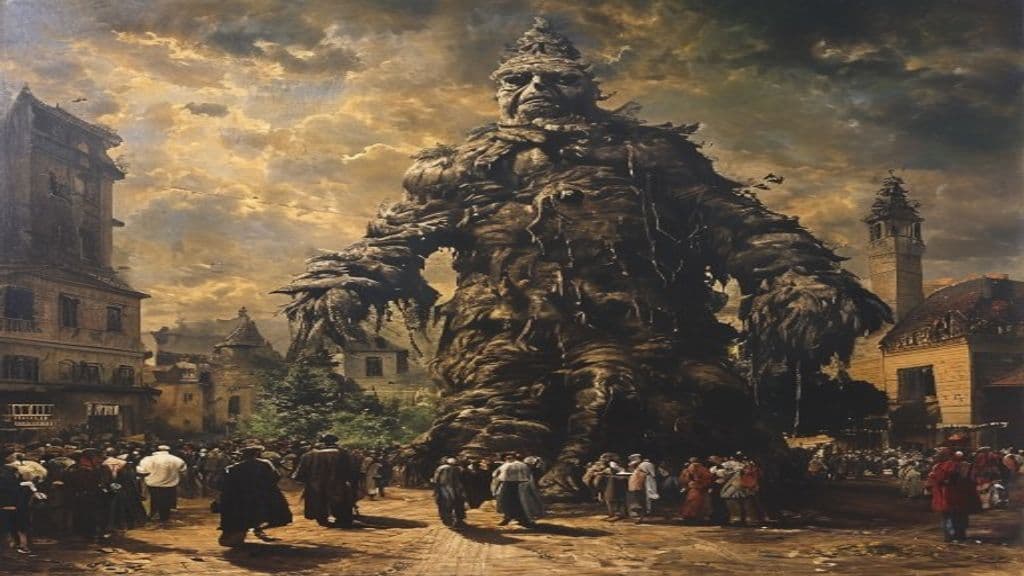
The provided sources describe two distinct referents rather than an origin myth for a single entity. Pi de les tres branques is a dead pine tree located in the countryside near the town of Berga in north-central Catalonia; it has been regarded by some Catalan nationalists as symbolizing the unity of the three 'Catalan Countries' and is the site of regular political-cultural gatherings (Source: Wikipedia: Pi de les Tres Branques). Separately, 'gegants' are recurrent in Catalan festival culture as large processional figures used in civic celebrations, implied by festival materials referencing music for dancing gegants and postcards depicting gegants (Sources: archive gralla entry title, postal de gegants, and multiple festival/tourism listings). The supplied corpus contains no account fusing the Pi tree and festival gegants into a single mythic origin or narrative.
The sources supply concrete descriptions for the two referents but do not describe a unified 'Gegants del Pi' appearance. Pi de les tres branques is described as a dead pine tree situated near Berga (Wikipedia). 'Gegants' are indicated by archival and festival materials as large processional figures used in public festivities — evidenced by references such as 'música per a ballar gegants' and visual/postcard material — but the provided documents do not include detailed physical descriptions of specific gegants.
No supernatural abilities are attested in the provided sources. The materials record cultural functions: the Pi de les tres branques functions as a symbolic landmark and the site of regular political-cultural gatherings tied to Catalan identity (Wikipedia). Gegants function as performative, processional figures in civic festivals and are associated with music (e.g., gralla) and public celebration (archive entries, festival listings, postcards, and tourism materials).
Gegants de la Barceloneta
No information about a folkloric or ceremonial entity called "Gegants de la Barceloneta" is present in the supplied source. The only provided source discusses the Algherese (Alguerese) dialect of Catalan and does not describe the Barcelona "gegants" tradition or any specific figures from La Barceloneta.
Gegants de la Ciutat
Gegants de la Ciutat refers to the gegants i gegantes (giants and giantesses) appearing as large ceremonial parade figures in La Patum de Berga, a Corpus Christi festival with documentary roots cited to the 14th century. The term in the provided sources designates festival effigies or costumed figures that take part in public performances and processions in the streets and small squares of Berga.
Gegants de la Plaça Nova
Gegants de la Plaça Nova refers to the tradition of civic festival giants (gegants) associated with Catalan popular celebrations; the provided source places related festival practices within the broader context of Catalonia's observances such as Saint George's Day but does not give specific details about these particular giants.
Gegants de la Sagrada Família
Gegants de la Sagrada Família are a set of traditional Catalan festival giants (gegants) associated with the Sagrada Família neighbourhood in Barcelona. They function as civic/folk parade figures used in popular celebrations, part of the broader Catalan tradition of giant puppets appearing in festivals and public events.
Gegants de les Cabanyes
Gegants de les Cabanyes are processional giant effigies associated with the locality Les Cabanyes in Catalonia. They belong to the Catalan tradition of gegants—large humanlike figures used as civic and festival effigies in public processions—rather than being described as supernatural beings.
Gegants del Casc Antic
Gegants del Casc Antic are the neighborhood 'gegants' (festival giants) paraded during the festa major of Barcelona's Casc Antic (Ciutat Vella). They are civic, performative figures used in street celebrations that embody local identity for the barrios of Sant Pere, Santa Caterina and La Ribera (El Born).
Gegants del Raval
Processional giants associated with El Raval neighbourhood in Barcelona; civic festival effigies paraded during the Festa Major del Raval and other Barcelona street festivals. Sources treat them as part of popular festa-major culture rather than as supernatural beings.
Gegants del tricentenari
The Gegants del tricentenari are processional giants used in public celebrations in Barcelona. They are large anthropomorphic parade figures associated with a tricentenary commemoration and function as civic ceremonial effigies rather than autonomous supernatural beings.
Gegants from Balsareny
Processional giants belonging to the Catalan tradition of gegants, presented and carried in civic and religious festivals in the town of Balsareny. They function as communal, performative icons within local procession ensembles rather than as supernatural beings.
Gegants from Cardona
No reliable information about 'Gegants from Cardona' was present in the supplied source. The single provided reference (a Wikipedia article about Sant Just Desvern) does not mention these figures; therefore no factual claims about their nature, appearance, or practices can be supported from the given material.
Gegants from Montblanc
Gegants from Montblanc are large parade effigies (gegants, 'giants' in Catalan) associated with Montblanc and the wider Catalan festival tradition. They function as civic and performative symbols in public celebrations and are not treated as supernatural beings in the provided sources.
Gegants from Ripoll
Gegants from Ripoll refers to the local manifestation of the Catalan gegants (giants) tradition associated with the town/area of Ripoll in Catalonia. The provided sources are travel and regional descriptions that mention the regional context but do not supply detailed folkloric texts about the Ripoll gegants themselves.
Community Record
- [1]Pi de les Tres Branques. Wikipedia: Pi de les tres branques — 'Pi de les tres branques is a dead pine tree located in the countryside near the town of Berga in north-central Catalonia, Spain. It has long been regarded by some Catalan nationalists as representing the unity of the three 'Catalan Countries' and is the site of regular political-cultural gatherings.'wiki
- [2]gralla (archive entry title: 'música per a ballar gegants'). Archive entry title implying 'música per a ballar gegants' (music for dancing/performing with gegants).other
- [3]Postal de gegants. Postal de gegants (postcard of gegants) — indicates visual/cultural presence of gegants in Catalan festival material.other
- [4]Festival and tourism materials referencing gegants and civic festivals. Tourism and festival listings reference Catalan civic festivals in which gegants commonly appear (multiple festival/tourism sources in the provided corpus).other
- [5]Basilica Santa Maria del Pi (guided visit / church listing). Reference to Basilica Santa Maria del Pi and related civic/religious context in Barcelona (tourism listing).other