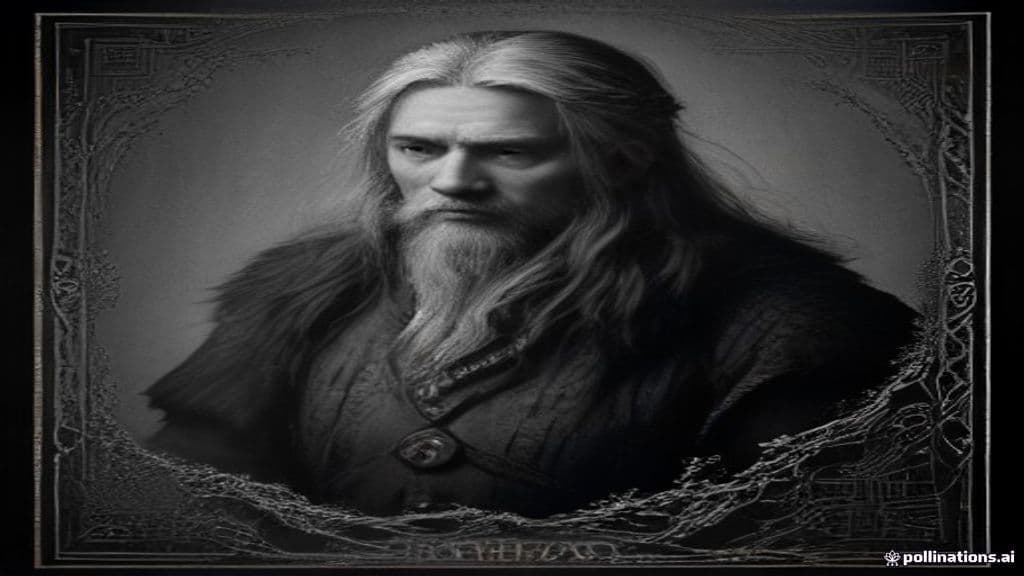
In the Old Norse literary corpus Granmar is presented as a king (konungr) of Södermanland whose recorded narrative is political and martial rather than supernatural. Heimskringla relates that Granmar married Hilda, daughter of the Geatish king Högne of East Götaland, and received Hjörvard the Sea-king as a son-in-law when Granmar had no sons; the marriage and acceptance of Hjörvard establish a defensive and political alliance. The Heimskringla account reports that when the Swedish king Ingjald Ill-ruler invited several petty kings to his hall to burn them, Granmar avoided the initial massacre by failing to arrive, but the following autumn he and Hjörvard were trapped at a feast on Selaön where Ingjald surrounded the hall and set it on fire, burning them to death. In contrast, the Helgi Hundingsbane poems and related traditions (reflected in the Volsunga saga milieu) preserve variant genealogies that ascribe sons to Granmar—Hothbrodd, Gudmund and Starkad—who are slain by the hero Helgi, a discrepancy that marks the character as part of competing saga and Eddaic strands of legendary history.
The surviving Old Norse sources provide no physical description of Granmar. The narratives focus on his actions, kinship ties, halls, feasting customs, and political role; as with many legendary kings in saga and Eddaic material, bodily or facial detail is not preserved in the provided texts, so no authoritative depiction of his appearance can be drawn from the sources.
Sources depict Granmar as a mortal king and war-leader: he hosts feasts, negotiates marriage alliances (notably to Hilda, daughter of Högne), accepts and grants positions to retainers (e.g., accommodating Hjörvard as son-in-law and defender), and leads or participates in military resistance against Ingjald Ill-ruler alongside allies such as Högne and Hjörvard. He is portrayed as politically active and militarily engaged rather than possessing supernatural powers. Tradition differs on his progeny: Heimskringla states he had no sons, while the Helgi poems attribute sons (Hothbrodd, Gudmund, Starkad) who are slain by Helgi.
Weaknesses
- conditionvulnerability to political treachery (hall-burning by Ingjald)
- conditionabsence or lack of male heirs (Heimskringla reports he had no sons), which affects succession and political security
Wards
- ritualmarriage and alliance-making
- ritualfeasting customs and hospitality
- conditionmilitary alliance
Community Record
- [1]Granmar — Wikipedia. Wikipedia: Granmarwiki
- [2]Wikidata: Granmar (Q5595982). Wikidata entry for Granmarother
- [3]Heimskringla (account summarized in supplied notes). Heimskringla (Snorri Sturluson) as summarized in source materials; cited incidents: marriage to Hilda, alliance with Hjörvard and Högne, avoidance of initial invitation, later burning on Selaönliterary
- [4]Helgakviða Hundingsbana I & II / Volsunga saga (Eddaic materials summarized). Poetic Edda (Helgakviða Hundingsbana I & II) and related saga material as summarized in source materials; cited tradition attributing sons Hothbrodd, Gudmund, and Starkad to Granmar who are slain by Helgiliterary
- [5]Archive items related to 'Granmar' (not substantive on the legendary king). Archive entries referenced in supplied materials (not providing additional verifiable detail about the legendary king)other