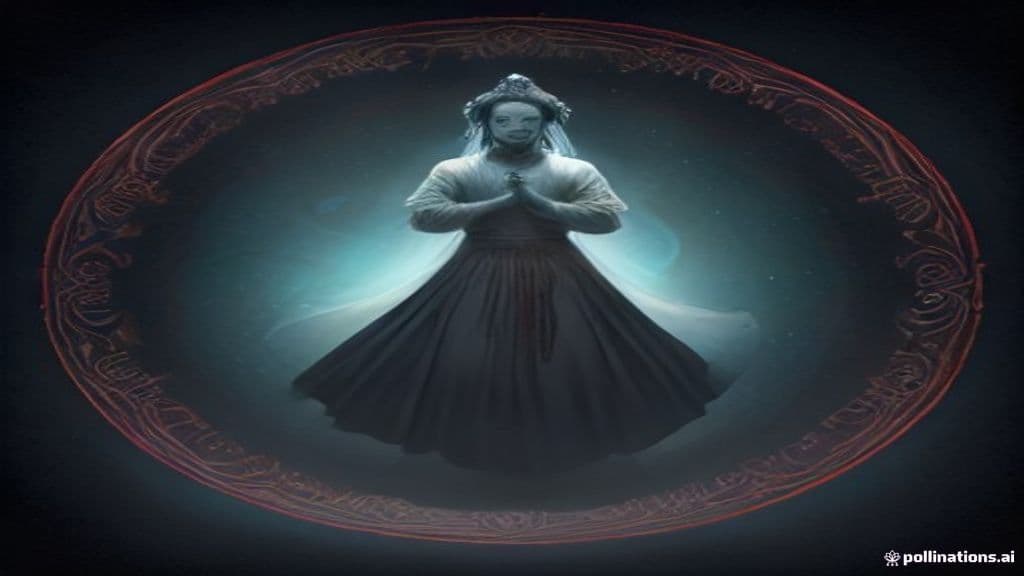
Gui arise from human death when social-ritual conditions produce an unsettled postmortem state: sources link their emergence to violent or unhappy deaths and to cases where the dead are neglected by their descendants. In Taoist and broader Chinese popular frameworks, such neglected or troubled dead do not become protective ancestral shen and instead persist as wandering or hungry spirits, requiring communal and specialist ritual attention.
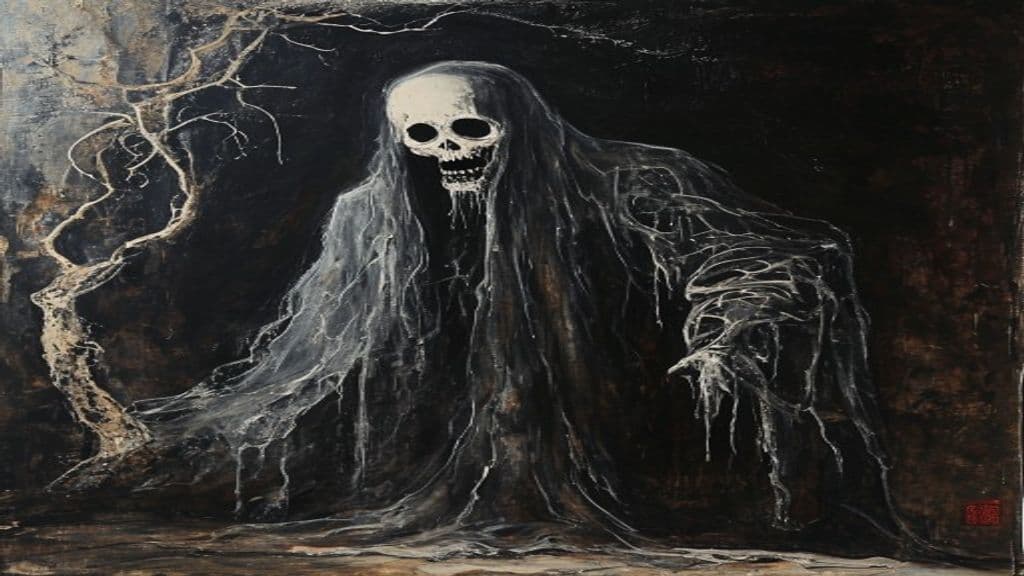
Sources do not provide a single standardized visual type for all gui. Descriptions in the literature treat them primarily in terms of condition (wandering, suffering, hungry) rather than detailed, consistent physical features; some summaries use the category label 'wandering spirits' or 'hungry ghosts' without fixed portraiture.
Primary attributes recorded in the sources emphasize endurance in the world of the living (wandering/roaming) and a condition of suffering or hunger that motivates ritual response. Gui are described as able to persistently affect the living's peace or fortunes such that families and communities perform rites to placate or exorcise them. The excerpts do not catalogue systematic supernatural powers (e.g., standardized possession, prophecy) for gui, only their capacity to disturb and to be the subject of ritual management.
Weaknesses
- conditionProper ancestral veneration (regular ancestor rites and maintenance of the ancestral cult)
- ritualRitual placation/exorcism performed by Taoist priests or Buddhist monks
Wards
- ritualAncestor worship / household ancestral rites (preventive maintenance to keep the dead integrated as ancestral spirits)
- ritualGhost Festival observances (community-level offerings and rites to satisfy wandering spirits)
- ritualEngaging Taoist priests or Buddhist monks to perform special placation or exorcistic rituals
Community Record
- [1]Gui (Wikipedia). Wikipedia, 'Gui'wiki
- [2]Hungry ghost (Wikipedia). Wikipedia, 'Hungry ghost'wiki
- [3]Ghosts in Chinese culture (Wikipedia). Wikipedia, 'Ghosts in Chinese culture'wiki
- [4]The World of Chinese Ghosts — Tsem Rinpoche. Tsem Rinpoche, 'The World of Chinese Ghosts'folk
- [5]GHOSTS, GHOST MONTH AND GHOSTBUSTERS IN CHINA | Facts and Details. Facts and Details, 'Ghosts, Ghost Month and Ghostbusters in China'other
- [6]Contract with the Dead: Adventures in Chinese Horror — Jionghao Liu (literary reference). Jionghao Liu, 'Contract with the Dead: Adventures in Chinese Horror' (literary/contextual reference)literary