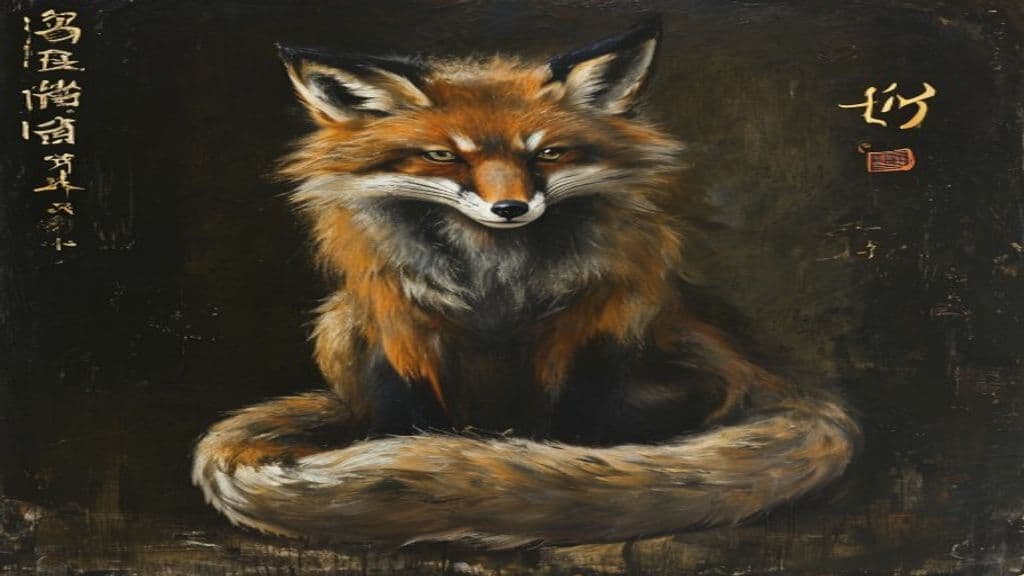
Sources in the dataset present the gumiho as the Korean manifestation of a pan‑East Asian nine‑tailed fox motif historically associated with Chinese mythology; modern descriptions treat the gumiho as a long‑lived fox spirit that has circulated into Korean storytelling and contemporary popular culture. The dataset does not supply a single canonical origin myth for the gumiho within Korean tradition and frames the Chinese nine‑tailed‑fox motif as a point of circulation rather than an exclusive provenance.
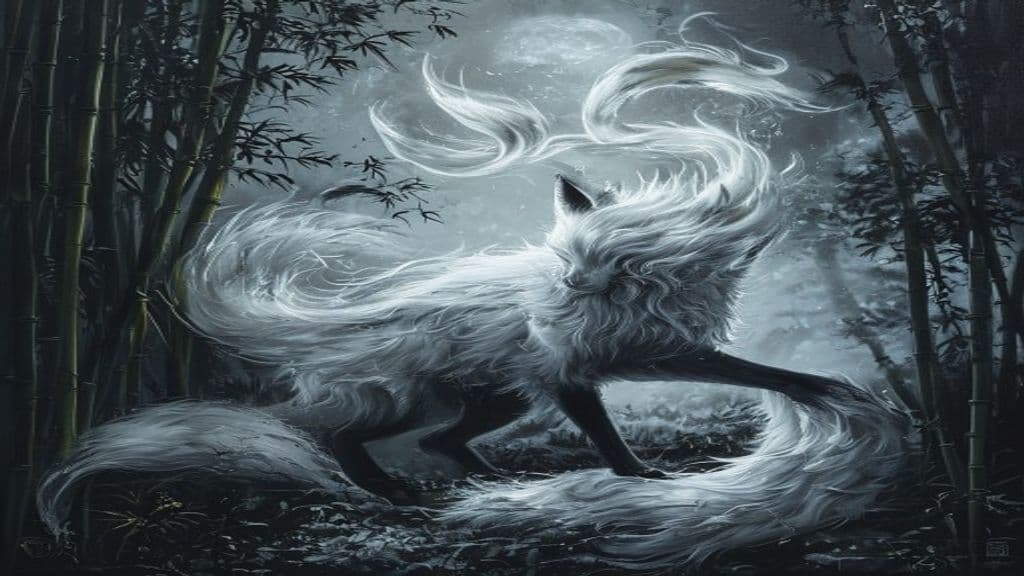
Representations vary by source and adaptation. The defining trait in the available materials is a fox associated with nine tails; many modern retellings emphasize the ability to assume human appearance and commonly depict the gumiho disguised as a woman. Contemporary works also portray extreme longevity (for example, fictional figures described as centuries old or given ages such as 999 in specific narratives), while older promotional blurbs in some mid‑century fiction use hyperbolic variants (e.g., a promotional reference to a 'nine‑thousand‑tailed' fox) which the sources treat as exceptional or exaggerated.
In the provided material the gumiho is reported primarily as a shapeshifting fox‑being able to appear as a woman. The Wikipedia summary situates it among regional nine‑tailed fox figures that commonly engage with humans in ambiguous or potentially dangerous ways; however, specific folkloric powers (for example, particular methods of harming humans, longevity mechanics, or a quest to become human) are not documented in the supplied sources. A modern fiction source (a novel blurb) uses the gumiho motif to suggest a potential causal link to human disappearances and portrays a woman rumored to be a gumiho as a suspect in missing‑persons cases; that depiction is explicitly a narrative use of the motif in contemporary fiction rather than an ethnographic account of traditional abilities.
Arang (Korean folklore)
Vengeful spirit driven by a desire for justice in Korean folklore, particularly during the Joseon Dynasty. (Note: 1. Power tier should be Primordial since it is described as having a cosmic level of influence in causing fear among magistrates. 2. The description for weaknesses is missing; add that Arang's weaknes)
Dokkaebi
Dokkaebi (도깨비) are legendary supernatural beings in Korean folklore associated with nature, household objects, and trickster behavior; they can be mischievous or benevolent, rewarding virtue and punishing greed in folktales.
Goryeo Supernatural Ancestor
A supernatural entity credited with uniting the Korean Peninsula and founding the Goryeo dynasty. (Note: 1. Remove "Primordial" power tier as it implies cosmic-level abilities, which is not supported by the source material that only mentions unification. 2. Add a statement about unknown weaknesses and wa)
Gwisin
In Korean folklore, gwisin are spirits or ghosts that are humans who have died. Sources describe the term as a class of departed-human spirit, noted as similar to yogoe or mamul and explicitly contrasted with non-human beings such as dokkaebi.
Household deity
A household deity is a deity or spirit that protects the home and its members, cared for inside domestic spaces and integrated into everyday household ritual. The category spans distinct cultural instantiations — hearth goddesses, ancestral family kami, and animistic house-spirits — and is characterized by reciprocal relations of offering and protection rather than cosmic sovereignty.
Hwanung
Divine being in Korean tradition, son of Hwanin, Lord of Heaven. Associated with human development and progress. (Note: - Power tier: Primordial may be too high given the description of abilities (institution of laws, teaching arts and medicine) which more closely align with a Greater (deity-level, but not cosmic) or A)
Igong Bonpuri
A supernatural being described in traditional shamanic narratives from Jejudo, Korea. Similarities with Buddhist mythology suggest it may be a type of Korean cultural cosmological entity. (Note: 1. Remove "Similarities with Buddhist mythology suggest it may be a type of Korean cultural cosmological entity" from summary as it's not directly supported by source material. 2. Power tier is Minor )
Imugi (proto-dragon)
Imugi (이무기; also transcribed Imoogi) is a Korean folkloric proto‑dragon — a large serpentine, aspirant creature described in modern summaries as a 'lesser dragon' that may become a true Korean dragon through a transformative act.
Inmyeonjo
A mythological creature in Korean tradition with human and bird characteristics. (Note: - Power tier: Lower than Primordial (should be Lesser or Greater) since no deity-level abilities are described. - Origin story: Remove statement since it's true that no specific origin story is mentio)
Jangseung (Korean tradition)
A physical object serving as a guardian or tutelary deity for Korean villages, typically made of wood and placed at village edges. (Note: * Power tier: Minor Spirit (a Greater entity would have more significant abilities) * Abilities: The jangseung is not believed to ward off evil spirits/demons, but rather serves as a deterrent and a r)
Liminal deity (category)
A scholarly category of gods and divine figures whose proper sphere is thresholds, borders, and transitions — places and moments where one state gives way to another. The term aggregates culturally specific deities (e.g., Janus, Hecate, Charon, Cheng'huang, Menshen, Jangseung, Bes) that function as guardians, psychopomps, or mediators at crossings of space, time, or condition.
Little people
A cross-cultural folkloric category of diminutive supernatural or semi-supernatural beings found worldwide. They occupy liminal places near humans (woods, mounds, anthills, mines, shorelines) and range from helpful household spirits to mischievous tricksters or dangerous guardians of places and resources.
Community Record
- [1]Nine‑tailed fox (Wikipedia). "The nine‑tailed fox is a mythical fox entity originating from the mythology of China."wiki
- [2]The nine‑tailed fox (Archive listing, mid‑century CID blurb). Archive blurb referencing missing GIs and 'a woman locally rumored to be a gumiho, a legendary nine‑thousand‑tailed fox disguised as a woman.'literary
- [3]The nine‑tailed fox (Alternate Archive listing, mid‑century CID blurb). Alternate archive entry with the same promotional description linking disappearances to a rumored gumiho.literary
- [4]TAIL OF THE NINE TAILED EPISODE 01 (synopsis archive). "The mythical nine‑tailed fox, or gumiho, Lee Yeon had to settle in the city many centuries ago. Able to transform into human form, he eradicates supernatural beings that threaten the mortal world."literary
- [5]My Girlfriend Is a Gumiho (Wikipedia). Title and descriptions cited among modern Korean media that center a gumiho as a romantic lead.wiki
- [6]My Roommate Is a Gumiho (Wikipedia). Title and descriptions cited among modern Korean media that center a gumiho as a main character; associated manga/manhwa adaptations noted in sources.wiki
- [7]Difference between Kumiho(Gumiho) and Kurama (Anime.StackExchange discussion). Comparative discussion referencing naming/terminology differences and cross‑media comparisons between gumiho/kumiho and other nine‑tailed characters.other
- [8]Review: Robin Ha’s The Fox Maidens – ImageTexT. Notes that Robin Ha’s The Fox Maidens 'reimagines the Korean folklore myth through a feminist lens,' cited as an example of modern reinterpretation.other
- [9]Gumiho Audiobooks (Audible listings). Audiobook synopsis example: 'Eighteen‑year‑old Gu Miyoung has a secret—she's a gumiho, a nine‑tailed fox who must devour the energy of men in order to survive.'literary
- [10]NetGalley reviews and promotional material (My Roommate Is a Gumiho and other modern works). Modern novels and promotional material showing the gumiho as a frequent protagonist/romantic figure in contemporary retellings.literary
- [11]My Roommate Is a Gumiho - MangaUpdates. Catalog entry showing modern serialized comic adaptations of gumiho narratives.other
- [12]The Kumiho Cooks Pajeon | Abyss & Apex (blog/creative retelling). Creative piece referencing gumiho motifs in contemporary storytelling and cuisine‑themed retelling.other
- [13]Korean Ghosts: A Guide To the Scariest Creatures in Korean Folklore – The Soul of Seoul. Popular‑culture guide listing gumiho among notable Korean supernatural figures and summarizing common motifs.other
- [14]Kumiho. Wikipedia, 'Kumiho' entrywiki
- [15]Gumiho (Wikidata). Wikidata item Q718580 (label: 'Korean mythological creature')other
- [16]The nine‑tailed fox (novel blurb). Archive.org, 'The Nine‑Tailed Fox' book blurb referencing a woman 'locally rumored to be a gumiho, a legendary nine‑thousand‑tailed fox disguised as a woman.'literary
- [17]My Roommateisa Gumiho THAI1 (listing). Archive.org listing referencing the gumiho motif (no additional folkloric detail in supplied excerpt).literary