
Local and pan-Hindu sources describe the murti at Guruvayur as originally divine: given by Vishnu to Brahma and transmitted through sacred lineages. At the end of Krishna's avatar the murti was recovered from the submerged city of Dvaraka by agents instructed by the deity (accounts name figures such as Uddhava and Brihaspati) and, accompanied by Vayu, brought to the Kerala coast. Vishvakarma is said to have consecrated the image on the shore (Rudratirtha), the place becoming Guruvayur (literally associated with Guru/Brihaspati and Vayu), and the presiding murti came to be called Guruvayurappan. Shiva is located across the shore at Mammiyur in the consecration narrative, situating the temple in a localized sacred geography.
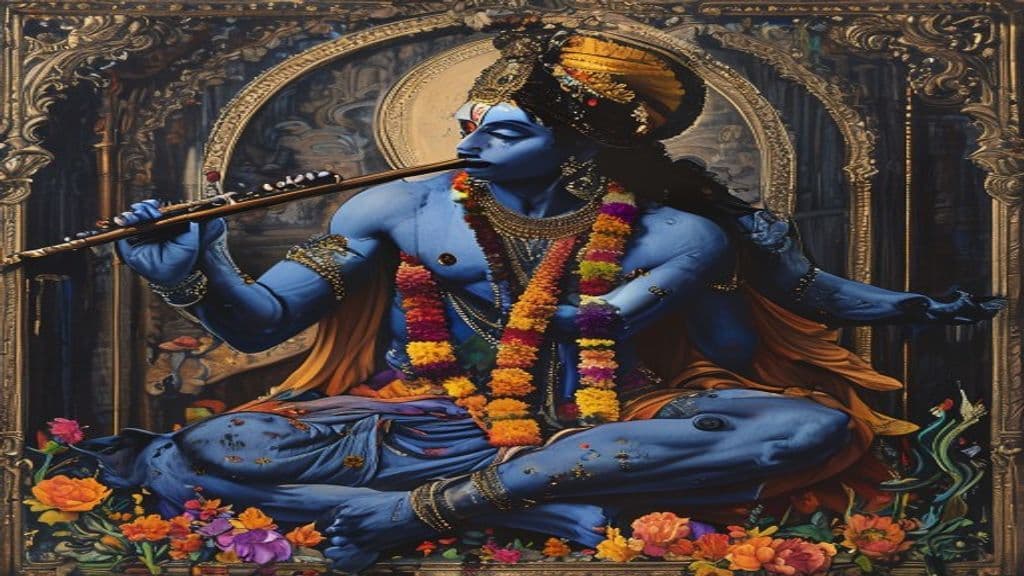
In the supplied sources Guruvayurappan is identified primarily with the consecrated murti at Guruvayur and worshipped as Krishna in his child form—hence the epithet Unnikkannan ('Little Krishna'). Specific iconographic details are not exhaustively described in the excerpts; a notable anecdote records that in a vision experienced by King Manaveda the child form of Krishna wore headgear from which the king took a peacock feather, and that feather was later incorporated into the headgear of the Krishna character in the local dance-drama Krishnanattam. Beyond these attestations, the sources treat the deity chiefly through his role as the living temple image rather than through an extended physical catalogue.
Regional devotional narratives portray Guruvayurappan as responsive to sincere devotion and able to intervene in devotees' lives: protecting a meditating king from the effects of a cobra bite (the king, absorbed in God, did not feel the sting), following a repentant boy who had stolen a banana because the boy offered half to the deity (the deity stating that having shared the fruit implicated him in the act), and accepting or consuming nivedyam (food offerings) presented by a child-priest after repeated entreaties. The stories also indicate that such appearances or interventions are structured by ritual and promise: in the Manaveda episode the deity withdrew when an agreed condition was violated, showing that interactions are portrayed as conditional and mediated by ritual propriety.
Weaknesses
None recorded.
Wards
- conditionNone specified in cited material (deity is object of devotion, not an adversary)
Community Record
- [1]Guruvayurappan — Wikipedia. Wikipedia contributors, 'Guruvayurappan,' Wikipedia, The Free Encyclopedia.wiki
- [2]Guruvayurappan — Wikidata. Wikidata entry Q4152501, 'Guruvayurappan.'other
- [3]Sri Guruvayurappan Suprabhatam (archive). Archive.org, 'Sri Guruvayurappan Suprabhatam' (text/audio related to temple devotion).other
- [4]High Court for State of Telangana - HBHC010464582004 (2004-12-31) (archive). Archive.org, legal document referencing Guruvayur matters as cited in research notes.other
- [5]Portrayal of Guruvayurappan by Bhattatiri: Best for meditation. Web article on meditative portrayal of Guruvayurappan as used in research notes.other
- [6]Guruvayurappane — devotional page. Devotional resource referencing Guruvayurappan hymn/chant.other