In the surviving literary testimony (Corippus’s Iohannis) Gurzil is presented as linked to the Egyptian/Siwan Ammon, described in the poem as the offspring of Ammon and a cow and labeled “Ammonian Gurzil.” This parentage is the primary mythological genealogy attested in the sources; modern scholars treat the Ammon link as evidence of local syncretic identification or as a poetic formulation rather than a fully preserved native cosmogony. The evidence for Gurzil’s origin otherwise derives from archaeological remains at Ghirza and later medieval reports of a hilltop sanctuary at Gherza, which together suggest a long‑lived localized cult rather than a pan‑regional creation myth.
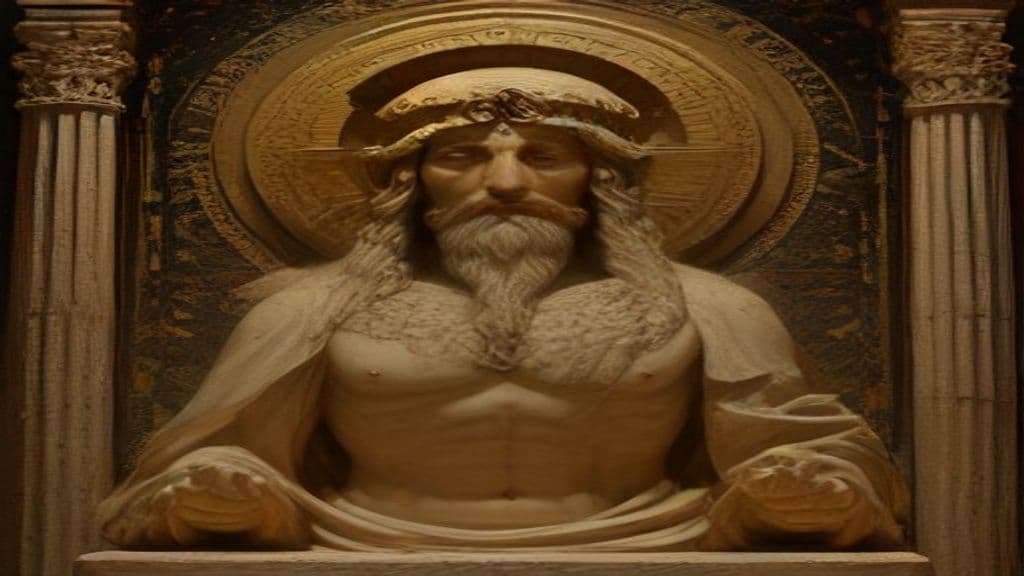
Corippus describes a cult image of Gurzil carried into battle “in the form of a bull” and mentions a wooden carved figure sought by Byzantine forces. Archaeological remains at the proposed cult center (Ghirza) include reliefs of cattle sacrifice and votive altars; some horned‑god reliefs and statues from North Africa have been proposed as comparable, though identifications outside Tripolitania (e.g., Volubilis, Banasa) are disputed. The strongest consistent element in the evidence is bovine or horned iconography associated with a cult image or idol.
The primary functional attribute attested in the sources is martial patronage: in Corippus Gurzil functions as a tutelary presence for the Laguatan, whose image was carried into battle and whose priestly‑chieftain (Ierna) sought to protect the idol in combat. The poem’s genealogy and bull imagery imply ritual associations with cattle and sacrificial practice; a poetic episode cited by scholars makes a single reference to Gurzil’s relationship with animals (a passage about attempting to restrain a horse), but such agency is uncertain and attested only in limited poetic context. Al‑Bakrī’s 11th‑century notice of a hilltop sanctuary with a stone idol implies continued local efficacy of the cult image into the medieval period. Modern proposals that equate Gurzil with Roman deities (e.g., Saturn) or extend his iconography beyond Tripolitania are interpretive and contested.
Community Record
- [1]Gurzil - Wikipedia. Wikipedia, article 'Gurzil' (summary of Corippus, archaeological reports on Ghirza, and al‑Bakrī)wiki
- [2]Corippus, Iohannis (as reported in secondary summaries). Corippus, Iohannis (mid‑6th century) as summarized in modern secondary sources cited on the Wikipedia pageliterary
- [3]Archaeological reports and scholarly summaries on Ghirza. Archaeological evidence from Ghirza: temple with votive altars and bowls, relief depicting bull sacrifice, inscription mentioning sacrifice of 51 cattle (reported in summaries cited on Wikipedia and by Mattingly and other scholars)academic
- [4]al‑Bakrī (11th century) report as summarized. Al‑Bakrī’s 11th‑century notice of a hilltop sanctuary at 'Gherza' containing a stone idol worshipped by surrounding Berber tribes (reported in modern summaries)literary