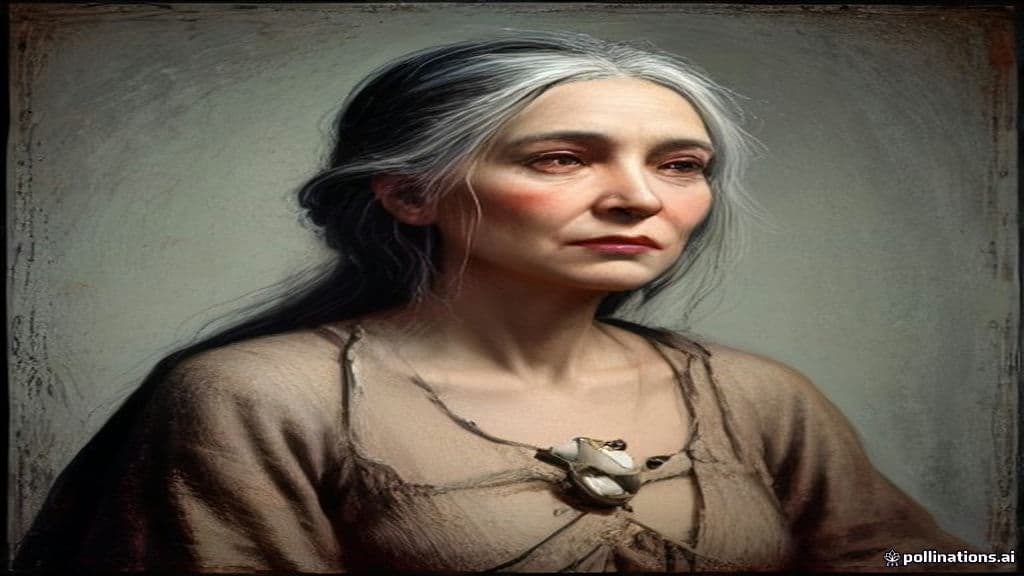
In the Theseus cycle, on his way to capture the Marathonian Bull, the young Theseus sought shelter from a storm at the hut of an elderly woman named Hecale. She received him hospitably and vowed that, if he returned safely, she would sacrifice to Zeus on his behalf. Theseus succeeded in capturing the bull but returned to find Hecale dead; in response, the local community—by Theseus' order according to Philochorus as reported by Plutarch—honoured her memory with votive commemoration, a deme bearing her name (Hecale of the tribe Leontis), and a festival called the Hecalesia in honour of Zeus Hecalesius and Hecale. The episode is attested in Plutarch's Life of Theseus and in fragmentary Hellenistic poetic treatment (Callimachus' Hecale).
Surviving sources characterize Hecale simply as an old/ancient woman. Fragmentary poetic reports emphasize her age and talkative disposition (e.g., reviewers cite lines describing 'the lips of the old woman are always in motion' and that the old woman and the hero 'spend all night speaking ...'). No detailed physical features, clothing, or precise appearance are preserved in the supplied materials beyond her being elderly.
No supernatural powers are attributed to Hecale in the supplied sources. Her significance arises from human virtues and actions: hospitality (receiving and sheltering Theseus), piety (vowing a sacrifice to Zeus on Theseus' behalf), and social memory (being honoured posthumously by civic cult).
Community Record
- [1]Hecale - Wikipedia. Wikipedia, entry 'Hecale'wiki
- [2]Hecale (poem) / Callimachus materials at Attalus. Callimachus, Hecale (fragmentary) and related material at Attalus.orgliterary
- [3]Hecale - in ancient sources @ attalus.org. Compilation of ancient references to Hecale at Attalus.orgliterary
- [4]Plutarch, Life of Theseus (summary as cited). Plutarch, Life of Theseus (as summarized on Wikipedia: reports the vow, Hecalesia festival, and civic honours by Theseus; cites Philochorus)literary
- [5]Callimachus: Hecale – Bryn Mawr Classical Review (reviews of editions). Bryn Mawr Classical Review discussions of Callimachus' Hecale fragments and editionsacademic
- [6]Wikidata: Hecale. Wikidata entry for 'Hecale' (includes taxonomic note unrelated to the mythic figure)other