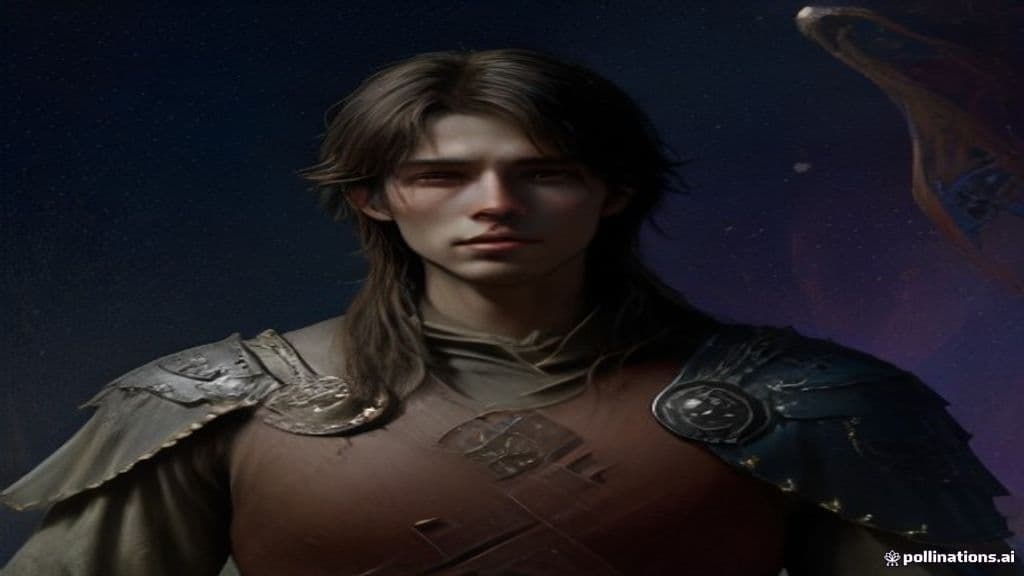
In the body of Old English and later medieval tradition Hengest is presented as a leader of Germanic warriors—paired with his brother Horsa in many accounts—who arrives in post‑Roman Britain during the fifth century. Chronicle and popular retellings cast him as negotiator and military leader in the Vortigern narrative, and later tradition lists him as the first of the Jutish kings or the founder of the Kingdom of Kent. The sources treat these accounts as legend and tradition, preserving a heroic‑age memory rather than providing archaeological proof of historicity.
Surviving sources do not provide a consistent physical portrait of Hengest. Literary and chronicle passages portray him in the social role of a warrior‑prince or thane—commander of retainers and leader in battle—so he is implicitly depicted with the trappings of martial leadership in heroic poetry and foundation narratives. No detailed bodily description or unique iconography is recorded in the cited materials.
Hengest's 'abilities' in the sources are strictly human and social: skilled military leadership and command in warfare; negotiation and political action in settlement narratives (including treaty‑making and rulership); and participation in oath, fealty, and honor practices central to Germanic heroic culture. In the Finn/Hengest materials he exemplifies comitatus tensions—oath‑taking, vengeance, and the hard choices of exile and loyalty—rather than any supernatural power.
Weaknesses
- conditionHuman political vulnerability (exposure to treachery, oath conflict, vengeance)
Wards
None recorded.
Community Record
- [1]Hengist and Horsa (Wikipedia). Wikipedia, article 'Hengist and Horsa'.wiki
- [2]Wikidata entry for Hengist. Wikidata item Q323495 'Hengist'.wiki
- [3]Beowulf (Gutenberg edition) / Finn and Hengest material. Beowulf (Old English heroic poem and translations), references to Hengest in Finn episode.literary
- [4]The Anglo‑Saxon Chronicle (Avalon Project) — Fifth Century. Anglo‑Saxon Chronicle, entry noting 'This year Hengest and Esc fought with the Welsh...'.literary
- [5]Early British Kingdoms: Historical Chronology AD 410–495. EarlyBritishKingdoms chronology noting Hengest's death and succession by his son Aesc.other
- [6]Tha Engliscan Gesithas — Hengest, Horsa and the Coming of the English. Retelling summarising Hengest's role in the Vortigern settlement narrative and foundation of Kent.other
- [7]Kent Archaeology: Hengest. Kent History & Archaeology article on Hengest and local tradition.other
- [8]Early British Kingdoms for Kids — The Story of Vortigern & the Saxons. Pedagogical retelling of the Vortigern narrative involving Hengest.other
- [9]Finn and Hengest (Wikipedia / secondary sources). Discussion of the Finn–Hengest narrative complex linking heroic poetry and tradition.wiki
- [10]Archive: Hengest : a study in early English hero legend. Study and collected materials on Hengest as an early English hero legend (archive resource).other