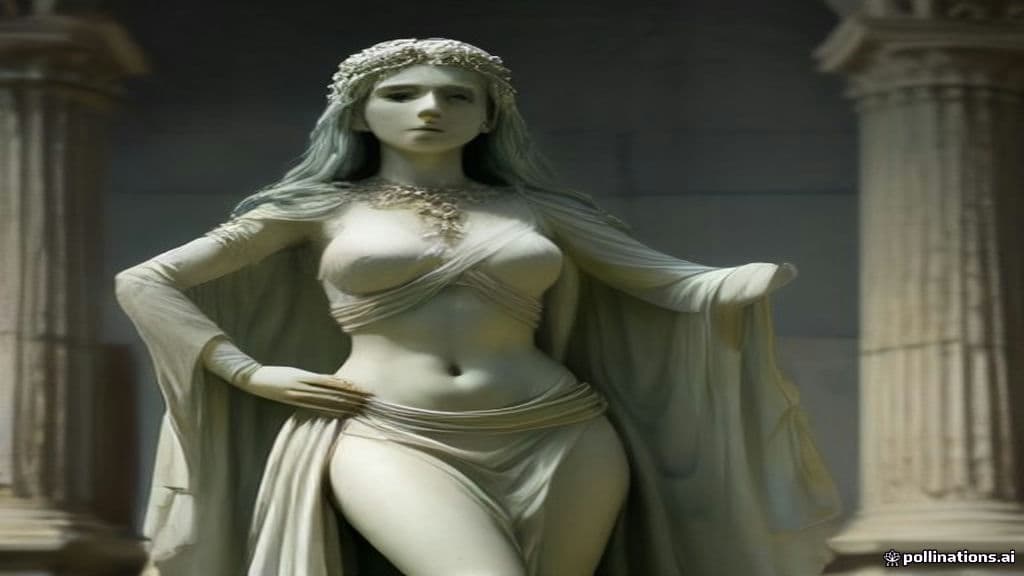
Hersilia appears in the narratives surrounding Rome's foundation and the episode of the abduction (the 'Rape') of the Sabine women. In accounts summarized from Roman literary sources she is presented as the wife of Romulus in some traditions and in alternative genealogical versions as the wife of Hostus Hostilius and ancestor of Tullus Hostilius. Her most famous act in the legendary cycle is interceding for the captured Sabine families: according to Livy's summary of the tradition she begged Romulus to forgive the parents of the captured women and to receive them into the state, successfully persuading him and helping to end the hostilities that followed the abduction. After her death some literary sources (notably Ovid's Metamorphoses as reported in modern summaries) describe her as having been deified and called Hora Quirini. Scholarly opinion disagrees on the origin of the Hora Quirini identification: Georg Wissowa considered it Ovid's invention, while T. P. Wiseman argued it derived from an earlier Greek source.
The surviving accounts that record Hersilia's actions are narrative and do not provide a sustained physical description. Primary summaries and later reference works focus on her role as mediator and her later apotheosis rather than on bodily features; no canonical iconographic or descriptive details are preserved in the cited materials.
As a mortal in the foundation narratives Hersilia's notable capacities are rhetorical and political: she acts as an intercessor and persuader, successfully pleading with Rome's leader to integrate former enemies for the good of the state (as summarized from Livy's account). After death she is described in some literary sources as having been deified and associated with Romulus/Quirinus under the title Hora Quirini, but the provided sources do not enumerate any specific supernatural powers or cult functions resulting from that apotheosis.
Community Record
- [1]Hersilia (Wikipedia). Wikipedia contributors, 'Hersilia,' Wikipedia, https://en.wikipedia.org/wiki/Hersilia (summary citing Livy, Ovid, and scholarly discussion)wiki
- [2]Wikidata entry for Hersilia. Wikidata: Q3022328 (taxonomic homonym noted; distinct from mythological figure)other
- [3]I and my true love (archive). Archive.org item (included in research materials; no direct content on myth cited in provided notes)other
- [4]The Endlos Museum — Acht Vierzig (archive). Archive.org item (included in research materials; no direct content on Hersilia cited in provided notes)other
- [5]Über die Entwicklung der Nebenhöhlen der Nase (archive). Archive.org item (included in research materials; not relevant to mythological material in provided notes)other