In the surviving literary tradition Hippe is presented as a daughter of Chiron who learned arts and prophetic lore from her father. In variants recorded by Euripides fragments she sang oracular songs and was given a coat of tawny horse-hair by Zeus; in Ovid (as Ocyrhoe) she is famed for prophetic speech that she cannot restrain and thus risks revealing forbidden knowledge; in Pseudo‑Hyginus traditions she is transformed and set among the stars as the Horse/constellation (linked with Pegasus), often placed apart from Centaurus (Chiron) because she sought to avoid her father. Some late or corrupt transmissions supply alternative names (Thea, Thetis) or locations (Pelion/Helicon), but the core narrative links prophecy, disclosure of divine secrets, metamorphosis into a mare, and celestial placement.
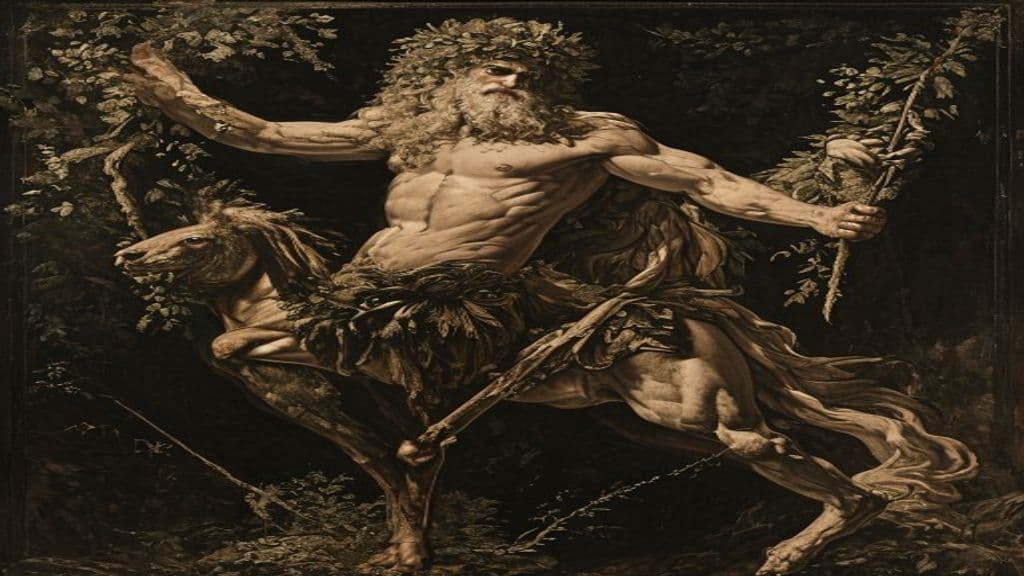
Before transformation she is described only as Chiron's daughter and a prophetess learned in her father's arts; precise personal features are not preserved in the extant summaries. In accounts of metamorphosis she is turned into a mare or given a tawny horse‑hair coat (Euripides fragment). As a constellation she is represented as the forepart of a horse, with the hindquarters concealed in star‑imagery — a detail in the Hyginus/Callimachus tradition said to obscure her sex.
Primary abilities attributed in the sources are prophetic/oracular speech and the learned arts taught by Chiron. Euripides' fragment attributes to her the singing of oracular songs that tell cures and ways to relieve pains; Ovid's account emphasizes an uncontrollable prophetic outpouring that leads her to disclose future deaths or divine secrets. Across variants, it is disclosure of forbidden knowledge or uncontrolled speech that triggers divine transformation into an equine form and placement among the stars. Some accounts also frame divine agency (e.g., Diana/Artemis or other gods) as effecting the metamorphosis for reasons including punishment.
Weaknesses
- conditionuncontrolled prophetic speech / disclosure of divine secrets
- conditionexposure of pregnancy or childbirth (narrative motive for flight in some variants)
- othersubject to divine will / punishment (transformation by a deity such as Diana or Zeus)
Wards
None recorded.
Community Record
- [1]Hippe — Wikipedia. Wikipedia entry summarizing Ovid, Euripides fragments, and Pseudo‑Hyginus traditionswiki
- [2]Wikidata: Hippe. Wikidata item for Hippeother
- [3]Ovid, Metamorphoses (summary as recorded in modern compilations). Summarized Ovidian account (Ocyrhoe) as reported in the supplied summariesliterary
- [4]Euripides fragments (Melanippe tradition, summarized). Summary of lost Euripidean fragments reporting a tawny horse-hair coat and prophetic songsliterary
- [5]Pseudo‑Hyginus / Hyginus, De Astronomia (tradition summarized). Summary of Hyginus' constellation tradition placing Hippe among the stars and apart from Centaurusliterary