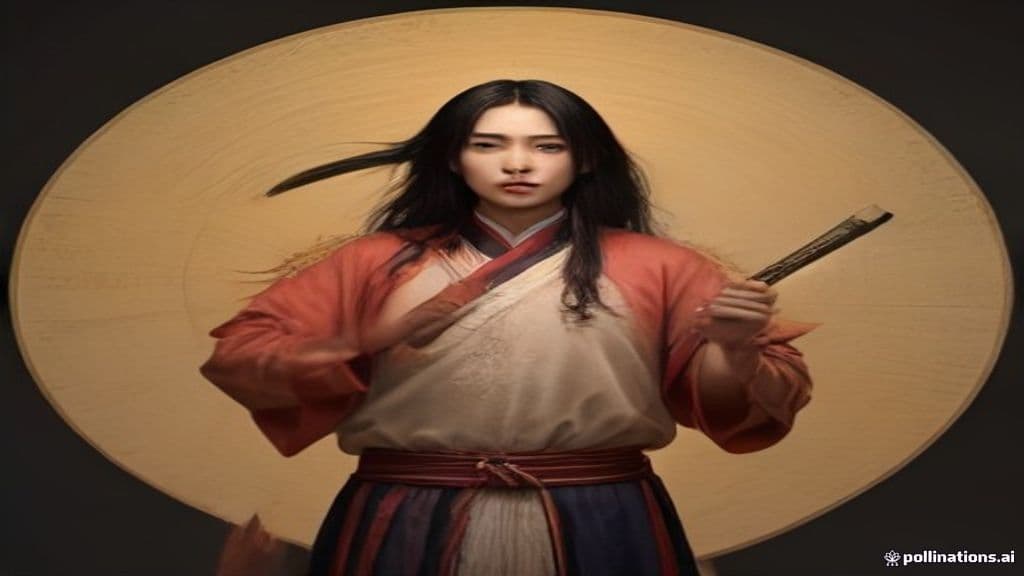
In the principal mythic strand, the land was threatened when multiple suns appeared together and scorched the earth; an imperial or celestial authority (commonly the mythical Emperor Yao in many versions, though some retellings name the Jade Emperor) commissioned Hou Yi to deal with the crisis. Acting as a divinely authorized archer, Hou Yi shot down multiple suns—traditionally nine—leaving a single sun to warm the world. Other accounts expand his remit: he was sent to reform or protect people by subduing monstrous beings that harmed humanity. Variant traditions historicize or politicize him (Bamboo Annals), casting him as a tribal leader who later attacked the Xia dynasty, while poetic sources (Chu Ci) record other deeds such as conflict with the river god Hebo.
Textual sources supplied focus on Hou Yi's actions (archery, commissions, and narrative role) rather than a fixed physical portrait; no consistent, detailed bodily description (clothing, facial features, stature) is preserved in the cited materials. Visual depictions exist in later art and imagination (e.g., an imagined portrait cited by secondary sites), but the canonical texts emphasize feats over stable physical attributes.
Hou Yi's primary ability is archery of extraordinary, possibly supernatural efficacy: he is credited with shooting down multiple suns (commonly nine of ten), after which the fallen suns are said in some tellings to have turned into three‑legged crows. He also slays or imprisons named monstrous beings in some accounts (sources list creatures such as Yayu, Zaochi, Jiuying, Dafeng, Fengxi, Xiushe in certain summaries). He is portrayed as a commissioned enforcer acting on behalf of an imperial/sky order and as recipient of divine gifts—most notably an immortality pill or elixir given by gods or by Xiwangmu (the Queen Mother of the West) in variant accounts. Narrative strands show moral variability: in some versions he is later acclaimed a king but becomes a tyrant, indicating human susceptibility to corruption and the figure's mortality or political vulnerability despite prodigious deeds.
Weaknesses
- othermortality and political vulnerability (can be proclaimed king, overthrown, or become tyrant)
- othermoral failing—hubris or tyranny (narratively exploited in versions where he becomes a despot)
Wards
- othernone documented (no canonical charms/wards against Hou Yi in supplied sources)
Community Record
- [1]Hou Yi (Wikipedia). Wikipedia, 'Hou Yi' entry (accessed via provided research notes).wiki
- [2]Hou Yi 后羿 (ChinaKnowledge.de). ChinaKnowledge.de entry 'Hou Yi' (as cited in research notes).other
- [3]Chu Ci (Heavenly Questions) — summarized reference. Summary citation to Chu Ci (Heavenly Questions) tradition as quoted in the Hou Yi Wikipedia entry (research notes).literary
- [4]Mid‑Autumn Festival materials (Chang'e and Hou Yi linkage). China Highlights, 'Top 3 Mid-Autumn Festival Stories and Legends' (as cited in research notes linking the Hou Yi/Chang'e tale to festival observance).folk
- [5]Bamboo Annals and annalistic conflation (summarized in modern sources). Reference in compiled summaries (Wikipedia) noting Bamboo Annals tradition that conflates Hou Yi with a tribal leader who attacked the Xia.other