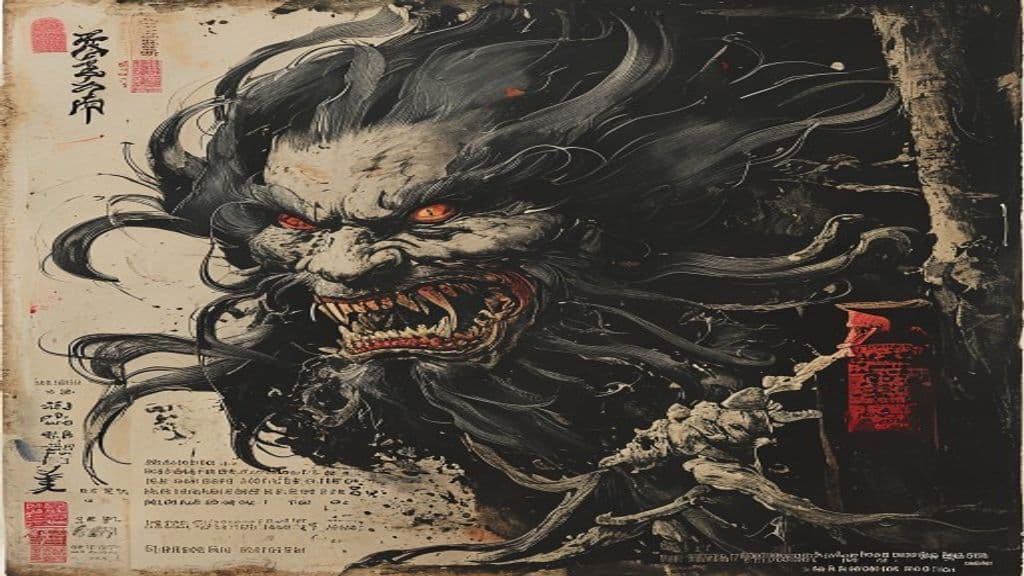
Accounts vary by locality. In Settsu-origin versions Ibaraki-dōji is said to have been born after an unusually difficult eighteen-month labor, arriving with teeth and immediate mobility; the infant laughed with sharp eyes and caused the mother to die of shock. In an Echigo-origin tale the child served as a page at a shrine (Yahiko-jinja / Kokojō-ji) and transformed into an oni after licking blood from a love-letter smear. Across versions the name element 'Ibaraki' ties the creature to particular place-names (Ibaraki city / Ibaraki in Settsu or places in Echigo), while 'dōji' marks it as a demon-child figure; some locales later treat the figure as part of shrine lore or even enshrine a local memorial.
Narratives describe Ibaraki-dōji as born with teeth (fangs), of great size (giant), and fearsome aspect; one account mentions long hair and a fierce gleam in the eye. Artistic representations (e.g., an 1840 preparatory sketch by Shibata Zeshin) depict the being capable of adopting a human guise and then reverting to a dramatic demonic form—most famously shown transforming while reclaiming a severed arm. Gender in the tradition is inconsistent: some tales portray Ibaraki-dōji as male, others as a kijo (female oni), reflecting variation across sources.
Ibaraki-dōji is depicted as physically powerful and violent: a core subordinate in Shuten-dōji’s band that raids the capital, kidnapping women and wreaking havoc in the Heian capital according to the Shuten-dōji cycle. A Settsu barber-shop variant narrates a taste for human blood (an origin episode where the child injures customers and licks their blood, later deliberately wounding to drink blood). The figure can disguise itself in human form—used to reclaim a severed arm by posing as a relative to approach Watanabe no Tsuna—and then transform back to demonic aspect. In the tale cycles it withstands and resists human warriors long enough to require extraordinary martial action to be temporarily neutralized.
Weaknesses
- otherphysical dismemberment (narrative disabling, not permanent)
Wards
- otherarmed intervention by warrior-heroes (narrative means of suppression)
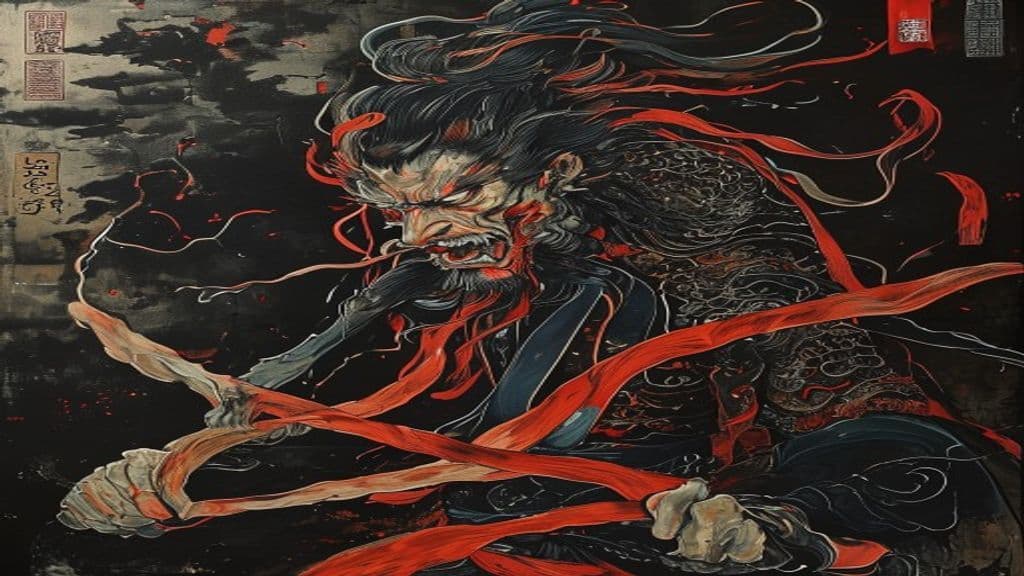
Shuten-dōji
Shuten-dōji is a legendary oni described in Japanese sources as the 'Demon King of Mt. Oe' who terrorized the region in folklore and was slain by the hero Minamoto no Raikō and his companions. In the best-known episode the demon is decapitated, yet the detached head remained animate and attempted to bite the hero, who survived by wearing multiple helmets stacked on his head.
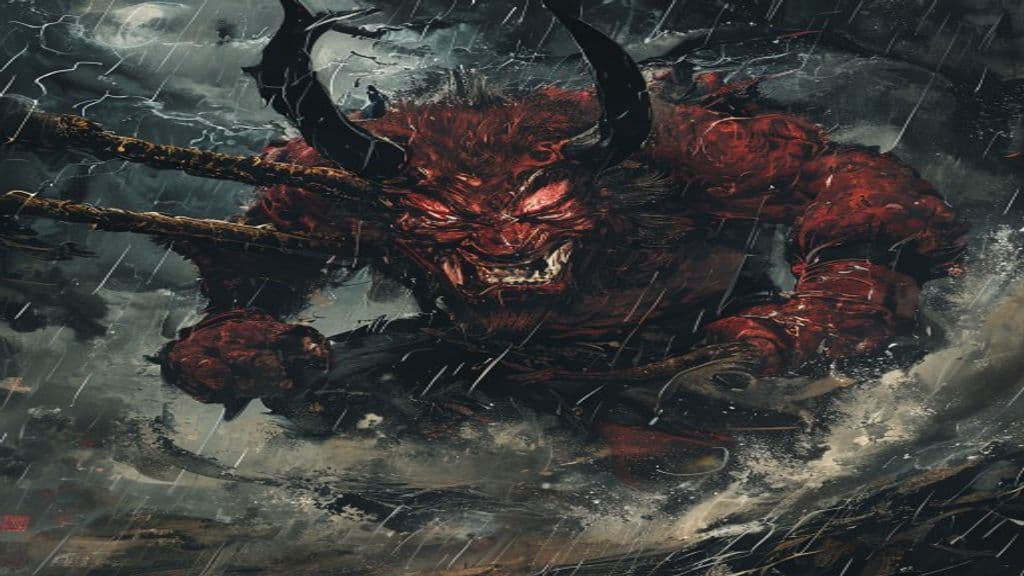
Oni
Powerful supernatural beings of Japanese folklore — associated with misfortune, disease, and the punishment of sinners in hell. Fearsome, often depicted as guardians of the underworld.
Ianeira
Ianeira (Ancient Greek Ἰάνειρά / Ianēra) is a name attested in Greek mythic onomastics applied to multiple female figures — chiefly an Oceanid and a Nereid — who appear as members of watery retinues and as an otherwise unattested marital name in heroic genealogies. The surviving evidence consists of brief catalogic listings and attendant-group appearances rather than an individuated cult-figure or a distinct set of powers or rites.
Iapetus
Iapetus (Iapetos, also spelled Japetus or Japetos) is a Titan in Greek mythological genealogy, son of Uranus (Sky) and Gaia (Earth), primarily attested as the father of Atlas, Prometheus, Epimetheus, and Menoetius. The surviving material presents him chiefly as an ancestral figure within the older, pre‑Olympian generation of deities rather than as an actively characterized deity with a distinct portfolio or cult.
Iapyx
Iapyx is a mythic human healer of the classical Greco‑Roman corpus, presented as a favored attendant of Apollo who practices the healing arts and, in some traditions, as an eponymous founder of Apulia. The name also appears separately in poetry as a minor wind.
Iarbas
Iarbas is a legendary North African/Libyan king or princely founder-figure preserved in Greco-Roman literary tradition. Presented as a son of the North African god Ammon (Jupiter-Hammon), he functions as a dynastic ancestor and cult-founder in accounts that also cast him as a suitor and political rival in the Aeneid-cycle narratives (notably as a rejected suitor of Dido).
Iasion
Iasion is a figure from Greek mythic tradition portrayed as a mortal culture-hero associated with the founding or transmission of secret/initiation rites (notably the Samothracian mysteries) and best known as a consort of Demeter and father of Plutus in several classical accounts. Traditions disagree on his fate, ranging from death by Zeus' thunderbolt to survival into old age as Demeter's husband, and some later or variant accounts link him to Cybele and the Corybantes.
Iasus (Iasius)
Iasus (Ancient Greek: Ἴασος / Ἰάσιος) is a personal name borne by multiple distinct figures in Greek myth and genealogies — kings, fathers of heroes, a participant in contests, and one attested among the Dactyli/Curetes — rather than a single unified supernatural entity. The bearers of the name function as onomastic nodes linking local traditions (Argos, Arcadia, Cyprus, Orchomenus, Trojan theatre) within the heroic-mythic timeline.
Iblis
The primordial deceiver in Islamic theology; a jinn who refused God's command to bow before Adam and was expelled from heaven. The source of all temptation and whispered suggestion.
Ibong Adarna (Adarna Bird)
A magical legendary bird from an early 19th‑century Filipino corrido/epic (Ibong Adarna) whose song, droppings, and capture drive a quest narrative: its song induces sleep, its droppings petrify unwary listeners, and bringing the bird is the cure for a king's malady.
Icarius of Sparta
Icarius of Sparta is a mortal figure in Greek mytho-historical tradition: a Spartan king/prince best known as the father of Penelope, wife of Odysseus. He appears in epic and genealogical accounts to situate Penelope within Spartan royal lines and to link Sparta with the Ithacan cycle of the Odyssey.
Icaunis
Icaunis (Dea Icaunis) is the localized Gallo‑Roman goddess of the river Yonne (ancient Icauna), known from a single inscription found at Auxerre in Burgundy. She exemplifies the widespread Roman‑era practice in Gaul of venerating rivers and other natural features as female divine figures.
Idas (son of Aphareus)
Idas is a Messenian prince and heroic figure in Greek myth remembered as an Argonaut, a hunter in the Calydonian Boar hunt, and, in later summaries, a mortal who came into contention with the gods. He is described in modern summaries as 'keen and spirited' and figures among the pan-Hellenic roster of heroes rather than as a supernatural being.
Ide
Not attested as a supernatural entity in the provided sources. The term 'Ide' in the supplied materials appears as a Wikipedia disambiguation headword, a toponym for a village in Devon, England, and as the acronym 'IDE' in modern computing contexts (Integrated Development Environment) or as part of archival filenames.
Community Record
- [1]Ibaraki-dōji (Wikipedia). Wikipedia article 'Ibaraki-dōji' (summarizes multiple tradition variants, appearance, role as an oni, relation to Shuten-dōji, Settsu and Echigo versions)wiki
- [2]Wikidata: Ibaraki-dōji. Wikidata entry classifying Ibaraki-dōji as an oniother
- [3]Sketch of Ibaraki-dōji (Shibata Zeshin) — Cleveland Museum catalog (Archive.org). Cleveland Museum preparatory sketch description: depicts the demon disguised as an aunt transforming back into demon form while reclaiming a severed limbother
- [4]Watanabe no Tsuna (Wikipedia). Article on Watanabe no Tsuna; associated with the arm-severing episode involving Ibaraki-dōji in tale cycleswiki
- [5]Legends of Watanabe no Tsuna: The Original Demon Slayer (Tokyo Weekender summary). Popular summary of the Shuten-dōji cycle and the role of Tsuna and Yorimitsu in confronting oni including Ibaraki-dōjiother
- [6]Japan - Shrines and Temples: Sake Legends Temples (blog). Blog entry referencing shrine-linked legend variants that connect local shrine service and origin episodes to oni figures (used here for contextualizing shrine-origin motif)other
- [7]ASALTOMATA RADIO ROCK - SOBRE LA DOSIS 10-04-2023. Peripheral audio source that references the name Ibaraki-dōji but does not supply folkloric detail; noted in corpus inventoryother
- [8]The Next Guest (fiction references). Fictional work that references Ibaraki-dōji by name; included in source list but not used for folkloric claimsother
- [9]Oni at Rajōmon Gate (Wikidata). Wikidata entry Q11608565 'Japanese legendary creature'.wiki
- [10]Rashōmon Gate (Daruma Pilgrim blog). Daruma Pilgrims in Japan blog, 'Rashōmon Gate'.folk
- [11]Konjaku Monogatari-shu: Supernatural Creatures and Order (Mori Masato). Mori, Masato. 'Konjaku Monogatari-shu: Supernatural Creatures and Order' (scholarly article excerpt).academic
- [12]Japan supernatural :: Art Gallery NSW. Art Gallery of New South Wales, 'Supernatural' exhibition text.other
- [13]Japanese mythology & folklore (WordPress). JAPANESE MYTHOLOGY & FOLKLORE WordPress site, contextual material (e.g., Namahage reference).folk