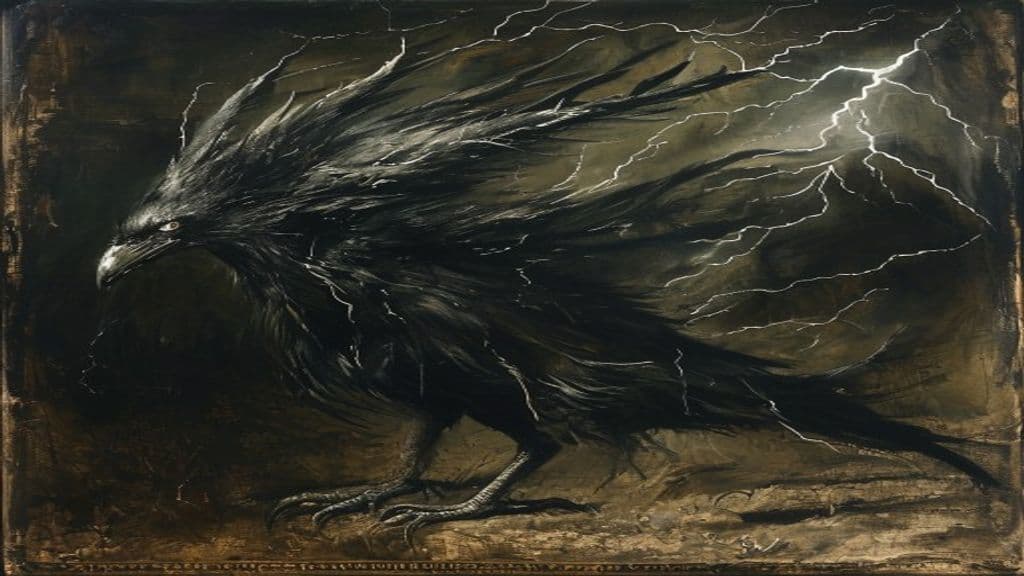
The provided sources do not record a detailed traditional origin narrative for the Impundulu. What is attested in the available material is that the creature is part of Zulu folklore and is recognized more broadly within Nguni cultural contexts (with one secondary account also naming Xhosa and Pondo). Ethnographic, linguistic, or ritual origins (for example, ancestral, elemental, or witch‑familiar status) are not documented in the supplied sources and therefore cannot be reliably described here.
Sources consistently identify the Impundulu as an avian creature and translate its name as "lightning bird," indicating a close association with lightning or storm phenomena. Modern visual representations and fan art sometimes reimagine the creature in monstrous or dragonlike forms, but the supplied materials do not provide traditional, detailed physical descriptions (such as size, plumage, or other specific traits).
The sourced material links the Impundulu to lightning by name and describes it in secondary commentary as a "formidable and fear‑inducing" supernatural being. Beyond the general association with lightning and the characterization of being fearsome, the provided sources do not document specific traditional powers, behaviors, or capabilities (for example, explicit feats like summoning lightning or particular feeding habits) and thus such specifics are not asserted here.
Weaknesses
- otherNo documented weaknesses in provided sources
Wards
- otherNo documented wards or protective measures in provided sources
Inkanyamba
A serpent-like water-and-storm spirit in southern African (principally Zulu and Xhosa) oral tradition tied to particular deep pools, rivers, and waterfalls. Folklore associates the inkanyamba with tornadoes, seasonal storms, rain and fertility, and with occasional predation on people and animals.
Mamlambo
Mamlambo is a southern African / Zulu river-deity or water spirit figure described in modern sources as a large, hybrid aquatic monster associated both with deadly attacks attributed by villagers and with themes of seductive wealth similar to Mami Wata. High-profile press reports from 1997 linked mamlambo to multiple deaths at the Mzintlava River near Mount Ayliff in the Eastern Cape.
Tokoloshe (Tokolosh)
A diminutive non-human spirit in Nguni and broader Bantu-speaking Southern African traditions, frequently portrayed as a dwarf-like, sometimes hairy water spirit used by malicious people to harass, frighten, or harm others. It functions both as a bogeyman for social discipline and as an explanatory agent for unexplained illness and death, and communities invoke traditional healers or pastors with an apostolic calling to counter it.
Imbrus
Imbrus (Ancient Greek: Ἴμβρος) is an Egyptian prince in Greek mythology, one of the sons of King Aegyptus. He married the Danaid Euippe and was slain on his wedding night along with most of his brothers on the orders of Danaus; Lynceus is named as the sole surviving brother in the cited accounts.
Imbulu (Mbulu)
Imbulu (also spelled Mbulu) appears in Bantu-language material as a 'fabulous creature' that, in the surviving excerpt, overtakes a girl traveling between settlements. The available sources are fragmentary and provide only a brief narrative mention without detailed attributes, rituals, or cosmological placement.
Imhotep
Imhotep was a historical Old Kingdom Egyptian official (chancellor to Pharaoh Djoser) whose memory was gradually glorified and by the Late Period and Ptolemaic era had been assimilated into Egyptian cult as a deified patron of medicine, wisdom, architecture, and scribal arts. He functioned as a non-royal cult deity centered at Memphis and was syncretized with gods such as Thoth and equated by Greeks with Asclepius.
Imp
An imp is a small supernatural being in European folklore, typically characterized as a mischievous, lesser spirit or attendant rather than a major deity. Traditionally associated with pranks and household or local disturbance, the concept shifted over time toward associations with familiars and infernal attendants in Christianized contexts.
Impi ya Moya (Ghost Warrior)
No documented information on an entity named Impi ya Moya appears in the supplied sources. The available excerpts do not describe such a spirit, its attributes, or its role in Southern African traditions.
Imra
Imra (Kati: Imro) is the chief creator deity in pre-Islamic Nuristani religion who was believed to have created the earth and, by his breath, the other main deities of the pantheon; he also functions as guardian of the subterranean gates of the dead, preventing the return of the dead to the living.
Imsety
Imsety is one of the Four Sons of Horus in ancient Egyptian religion, a mummiform, human-headed funerary deity invoked to protect the viscera of the deceased and to secure bodily wholeness in the afterlife. He commonly appears on canopic-jar lids and amulets and is named in funerary spells and ritual contexts tied to mummification and burial.
Imugi (proto-dragon)
Imugi (이무기; also transcribed Imoogi) is a Korean folkloric proto‑dragon — a large serpentine, aspirant creature described in modern summaries as a 'lesser dragon' that may become a true Korean dragon through a transformative act.
Imzuanna
Imzuanna (also attested as Ninzuanna) is a Mesopotamian city goddess attested from the Ur III through Neo‑Babylonian periods. She functions mainly as the consort of Marad's tutelary god Lugal‑Marada, appears in offering lists, lamentation literature, and ritual corpora (notably Šurpu), and is otherwise sparsely attested in the surviving record.
Community Record
- [1]Lightning bird (Wikipedia). "The lightning bird or impundulu or thekwane is a creature in the folklore of the Zulu people."wiki
- [2]Wikidata: Lightning Bird. Structured data entry for Lightning Bird / Impunduluother
- [3]Impundulu : The Lightning Bird - Mythlok. Secondary site: "The Impundulu, translated as the 'lightning bird' in Zulu, emerges as a formidable and fear-inducing entity within Zulu and other Nguni cultures, including Xhosa and Pondo."folk
- [4]African Thunder Clap (Impundulu as Dragon species) — art upload. Contemporary artwork portraying Impundulu in a dragonlike / monstrous visual modeother
- [5]Discover the World's Most Terrifying Horror Cryptids. Modern popular-culture listing that includes Impundulu among terrifying cryptids and mythic creaturesother