
The name Iphianassa originates in ancient Greek linguistic elements meaning 'strong' (īphi-) and 'queen' or 'lady' (-anassa), and it appears across classical catalogues and genealogies as the proper name of multiple women rather than a single unified mythic being. Classical lists and literary repertories record an Iphianassa among the fifty Nereids (the daughters of Nereus and the Oceanid Doris), placing one bearer of the name within the marine divine family of sea-nymphs (catalogued in poetic and mythographic sources summarized in the attestation list). Other genealogical narratives assign the name to mortal royal figures: one tradition names Iphianassa as consort of King Endymion of Elis and mother of Aetolus; another identifies her as one of the three daughters of the Argive king Proetus who were struck with madness and later purified by the seer Melampus, after which she is said to have married Melampus; yet another attestation lists an Iphianassa as a daughter of Agamemnon and Clytemnestra—an identification presented as possibly identical with Iphigenia in some summaries of the Atreid cycle. A final minor attestation records an Iphianassa as mother of Menalces by Medon of Cilla, whose son was slain by Neoptolemus. These origin-place attestations come from classical catalogs, mythographic summaries, and modern reference compendia that compile the disparate uses of the name rather than narrate a single birth-myth for one continuous entity (see sources).
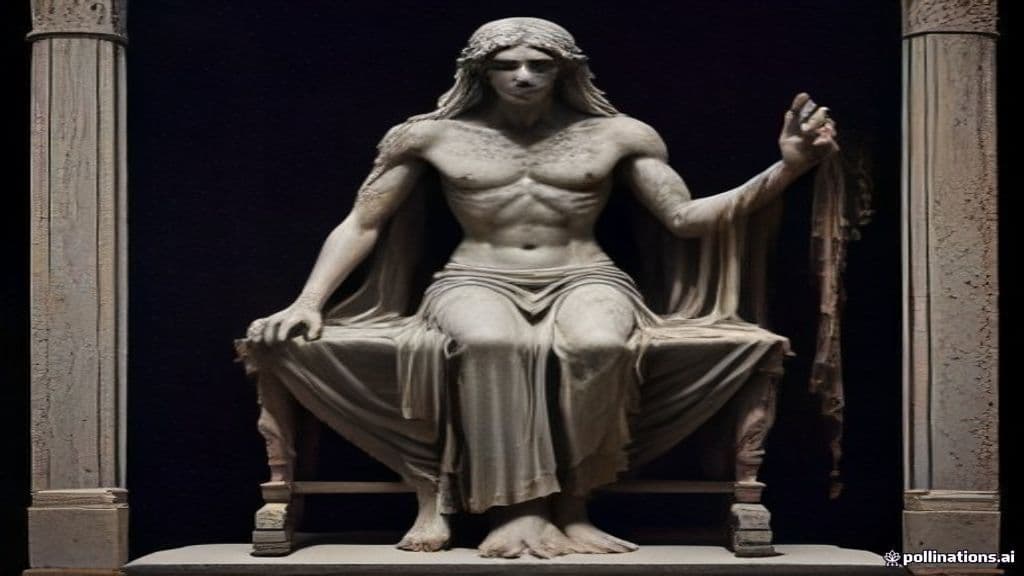
No single, consistent physical description is supplied for 'Iphianassa' across the sources because the name designates multiple personae in differing categories. In the literary catalogs where she appears as a Nereid, she is listed among the fifty marine nymph daughters of Nereus and Doris and thus would inherit the general poetic iconography of Nereids—graceful sea-nymph attendants appearing in maritime scenes—although the classical lists and summaries that name her do not attach any distinctive epithet or visual attribute unique to her (the Lucian dramatis personae listing and other catalogues corroborate her inclusion without descriptive detail). As the mortal consort or princess in the various genealogies (Endymion’s wife, one of the Proetid daughters, Agamemnon’s possible daughter, or mother of Menalces), sources present her simply as a royal or familial woman in the appropriate narrative context; those attestations likewise do not provide particular bodily or costume details. The absence of individualized iconography in the provided material is itself salient: the classical sources record her name and relational status but not an iconographically distinct portrait.
Because 'Iphianassa' functions as a name borne by different characters rather than a single supernatural office, there is no coherent list of powers or abilities attached to the name across sources. Where the name attaches to a Nereid, the bearer belongs to the class of sea-nymph daughters of Nereus and Doris who in epic and poetic convention operate as marine attendants and minor sea-deities (this is an implicit, generic capability reflected by her inclusion in Nereid catalogues). In the Proetid narrative, Iphianassa (one of the daughters of Proetus) undergoes madness and is subsequently 'purified' by the seer Melampus; this attestation locates agency in the healer/seer rather than attributing supernatural agency or magic to Iphianassa herself, though the story does place her within motifs of divine or mantic affliction and ritual cure. The possible identification with Iphigenia would place that bearer in the tragic role of a sacrificial princess within the Atreid cycle, but the provided summaries emphasize that this identification is tentative rather than definitive. Thus the sources support only generic Nereid-associated behaviors (sea-attendant role) and narrative roles for mortal Iphianassas (afflicted royal, bride/consort, mother) rather than specialized powers or a unified supernatural portfolio.
Weaknesses
- otherno specific weaknesses attested
Wards
- otherno traditional wards attested; healing/purification by Melampus is the only ritual-like intervention recorded
Community Record
- [1]Iphianassa — Wikipedia. Wikipedia contributors, 'Iphianassa,' Wikipedia, The Free Encyclopedia.wiki
- [2]Iphigenia — Wikidata. Wikidata entry for Iphigenia (used to indicate the linked Atreid/Iphigenia tradition noted alongside Iphianassa).other
- [3]The Dialogues of the Sea-Gods (Lucian) — LibriVox / Archive catalog entry. Archive.org catalog entry for Lucian's Dialogues (dramatis personae includes an Iphianassa among sea-god related characters).literary
- [4]Agamemnons Tod - Gerhard Hauptmann (1946) — Archive catalog entry. Archive.org program notes and synopsis referencing the prominence of the Iphigenia/Iphianassa strand within the Atrid tragic cycle in modern dramatic reception.literary