Iphitus is presented in Greek mythographic tradition as a son of King Eurytus of Oechalia and brother to Iole. Some genealogical accounts pair him with mothers named in differing traditions (e.g., Antiope/Antioche in some lists), and certain catalogues of heroic figures include Iphitus among the Argonauts. In the sequence of narratives connected to Heracles, a dispute over Iole and stolen cattle leads to a confrontation: Iphitus seeks or defends against Heracles (in literary and visual accounts), and during an episode of Heracles' madness or uncontrollable rage Heracles kills Iphitus. This killing functions in the cycle as the precipitating offense that obliges Heracles to seek formal absolution — according to mythographic summaries an oracle prescribes that Heracles sell himself into servitude for three years and give the proceeds to Eurytus, after which he is purchased by Omphale. Variants of the tale appear across epic, tragic, and later mythographic sources, but the core elements — Iphitus' kinship to Eurytus and Iole, his death at Heracles' hands, and the consequent demand for purification or atonement — are constant in the supplied materials.
Ancient sources and the supplied materials give no detailed physical description of Iphitus (no measurements, clothing specifics, or unique marks). He is identified by social role and kinship — an Oechalian prince, son of Eurytus and brother of Iole — and in narrative and iconographic traditions appears as a named noble of the heroic generation rather than as an individually fleshed-out physical type.
No supernatural powers or magical abilities are attested for Iphitus in the provided sources. He is portrayed as a mortal member of the heroic-age nobility; some catalogues list him among the Argonauts, which situates him within the cohort of heroic companions but does not ascribe explicit extraordinary faculties. Narratively he acts as defender or seeker (sources note he 'defended [Heracles] and went in search of [his] cattle' in some visual-tradition descriptions) and chiefly functions as a named victim whose murder has legal, social, and ritual consequences within the mythic economy.
Weaknesses
- conditionmortal vulnerability
Wards
None recorded.
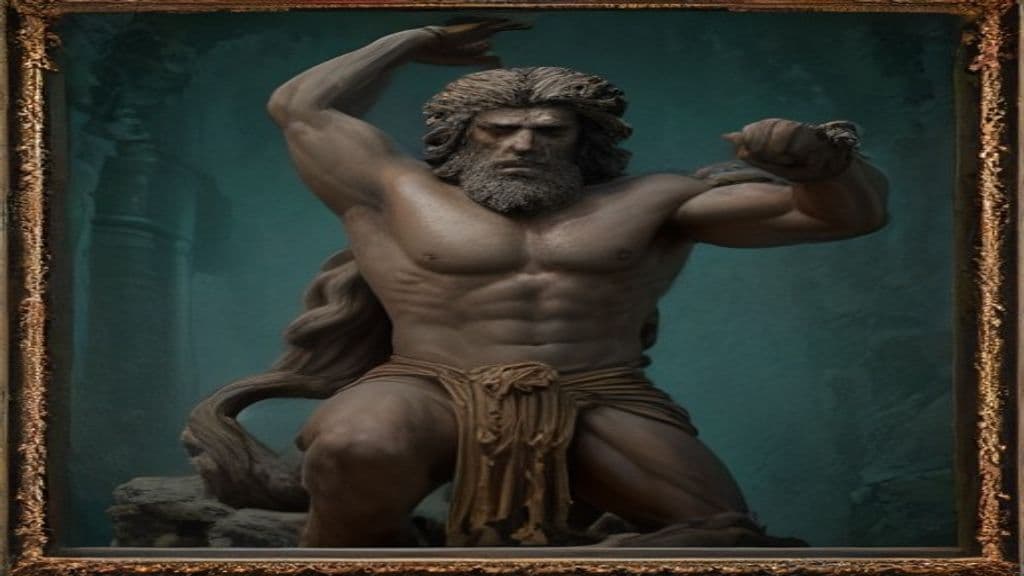
Heracles
Heracles is the greatest hero of Greek myth whose career bridges mortal hero-cult and full divinization. Celebrated for his Twelve Labours, martial prowess, and travels between the mortal world, the underworld, and Olympus, he functioned as a civic patron, ancestor of royal lines (the Heracleidae), and object of cult that treated him both as chthonic hero and as god.
Argonauts
A band of human heroes in Greek myth who sailed aboard the ship Argo under Jason to Colchis to retrieve the Golden Fleece. Their identity is defined by membership in the celebrated voyage and by shared heroic lineages; membership lists and details vary by source.
Community Record
- [1]Iphitus (son of Eurytus) — Wikipedia. Wikipedia entry 'Iphitus (son of Eurytus)' summarizing mythographic traditions including his killing by Heracles.wiki
- [2]Labors Legacy (Apollodorus paraphrase) — Archive LP0051. Labors Legacy paraphrase of Apollodorus: account that Heracles killed Iphitus, sought absolution, and was told by an oracle to sell himself into slavery for three years and give the money to Eurytus; subsequently purchased by Omphale.literary
- [3]The Argonauts Assembled, from The Fables of Hyginus — Archive LP0078. Catalogue material including lists that in some traditions include Iphitus among the Argonauts.literary
- [4]Lucas Cranach — 'Hercules at the Court of Omphale' (catalog note). Catalog description referencing a painting tradition: Iphitus defended the king and sought Hercules and the cattle; Hercules, in an attack of madness, killed Iphitus.other
- [5]Iphitus of Oechalia — Wikipedia (general). General summary entry noting Iphitus as Oechalian prince, Argonaut, and victim of Heracles' madness.wiki
- [6]Iole — Wikipedia. Contextual material linking Iphitus to his sister Iole and the dispute between Eurytus and Heracles that precipitates the episode.wiki