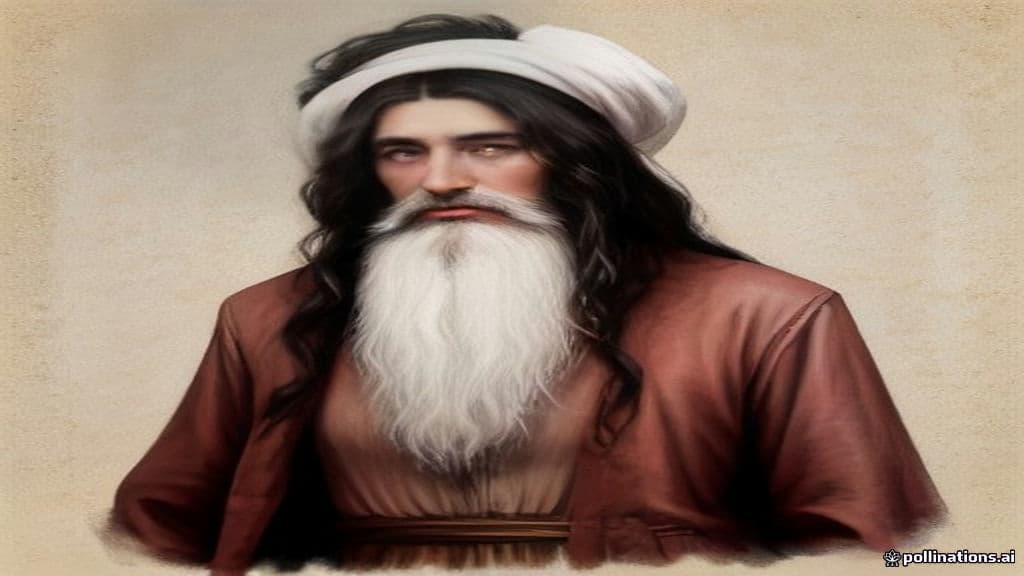
Sources present Ishmael ben Fabus as a historical member of the priestly elite rather than a mythic or supernatural origin. He is situated within the hereditary Temple priesthood of Second Temple Jerusalem and appears in texts that record the sequence of high priests and their cultic duties; no mythological birth or supernatural origin is ascribed in the cited materials.
The available sources do not supply a detailed physical description beyond a later evaluative remark preserved in tradition: he is said to have been "the handsomest man of his time, whose effeminate love of luxury was the scandal of the age." As High Priest he would be understood to have worn the priestly vestments appropriate to his office when officiating, but the primary attestations focus on his administrative and ritual role rather than physical detail.
As Kohen Gadol Ishmael ben Fabus's authorities and functions were institutional and ritual: officiating at high-level Temple rites (explicitly recorded as preparing the red heifer whose ashes were used for purification), adjudicating and implementing ritual procedure, and exercising the administrative prerogatives of the high priesthood. Rabbinic anecdotes (Tosefta Parah 3:6 summary) record a procedural decision he made regarding preparation of two red heifers and his subsequent concession when corrected, indicating active ritual decision-making subject to communal halakhic scrutiny. Sources also record social criticisms of his household's conduct in extracting priestly dues and of his luxurious lifestyle.
Weaknesses
- conditiondependence on political appointment and contested priestly succession
Wards
None recorded.
Community Record
- [1]Ishmael ben Fabus - Wikipedia. Wikipedia article 'Ishmael ben Fabus' (summary citing Mishnah Parah 3:5; Tosefta Parah 3:6; historical lists).wiki
- [2]Wikidata: Ishmael ben Phabi (Q2664540). Wikidata entry for Ishmael ben Phabi (identifier Q2664540) referenced in compiled lists.wiki
- [3]Mishnah, Parah 3:5 (attestation summarized). Mishnah Parah 3:5 as summarized in secondary sources noting that Ishmael ben Fabus officiated over preparation of the red heifer.other
- [4]Tosefta, Parah 3:6 (attestation summarized). Tosefta Parah 3:6 summarized in secondary sources recording the anecdote that Ishmael prepared two red heifers and was corrected regarding repetition after sunset.other
- [5]Lists/timelines of High Priests (secondary compilations). Secondary online lists and timelines compile sequences of high priests and date Ishmael ben Fabus's tenure to c. 15–16 CE and sometimes identify a possible later reinstatement c. 58–62 CE (noted as uncertain in the summaries).other
- [6]Valerius Gratus - Wikipedia. Wikipedia entry for the Roman procurator Valerius Gratus, cited in summaries as the official who appointed Ishmael ben Fabus c. 15–16 CE.wiki