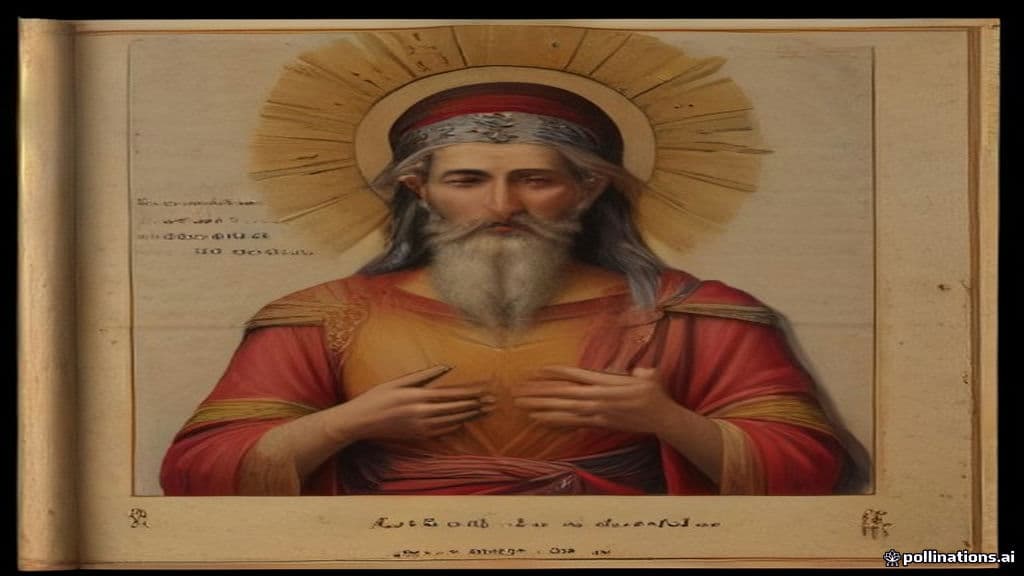
Jaddua appears in genealogical and historiographical material as the son of Johanan and as a successor in the post‑exilic high priestly lineage. Sources situate him in the late Persian period, with later narrative traditions linking him to events at the time of Alexander the Great; these narratives present divine communication (a dream) as prompting communal action under his leadership.
The supplied sources do not record a physical description of Jaddua. Accounts focus on his office, genealogical placement, decisions as high priest, and the actions he directed rather than on his personal bodily appearance.
As high priest Jaddua exercised institutional religious authority: presiding over temple rites, adjudicating priestly discipline (for example in the dispute over his brother Manasseh's foreign marriage), and directing communal ritual behavior. In later historiographical traditions (Josephus; Samaritan retellings) he is also depicted as a recipient and interpreter of a divine dream that authorized protective communal performance when Alexander the Great approached, enabling diplomatic accommodation and the securing of communal rights.
Weaknesses
- conditionnot applicable (human officeholder rather than supernatural entity)
Wards
- ritualEnforcement of priestly purity and restriction from altar access
- ritualDream‑prompted communal display: decorating the city with wreaths and greeting a visiting ruler with priests and populace dressed in white
Community Record
- [1]Jaddua - Wikipedia. Wikipedia, 'Jaddua' article (summary treating genealogical attestations and traditions).wiki
- [2]Wikidata entry for Jaddua. Wikidata item Q2723012 (chronological placement and identifiers).other
- [3]JADDUA - JewishEncyclopedia.com. Jewish Encyclopedia entry on Jaddua (historical and textual discussion).literary
- [4]The Samaritan Temple (newsletter summary). Samaritan tradition summary describing the dream and ritual greeting narrative.folk
- [5]Abarim Publications: Jaddua (name discussion). Name discussion and Hebrew transliteration commentary (notes on onomastic placement).other
- [6]Archive: A class-book of New Testament history (references). Historical secondary discussions referencing post‑exilic priesthood and chronology.other