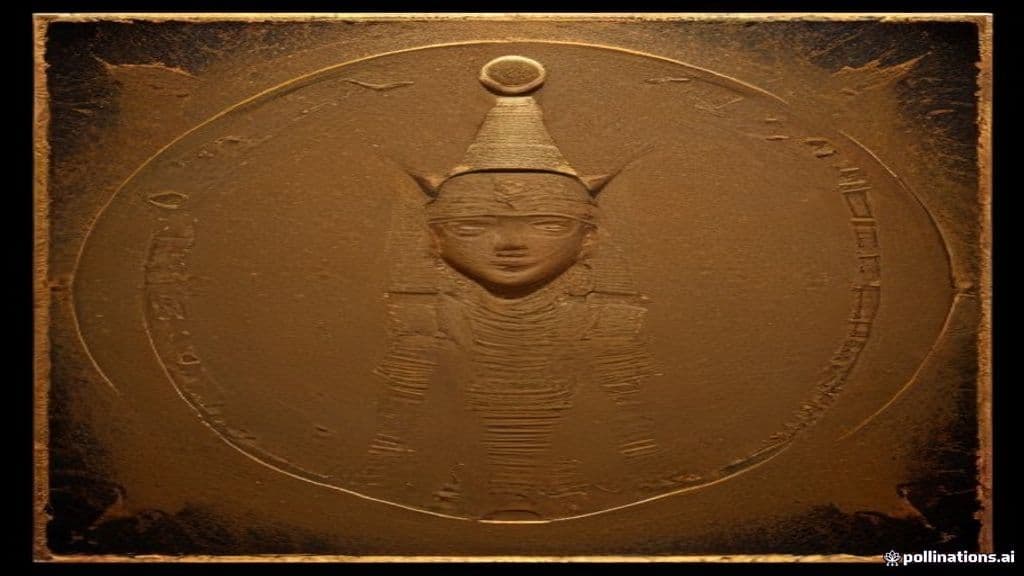
The supplied inscriptions do not provide a standalone mythic origin for Kamutef. In the textual and material record cited, the name Kamutef appears as a title or aspect appended to Amun/Amun‑Ra and is used within temple formulae and iconographic scenes that link divine maternity, royal wifehood, and creator epithets (for example, an arc sistrum inscription addressing god’s mother of Kamutef and ‘‘The-one-who-creates-what-is’’). Thus Kamutef’s 'origin' in these sources is theological: a cultic epithet embedded in the vocabulary of creation and kingship associated with Amun rather than an independently narrated origin myth.
The sources do not furnish a distinct physical description of Kamutef separate from Amun/Amun‑Ra. Visual and inscriptional evidence shows the name attached to depictions of Amun/Amun‑Ra (e.g., an archival image titled 'Darius I offering lettuces to Amun‑Ra Kamutef') and appears on ritual objects such as a metal arc sistrum that bears an inscription invoking 'god’s mother of Kamutef' alongside Hathor imagery. Therefore, any appearance in the sources is mediated through Amun/Amun‑Ra iconography and temple material culture rather than an independently described form.
No specific actions, miracles, or powers unique to Kamutef are recorded in the provided materials. Within the theological language preserved on ritual objects and inscriptions, Kamutef is associated with creative and royal dimensions of divinity — the sistrum text connects the phrase to creation ('The-one-who-creates-what-is') and to divine maternity and queenship ('god’s mother of Kamutef,' 'great royal wife') — indicating a role in the ideology of cosmic generation and legitimization of royal authority rather than enumerated supernatural feats.

Apsara
Celestial dancers and water nymphs of Hindu cosmology — beautiful semi-divine beings who dance at the court of Indra and, by his command, descend to earth to distract sages from excessive asceticism.
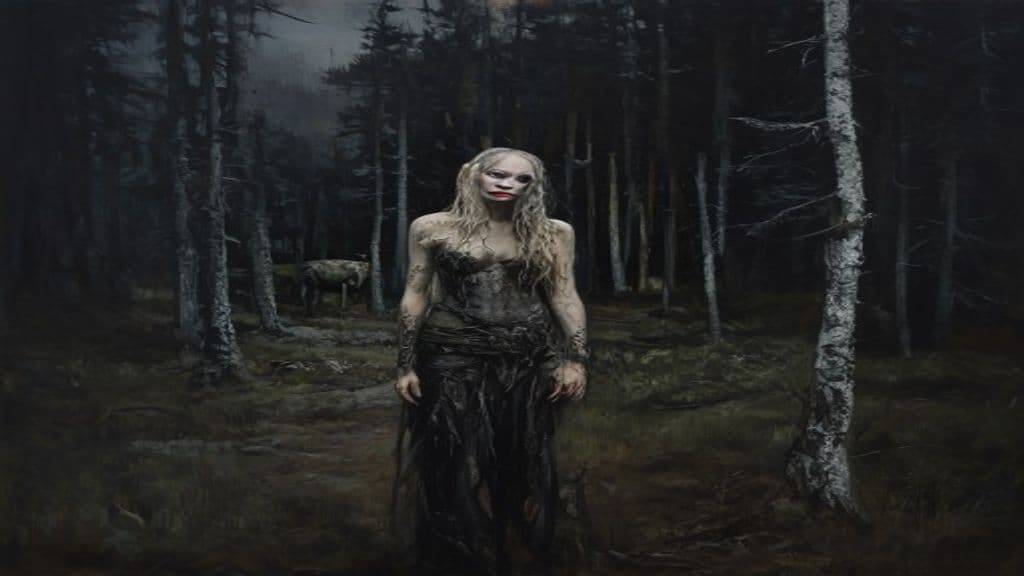
Huldra
A seductive forest spirit of Scandinavian folklore — beautiful from the front but with a cow's tail or hollow back — who lures men into the wilderness, sometimes to their ruin.
Community Record
- [1]Amun (Wikipedia). Wikipedia, article 'Amun'.wiki
- [2]Wikidata: Kamutef. Wikidata entry Q1723406 for Kamutef.other
- [3]Darius I offering lettuces to Amun‑Ra Kamutef (Archive item). Archive item titled 'Darius I offering lettuces to Amun‑Ra Kamutef.'other
- [4]Arc Sistrum (MMA object description). Arc sistrum description with inscription invoking 'god’s mother of Kamutef' and Hathor titulary.other
- [5]The Endlos Museum — Elf (Archive collection). Archive collection containing related museum/object records referenced in the notes.other