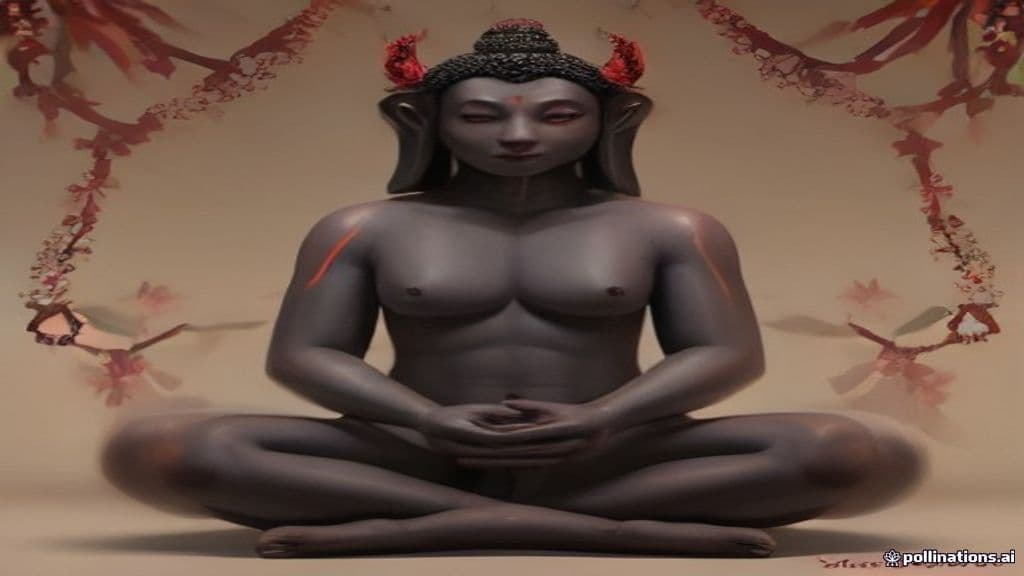
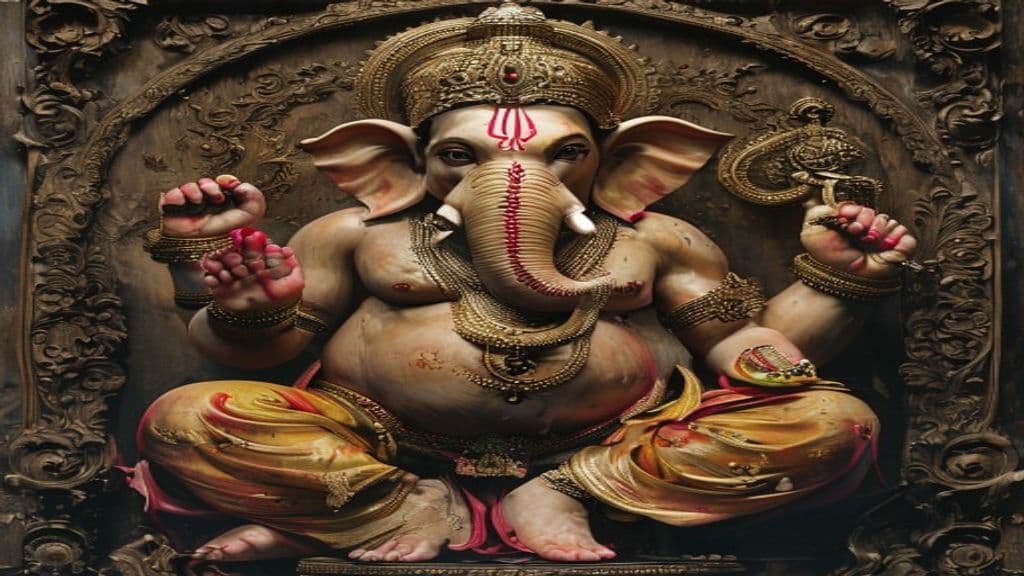
The figure derives from Indian Vinayaka / Ganapati traditions and early Buddhist references to vinayakas as a class of obstacle-producing beings. In East Asian and Japanese esoteric transmission Vinayaka/Ganapati was incorporated into tantric cosmology (Mahavairochana Tantra cited in Japanese commentaries) and underwent reinterpretation: where early texts depict vinayakas as demonic obstructors, tantric practice uses mantra and offerings to disperse or propitiate them. In Japan this process produced Kangiten — a being framed as both the former 'lord of obstacles' and, when ritually transformed, a 'god of bliss' and efficacious protector associated in some readings with Kannon (Avalokiteshvara) and Vairochana.
Two principal iconographic types are attested in the sources. One is a single-bodied, elephant-headed deity similar to Indian Ganapati. The more common Japanese portrayal is the dual-bodied (Sōshin) form: a male–female pair, each with elephant heads, embracing (the 'Embracing Kangiten'). Statues and images are relatively rare in Japan and often kept hidden from public view in temple settings; ritual images and rites are typically handled by qualified clergy and not displayed for lay private veneration.
Sources record two complementary functional strands. In earlier Buddhist literature vinayakas are obstacle-producers—beings who create impediments to ritual and practice. Esoteric tantric sources and Japanese reception describe the vinayaka/Kangiten as transformable through mantra and offering into a powerful protector who 'removes all impediments' and grants favors, prosperity, and fertility. The deity is portrayed as extremely efficacious for petitioners yet ambivalent: Kangiten remains associated with base passions (kleshas), can be volatile, and requires correct ritual comportment. Some traditions describe Kangiten as a karmic guardian who watches over those bound to him from conception.
Weaknesses
- mantradispersal through mantra (as in Mahavairochana Tantra)
- ritualexpulsion or conversion by tantric ritual performed by qualified practitioners
Wards
- ritualmantra-based dispersal (Mahavairochana Tantra tradition)
- ritualritual propitiation and offerings consumed by the practitioner to convert vinayaka into an ally
- conditionesoteric specialist mediation (images kept hidden and rituals performed by qualified monks)
Community Record
- [1]Kangiten. Wikipedia, 'Kangiten'wiki
- [2]JAANUS: Kangiten 歓喜天. JAANUS entry on Kangitenother
- [3]Kankiten, Idaten, Marishiten & Other Tenbu (Deva) in Japanese Buddhist Traditions. Onmarkproductions — overview of tenbu including Kankitenother
- [4]Ganesha in Buddhism. Wikipedia, 'Ganesha in Buddhism'wiki
- [5]Protectors of Children, Goddesses of Motherhood (Onmarkproductions). Onmarkproductions — Kangiten as patron of children/fertilityother
- [6]Elephant Lore. Devdutt Pattanaik — notes on elephant-associated deities and symbolismfolk
- [7]A Japanese gANApatya text | mAnasa-taraMgiNI. Manasataramgini blog — historical notes on Japanese Ganapatya textsother