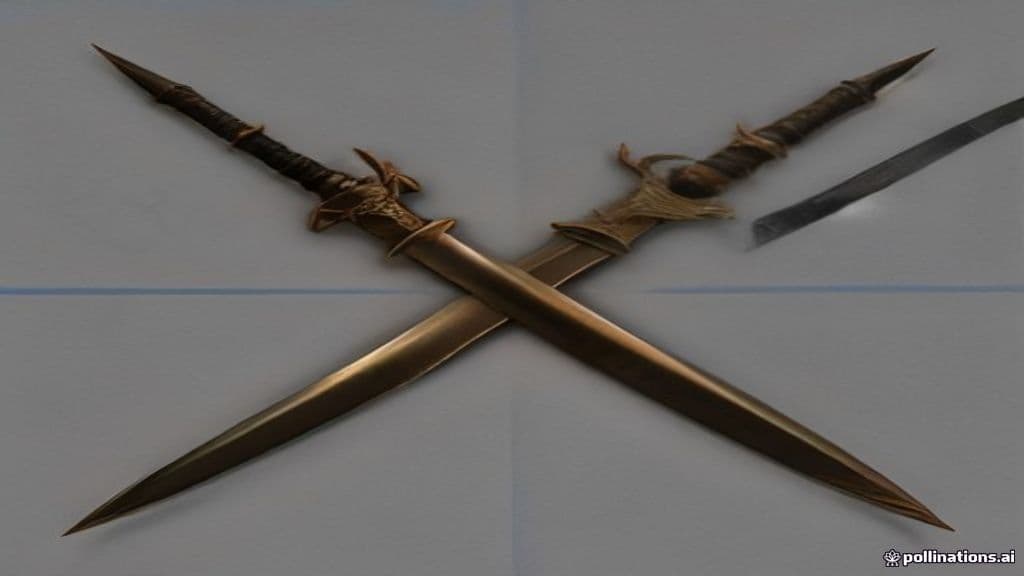
Not attested as a mythic or supernatural being in the supplied sources. The khopesh is described as a weapon style that originated in Western Asia during the Bronze Age, was introduced into Egypt in the Second Intermediate Period, and became common in the New Kingdom. The provided materials do not supply a mythological origin tale for the object itself.
Described in the sources as a sickle-like sword, the khopesh has a curved, hooked blade reminiscent of a sickle and is visually distinct from straight swords and daggers. No specific dimensions or decorative details are given in the provided excerpts. The form was also adapted iconographically—for example, rendered as a "khepesh crown" in a late-period/Ptolemaic votive relief.
As an object, the khopesh functions as a hand-held weapon developed from earlier battle-axe forms; its abilities are those of a melee arm used in combat. The supplied sources do not attribute animate behavior, supernatural powers, or independent agency to the khopesh.
Community Record
- [1]Khopesh. Wikipedia, 'Khopesh' (summary stating the khopesh is a sickle-like sword that developed from battle axes, originated in Western Asia, introduced in the Second Intermediate Period, became common in the New Kingdom and is often depicted with kings).wiki
- [2]khopesh (Wikidata). Wikidata entry summarizing the khopesh as a 'sickle-like sword of the Bronze age.'other
- [3]Les ARMES de l'ÉGYPTE ANTIQUE ! - (Feat @Le Phare à On ) CMA#3. French-language video/archive listing Egyptian weapons and treating the khopesh among maces, axes, daggers/swords, lances, etc.; identifies the khopesh as a recognizable blade type ('Le Khopesh').other
- [4]Relief of king's head in blue crown, head of child god on opposite side (MMA archive). Museum Archive note: 'A king in a khepesh crown appears on one side of this relief...'; also notes small Late Period and Ptolemaic reliefs as 'sculptor’s models / votives' linked to donation practice.other