Accounts of Arthur's origins vary across the traditions summarized in the sources. Early medieval compilations (notably the Historia Brittonum) and Welsh annals place Arthur as a leader of post‑Roman Britons who fought a series of battles (the Historia lists twelve) against Anglo‑Saxon foes; the Annales Cambriae connects him to the battles of Badon and the final battle of Camlann where he and Medraut/Mordred die. Geoffrey of Monmouth expands and reworks these traditions in a literary, quasi‑historical narrative that presents Arthur as a founder of a wide realm and situates him in a Christianized, courtly context, introducing or popularizing motifs such as Avalon, Excalibur, and Merlin. Later French romances and Malory transform and elaborate the material further, producing multiple, often inconsistent birth and early‑life episodes rather than a single canonical origin.
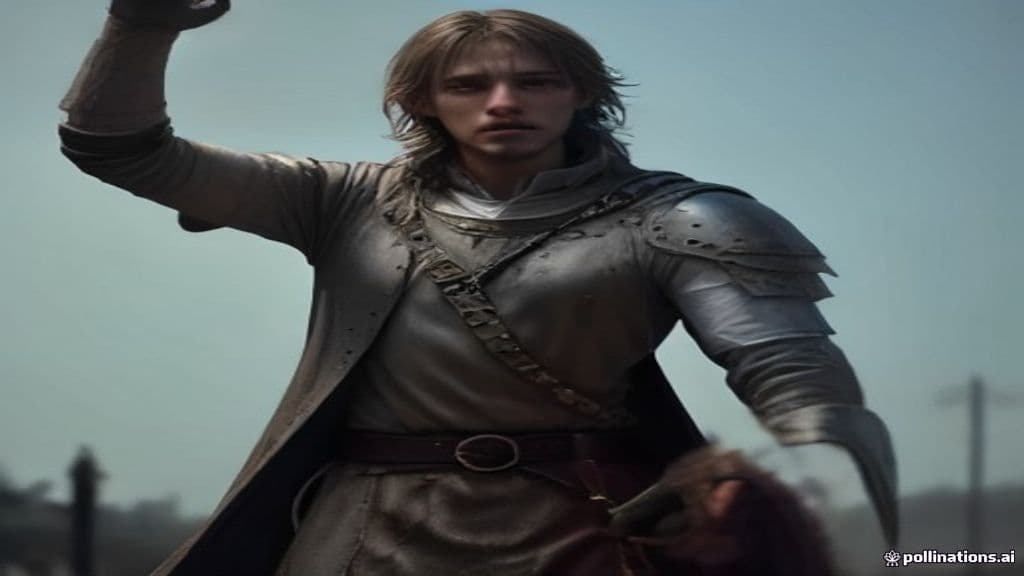
The provided sources do not supply a single, consistent physical description of Arthur. Medieval romances commonly depict him as a kingly and martial figure—appearing in courtly regalia and armour appropriate to a medieval monarch and leader of knights—but specific features (height, hair, precise dress) are inconsistent or not given in the excerpts. Thus descriptions vary by text: early Welsh material emphasizes his role as a war leader, Geoffrey and romances emphasize royal and courtly presentation, and later literature supplies episodic depictions tied to narrative needs rather than a stable portrait.
Across the corpus summarized in the sources Arthur functions primarily as an exceptional martial leader, legendary battlefield commander and royal patron. Early annalistic material credits him with military victories (the Historia Brittonum lists twelve battles and contains legendary claims of exceptional prowess at Badon) and the Annales Cambriae records his association with Badon and the fatal Camlann. Geoffrey of Monmouth and subsequent romance writers place Arthur at the center of courtly and magical narratives—surrounded by figures with supernatural agency (Merlin) and later linked by tradition to otherworldly places (Avalon) and wondrous objects (Excalibur)—but the sources caution that these associations are literary developments rather than evidence that Arthur personally possessed intrinsic supernatural powers.
Weaknesses
- conditionmortality (killed at Camlann)
- otherbetrayal by kin/ally (Medraut/Mordred causing downfall)
Wards
None recorded.
Community Record
- [1]King Arthur — Wikipedia. Wikipedia, 'King Arthur' article (summary of medieval and modern traditions, annalistic mentions, Geoffrey of Monmouth, romances, and modern reception).wiki
- [2]King Arthur — Wikidata. Wikidata entry for King Arthur (identifier and linked data about the legendary figure).wiki
- [3]King Arthur and the Knights of the Round Table — Sir Thomas Malory (Project Gutenberg). Malory, Le Morte Darthur (collected English romances consolidating many Arthurian episodes and courtly material).literary
- [4]The Legends of King Arthur and His Knights — Knowles and Malory (Project Gutenberg). Collected retellings and commentary on Arthurian stories drawing on medieval sources and later compilations.literary