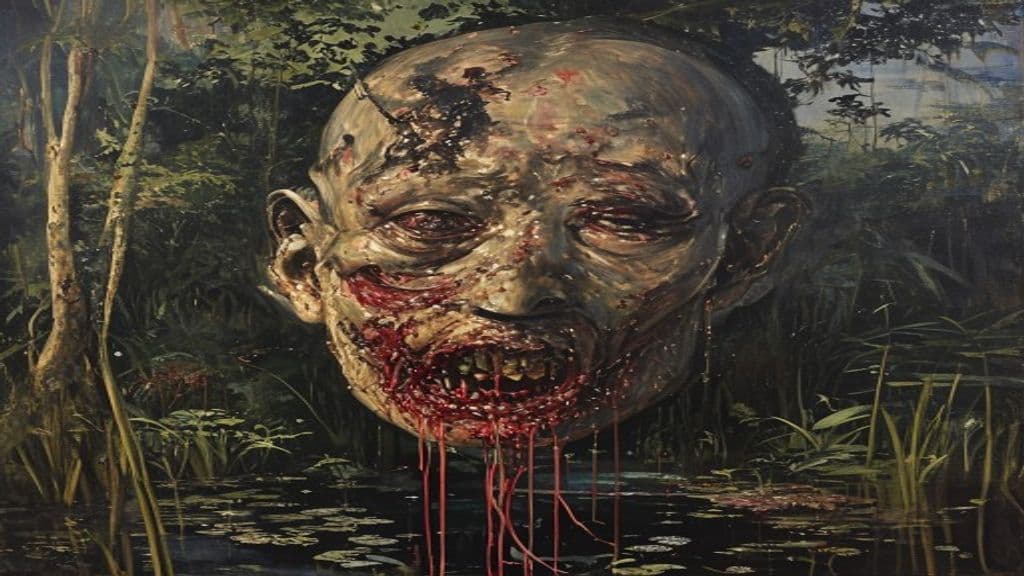
In the traditions surveyed the Krasue is most often described as a transformed or cursed human, frequently a woman, whose condition is linked in popular accounts to moral transgression, failed or misused magic, or other social sins; transmission via contact with the saliva or flesh of an existing Krasue is also reported. In Cambodian sources (Ahp/Aap) the being is explicitly described as 'half spirit and half-mortal' by day, appearing normal in daylight and detaching at night to seek food. The available sources emphasize these causes as regional/folk explanations rather than a single canonical origin narrative.
The creature is commonly described as the floating, disembodied head of a young and often beautiful woman with internal organs — heart, stomach, intestines, and sometimes lungs or liver — trailing below the neck, frequently daubed with blood and sometimes glowing. Thai ethnographer Phraya Anuman Rajadhon recorded an accompanying will-o'-the-wisp–like luminescent glow, and contemporary popular media sometimes add features such as pointed fangs or exaggerated halos; regional variants and cinematic reinventions produce variation in specific details.
Krasue and its regional analogues are nocturnal and move by hovering or flying because they lack a lower body. They are characterized by a voracious appetite for foul or raw substances: Cambodian Ahp accounts enumerate foods including blood, raw meats, corpses, feces, placentas, newborns, and livestock, while other regional traditions emphasize carrion, uncooked food or other smelly matter. Socially, women who behave oddly may be suspected of being Krasue; transformation is framed as punitive and stigmatizing in village cosmologies. The association with witchcraft and shared habitat with other local spirits (for example the Thai Krahang) is regularly noted in the sources.
Weaknesses
- otherthorns (Cambodian Ahp weakness attested in sources)
- otherguard dogs (Cambodian Ahp weakness attested in sources)
Wards
- conditioncommunity vigilance / suspicion of witchcraft (social countermeasures rather than magical rites; attested in summaries of village responses)
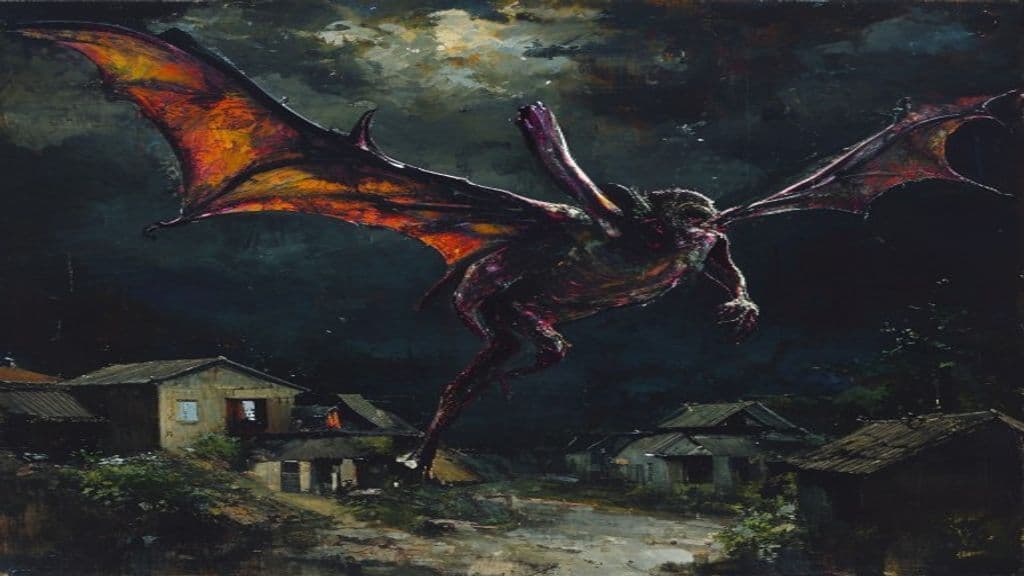
Manananggal
A terrifying Philippine vampire who severs its own upper body from its lower half at night, sprouting bat wings to fly out and feast on sleeping pregnant women's fetuses.

Nukekubi
A Japanese yōkai, typically depicted as a woman whose head detaches (or becomes free-moving on a string-like neck) at night to fly about and prey on human blood. Considered a variant of the broader rokurokubi category and attested in classical kaidan, Edo-period yōkai literature, and modern reference collections.
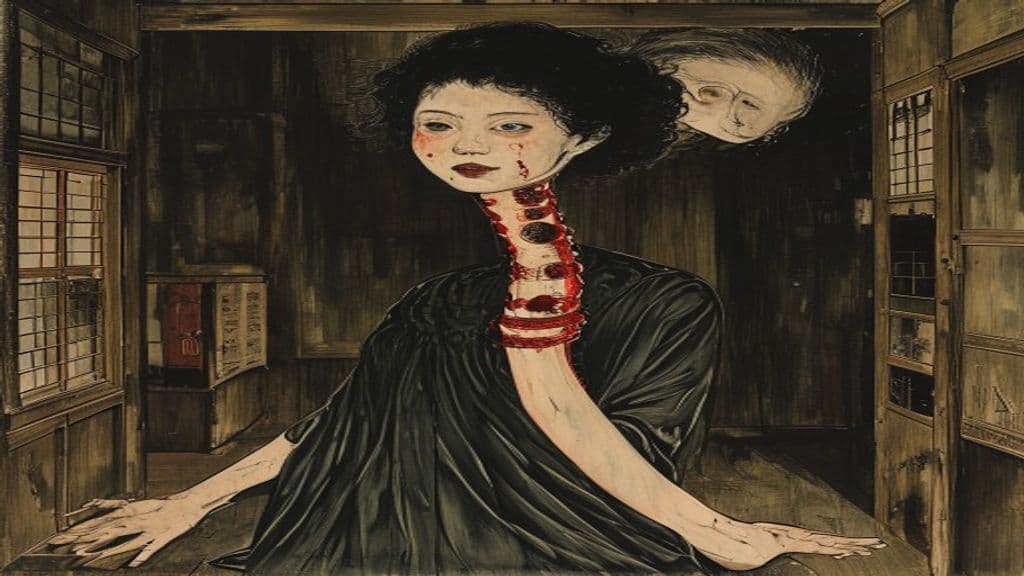
Rokurokubi
A Japanese yōkai-class apparition associated with humans (most often women) who display an uncanny bodily anomaly: either an extremely extendable neck or a head that detaches and moves independently (the latter often called nukekubi). Appears in classical kaidan collections and Edo-period encyclopedias and is variously framed in sources as a supernatural being, an illness, or the soul wandering during sleep.
Anggitay
A Philippine folkloric female equid–human hybrid often described with the upper body of a woman and the lower body of a horse. Frequently compared to the Greek centauride and sometimes presented as a female counterpart to the tikbalang; traditionally associated with an attraction to gemstones and jewelry and with a local homeland in Santo Tomas, Batangas in some accounts.
Bal-Bal
A Philippine folkloric undead/monster that steals corpses from funerals and graves and feeds on them, noted for keen scent for dead bodies, sharp claws and teeth, foul breath, and reportedly leaving a banana‑tree trunk in the coffin as a substitute for the stolen corpse.
Berbalang
The Berbalang are legendary creatures from the Philippines described in available sources as corpse-eating ghouls associated with grave-digging; some accounts also report they can fly or send a spirit to do so. Documentation is limited and drawn from summarised folkloric reports.
Bungisngis
The Bungisngis is a one-eyed giant from Philippine folklore, described as humanoid, always laughing, and possessing great strength but easily outwitted. Tales place it in specific Philippine localities and often portray it as a comic yet dangerous antagonist defeated by clever protagonists.
Cáo (Hồ ly tinh)
This entry documents the absence of information on the Vietnamese fox spirit "cáo" or "hồ ly tinh" in the supplied source set. The provided materials do not describe this supernatural figure; they instead refer to unrelated entries (the historical Cao Cao, the Chinese surname Cao, and unrelated archived web pages).
Dalaketnon
A Visayan Philippine engkanto lineage associated with Dalakit/Balete trees; portrayed as an elitist, tree‑dwelling supernatural people who host feasts, abduct humans, and bind victims by compelling them to eat enchanted black rice. Contemporary media elaborates additional powers and aristocratic styling.
Ekek
A nocturnal birdlike human predator from Philippine folklore, the Ekek (or Ek Ek) is a winged creature said to hunt at night for flesh and blood, particularly targeting sleeping pregnant women and draining fetuses with a long proboscis.
Juan Tamad
Juan Tamad (Tagalog for "Lazy Juan") is a stock character in Philippine folklore known for extreme laziness. Portrayed usually as a child (sometimes a young man), he appears in short comic or moralized tales that exemplify sloth through absurd behavior and its social consequences.
Kapre
A Philippine tree-dwelling humanoid spirit commonly described as a very tall, dark-skinned, tobacco-smoking being that inhabits large trees and wooded edges; kapres interact with humans as tricksters, companions, or retaliatory guardians of their trees. The modern folkloric figure is often linked in etymological accounts to Spanish/Arabic terms used in colonial discourse and so carries layered cultural meanings.
Lạc bird
A mythical creature in Vietnamese culture, considered the national bird of Vietnam. (Note: * Remove "national bird of Vietnam" from summary, as it only mentions the Lạc bird is considered one. * Power tier should be set to Unknown or Unspecified, as no information is available on its abilit)
Nine-tailed Fox
A long-lived fox-spirit figure from Chinese myth (九尾狐) that appears across East Asia (e.g., kitsune, kumiho). Associated with age-linked transformation, shapeshifting into humans, ambiguous morality (trickster/seducer or occasionally honorable), and in some doctrinal sources a celestial/ritual role with talismans and jiao rites.
Santelmo
Santelmo in Philippine contexts is a luminous fireball or glowing phenomenon treated variously in sources as a folkloric apparition or as a cultural interpretation of the meteorological St. Elmo's fire. It appears in popular media and folklore inventories alongside other Philippine supernatural beings, and accounts emphasize its fiery appearance and association with storms and pointed objects.
Community Record
- [1]Krasue. Wikipedia: Krasuewiki
- [2]Krasue (Wikidata entry Q2684311). Wikidata: krasuewiki
- [3]Tamnan Krasue – Constructing a Khmer Ghost for a Thai Film. Tamnan Krasue, Kyoto Review of Southeast Asiaacademic
- [4]The Malaysian breast ghost and other scary global tales | Halloween. TucsonSentinel article on regional variantsother