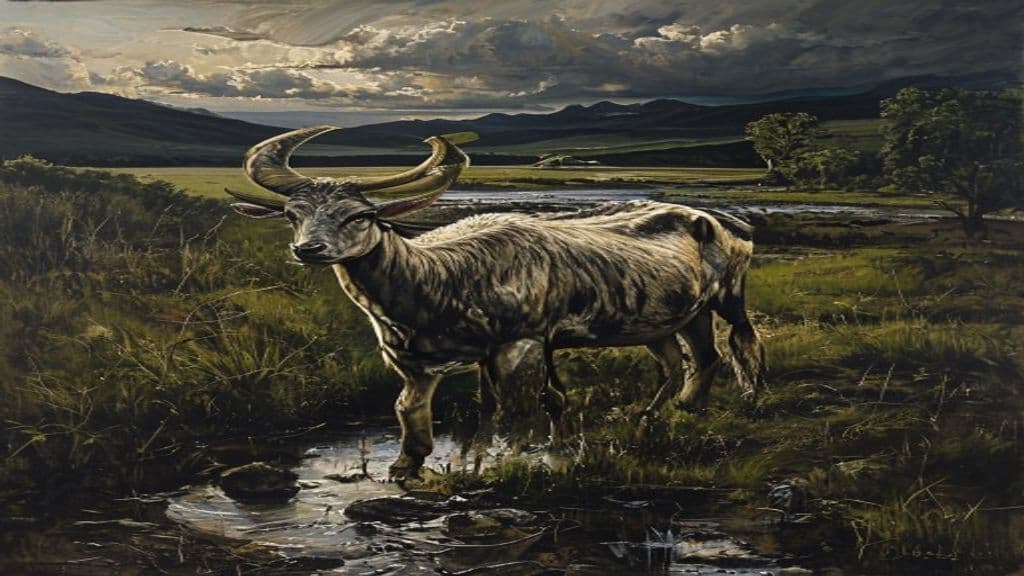
Etymology / Usage: 'La Vaca' is Spanish for 'the cow' (feminine singular). In the Bogotá example the site also bears the alternative name Techovita, identified in the source as the name of a cacique of the Muisca Confederation, indicating layered naming practices (Spanish common noun and an indigenous proper name) for the same place. The sources do not provide a mythological origin or narrative treating 'La Vaca' as a spirit or mythic being.
Geographic attestations: Humedal La Vaca (also called Techovita) is described as a small wetland in the locality Kennedy, Bogotá, Colombia, in the Tunjuelo River basin on the Bogotá savanna, covering an area of about 8 hectares. Separately, Isla La Vaca is recorded as an islet on Lake Nicaragua in the Granada Department. No physical description of a creature or supernatural entity called 'La Vaca' is provided in the sources.
Attestations / Uses: The sources show 'vaca' used in non-supernatural contexts: as a toponym for landscapes (wetland, islet), as a surname in a telephone-call archive entry (Lucas Vaca), and as a lexical item or title in recorded media (a podcast line employing 'vacă' metaphorically in Romanian; program titles such as 'El hombre de la vaca' or 'lavaca.org'). The supplied materials do not attribute any powers, behaviors, or agency to 'La Vaca'.
La Guita Xica
La Guita Xica is a Catalan mule–dragon figure tied to the Patum de Berga Corpus Christi festivities. Historically described as threatening or demonic, twentieth-century traditions reframe it as a protective festival spirit embodied by large effigies that parade and theatrically spit fireworks.
La Llorona
La Llorona is presented in the supplied source as a vengeful female ghost in Hispanic American folklore who roams near bodies of water mourning children she drowned; hearing her crying is said to bring misfortune, death, or ruin to listeners.
La Llorona
The Weeping Woman of Mexican folklore — the ghost of a mother who drowned her children and now wanders rivers and lakes, weeping for them and taking other children she finds at night.
La Patasola
La Patasola is a legendary one-legged female monstrous figure from Colombian and northern South American folk narrative who inhabits virgin forests and mountains. She appears as a beautiful woman to lure men, then reveals a single leg with a cleaved hoof and a bestial face, and is portrayed as punitive toward men who transgress social or ecological norms.
La Sayona
La Sayona is a Venezuelan popular-legend vengeful female spirit who, according to tradition, appears to men who commit infidelity. Originating in an origin-tale about a woman named Casilda, the figure functions as an avenger of wronged women and is associated with a long white underdress (the 'sayona').
La Sirène
La Sirène is a mermaid-like water spirit (lwa) within Haitian Vodou, represented in ritual art and drapo (Vodou flags) and situated in Vodou pantheon lists alongside other named lwa. She is associated with marine imagery and participates in the visual and religious culture of Haitian Vodou rather than appearing only as a folkloric sea creature.
Labasu
Labasu is a Mesopotamian malignant spirit or demon of disease attested in Sumerian–Akkadian textual tradition. It appears in medical, astrological and anti-witchcraft corpora as a named etiological agent for fever and related illnesses and commonly occurs alongside Lamashtu and Ahhazu in ritual lists and expulsions.
Labdacus
Labdacus (Ancient Greek: Λάβδακος, Lábdakos) is a legendary/mythic king of Thebes in Greek tradition. He is chiefly significant as a dynastic ancestor — grandson of Cadmus, son of Polydorus, and father of Laius — and appears in variant accounts that place his brief rule and early death within the genealogical history that leads to Oedipus.
Lacedaemon
Lacedaemon (Lakedaimon, Lacaedemon) is a mythic eponymous king in classical Greek tradition: the legendary founder whose name is given to the region and polis of Lacedaemon/Sparta. He is presented genealogically as a son of Zeus and the Pleiad Taygete and as husband of Sparta, serving an etiological function linking the city to divine ancestry.
Lacritus
Lacritus (Ancient Greek: Λάκριτος) is attested in classical sources as a historical sophist from Phaselis, best known from a forensic speech of Demosthenes brought against him concerning a disputed loan; he was a pupil of Isocrates and tutor of Archias of Thurii.
Lacus Curtius
The Lacus Curtius is a mysterious, possibly supernatural feature of the Forum Romanum in ancient Rome, characterized by a pit or pool with uncertain origins and significance. (Note: 1. Power tier should be "Primordial" since it's an enigmatic feature with unclear origins, possibly even a natural wonder that predates Roman era. 2. Abilities section should be removed or rephrased, )
Ladon
Ladon is listed in the provided sources as "one of the dragons in Greek mythology." The available materials are disambiguation-style and also show the name Ladon applied to other, distinct referents (a husband/father figure, a hunting-dog, rivers, and a French commune); the supplied excerpts contain no narrative details about the dragon Ladon.
Community Record
- [1]La Vaca (Humedal La Vaca) - Wikipedia. Wikipedia, 'La Vaca' (Humedal La Vaca / Techovita); notes location in Kennedy, Bogotá; Tunjuelo River basin; area ~8 hectares; alternative name Techovita was the name of a cacique in the Muisca Confederation.wiki
- [2]Isla La Vaca - Wikidata. Wikidata entry for Isla La Vaca, recorded as an islet on Lake Nicaragua, Granada Department, Nicaragua.wiki
- [3]#25 Bullitics cu Artur Gurău - VotemeApp: Viitorul democrației (archive.org). Archive.org item; transcript excerpt contains Romanian phrase using 'vacă' metaphorically: 'Calea ferată este o vacă care o fost mulsă...'. No supernatural description.other
- [4]03 08 Lucas Vaca Monsanto (mp 3cut.net) (archive.org). Archive.org telephone-call/audio entry titled with the personal name 'Lucas Vaca'. No folkloric description provided in the metadata.other
- [5]El hombre de la vaca 2012 16 (archive.org). Archive.org program entry 'El hombre de la vaca' / lavaca.org; title contains 'vaca' but no accompanying folkloric or supernatural description in the provided metadata.other