Within Mandaean cosmology Libat is counted among the Seven (Classical Mandaic: šuba), planetary beings who belong to the entourage of Ruha in the World of Darkness. The name Libat is derived from Akkadian Delebat (with the first syllable of the Akkadian original possibly omitted in Mandaic through analysis as the relative pronoun ḏ), showing a lexical continuity with Mesopotamian planetary nomenclature. Textual traditions—including the Right Ginza—describe Libat using the Middle Persian loanword dāiuia (from dēw), placing the planet within the corpus of underworldly or demonic powers; in some passages Libat is equated with or named among Ruha's epithets (for example Amamit) and with ʿstira/Estira (Ishtar/Astarte), indicating syncretic reworking of older Mesopotamian and Levantine goddess-planet figures into the Mandaean dualistic scheme.
Primary descriptions of Libat in the available texts treat it as the planet Venus rather than as a detailed anthropomorphic or spectral figure. The Right Ginza and related Mandaean literature characterize Libat as a member of the Seven and label it with terms (e.g., dāiuia) that mark it as demonic or underworldly, and certain passages explicitly identify the planet with demonic figures such as Amamit or with the feminine divine epithets ʿstira/Estira. Aside from these identifications and epithets, the provided sources do not supply concrete morphological features, bodily descriptions, or standardized visual iconography for Libat; it is primarily an astral and moral-personhood construct in the Mandaean religious imaginary.
Mandaean texts attribute to Libat the agency of the planet Venus: astrological influence particularly over love and reproduction. As one of Ruha's retinue in the World of Darkness and described by the loanword dāiuia (from Middle Persian dēw), Libat is framed in many sources as a morally hostile or demonic power whose influence is located in the lower, hostile region of the cosmos. The identity-overlap with Ruha and with epithets such as Amamit/ʿstira implies that Libat shares in the broader roles and oppositional functions of Ruha in Mandaean myth. Notably, late-antique magical formulas sometimes invoke Libat positively to secure success in love or procreation, showing that practitioners could appeal to Libat's astrological faculties for beneficial ends despite its negative portrayal in theological texts.
Weaknesses
- otherNo specific weaknesses recorded in the provided sources
Wards
- otherSources do not document explicit wards or protective rituals directed at Libat in the provided material; only general Mandaean strategies (appeal to Light-world powers and ritual purity) are implied
Amamit
Amamit is a female planetary figure in Mandaean cosmology associated with the planet Venus (Libat/Ishtar) and counted among the entourage of Ruha in the World of Darkness; she is attested in Mandaean texts with a role in eschatological decline.
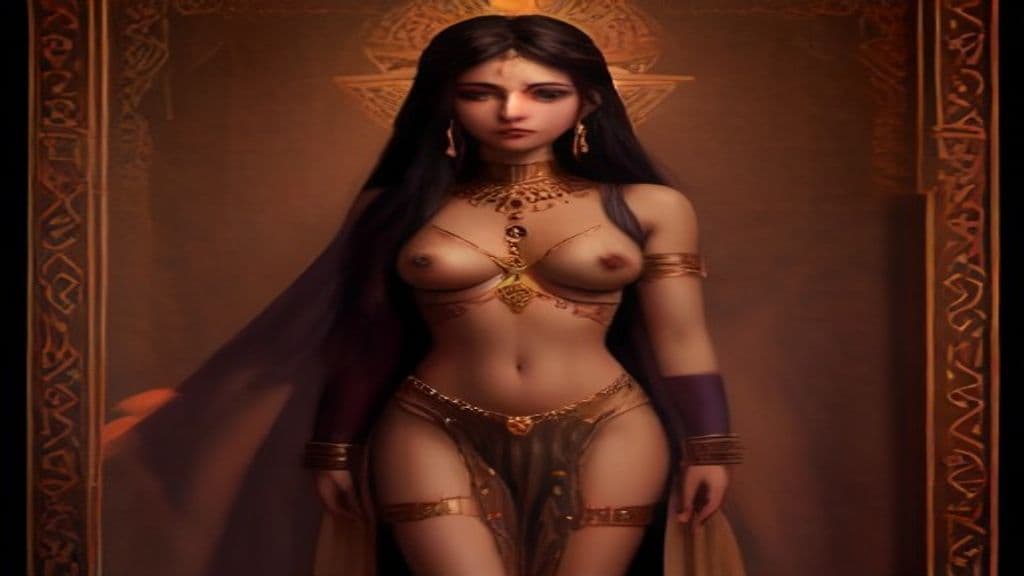
Ishtar (Inanna)
Major ancient Mesopotamian goddess of love, fertility/sexuality, and war, worshipped originally in Sumer as Inanna and later in East Semitic cultures as Ishtar. She is a principal divine figure associated with political power, divine law, and seasonal cycles, and appears prominently in myths such as The Descent of Inanna/Ishtar.
Community Record
- [1]Libat (Wikipedia). Wikipedia: Libatwiki
- [2]Libatio (Pauly-Wissowa) / Wikidata entry. Wikidata: Q20872573other