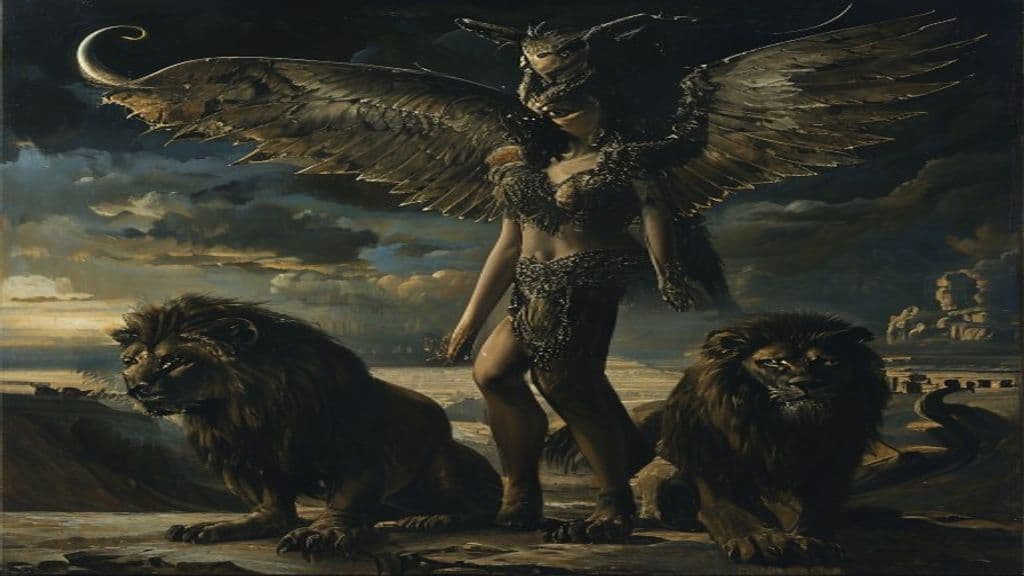
The Lilitu appears in Sumerian and Akkadian texts as a class of wind-demon (related to the word 'lilu' meaning wind or spirit). She attacked men in their sleep, causing wet dreams and nocturnal emissions, and was believed to cause illness through her embrace. The Burney Relief (c. 1800 BCE) may depict a Lilitu figure — a winged woman with bird talons standing on two lions. The connection to the later Hebrew Lilith is debated but widely accepted.
A beautiful winged woman, sometimes with owl features or bird-talon feet. She is associated with night winds and darkness. Some depictions show her naked, with long flowing hair and wings outstretched.
Attacked sleeping men, causing erotic dreams, nocturnal illness, and wasting. Could ride the night wind to enter homes. Associated with causing fever, disease, and death. In later traditions became identified with child-killing.
Weaknesses
- mantraSpecific exorcism incantations from the Maqlu series
- ritualBurning wax figurine of the demon
Wards
- symbolProtective figurines (apotropaic statuettes) buried under threshold
- ritualMaqlu anti-witchcraft ritual
Community Record
- [1]The Burney Relief. Black, Jeremy & Green, Anthony. 1992. Gods, Demons and Symbols of Ancient Mesopotamia. British Museum Press.academic
- [2]Lilith. Handy, Lowell K. 1992. 'Lilith'. In Anchor Bible Dictionary. Doubleday.academic