
The modern Loch Ness Monster tradition crystallized in public awareness after a 1933 Inverness Courier article reporting a sighting in Loch Ness, which catalyzed widespread attention and subsequent decades of sightings, photographs, sonar claims, and organized hunts. Scholarship situates the modern phenomenon alongside older Celtic and medieval 'water-beast' motifs — most notably a seventh-century hagiographic episode about Saint Columba confronting a river beast — but scholars in the cited sources caution that the medieval accounts are part of common hagiographic motifs and that direct continuity between those texts and the twentieth-century Loch Ness phenomenon is not firmly established.
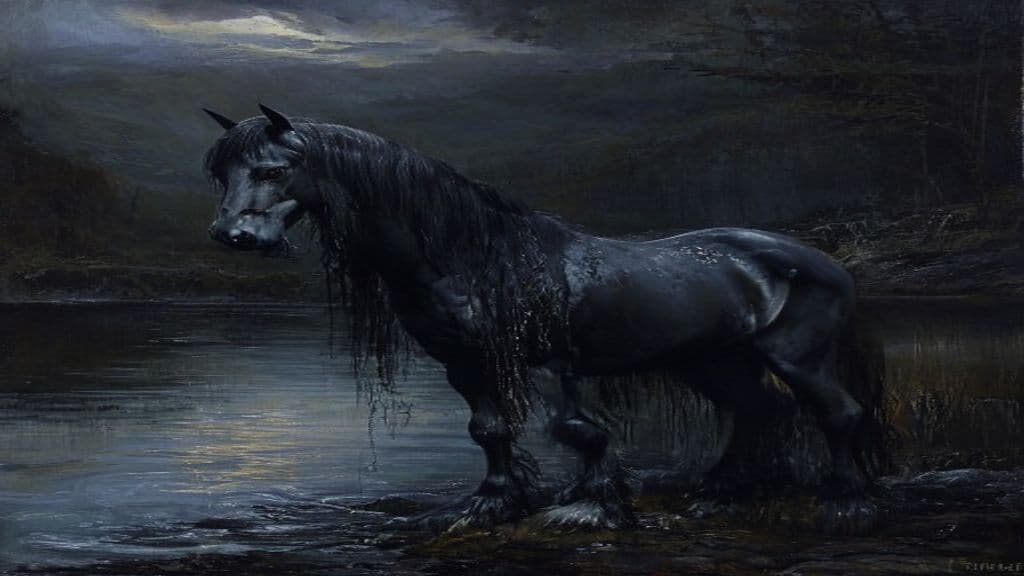
Popular descriptions commonly portray the creature as large, long-necked, and with one or more humps protruding from the water. Historical and early reports vary: a 1933 Inverness Courier report described a body 'resembling that of a whale' rolling and plunging; 19th-century accounts alternately described a log- or upturned-boat-like object 'wriggling and churning', or a 'large stubby-legged' salamander-like animal. The sources present these varying witness descriptions without a single consistent morphology, reflecting observational ambiguity.
Modern reported behaviors are mainly surface phenomena: surfacing, rolling, plunging, creating large waves and churning water, sometimes vanishing rapidly from view. Much of the modern corpus of evidence is anecdotal and contested — including disputed photographs and sonar readings — and scientific commentary cited in the sources explains many claims as misidentifications, hoaxes, or natural phenomena. Separately, a medieval hagiographic account records a water-beast attacking a swimmer and being repelled when Saint Columba made the sign of the cross and commanded it to cease; that single narrative is presented in the sources as literary hagiography and is treated by scholars as an instance of a common water-beast motif rather than as documentation of ongoing powers of the modern Loch Ness tradition.
Weaknesses
None recorded.
Wards
- ritualSign of the cross (hagiographic episode)
Community Record
- [1]Loch Ness Monster. Wikipedia, 'Loch Ness Monster'.wiki
- [2]Loch Ness Monster (Wikidata). Wikidata entry for Loch Ness Monster.wiki
- [3]Biggest Hunt for the Loch Ness Monster in 50 Years. Outside (reported item referenced in provided notes).other
- [4]The surgeon’s photograph of the Loch Ness monster - Hektoen International. Article on the famous disputed 'Surgeon's photograph'.other
- [5]Lost Loch Ness Monster camera from 1970 accidentally found by Boaty McBoatface - CBS News. CBS News report referenced in the notes.other
- [6]Archive: 26 - Sasquatch vs Loch Ness Monster!. Archive episode listing referenced in notes showing popular-culture pairing with Sasquatch.other
- [7]Loch Ness Monster 1934- (site). Collected modern material referenced in the notes.other