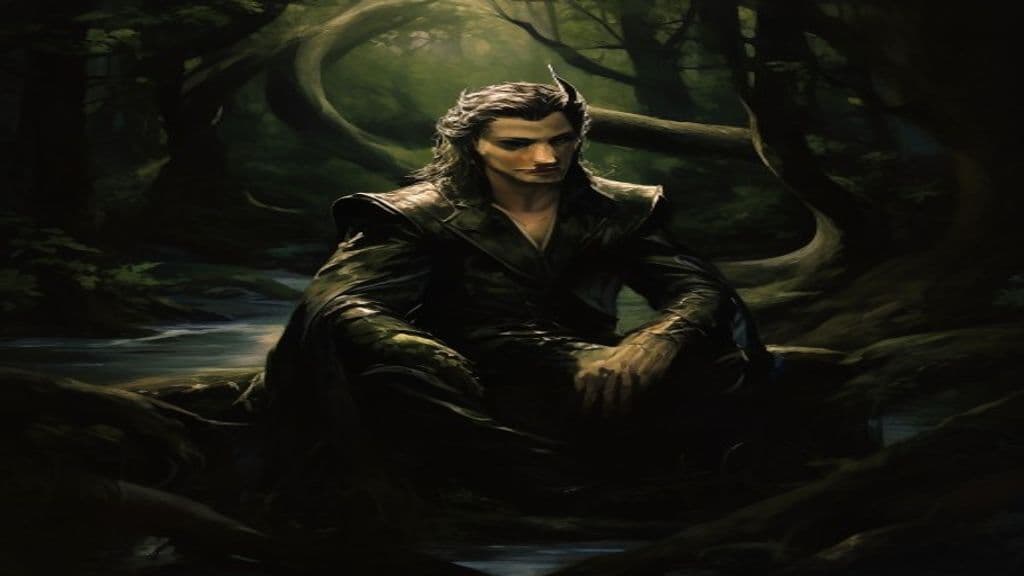
In the Old Norse corpus Loki is described as the son of the jötunn Fárbauti and the female figure Laufey (sources vary in how Laufey is characterized), making him kin to jötnar by birth while he lives among and participates in the society of the Æsir in Asgard. By the jötunn Angrboða he fathers Hel, Fenrir, and Jörmungandr; these offspring are tied to the cosmos and the prophecies of Ragnarök. The texts present Loki as liminal: born of giant stock, resident among gods, and a father of monstrous beings whose destinies intersect with the end‑time events.
Loki is repeatedly described as a shape‑changer rather than possessing a single fixed form. Attested transformations in the mythic sources include a salmon, a mare (in which form he is impregnated and later gives birth to the eight‑legged horse Sleipnir), a fly, and possibly an elderly woman named Þökk in one narrative context. As a result, surviving narratives do not fix a single stable physical appearance but emphasize mutability and disguise.
Primary abilities attested in the Poetic and Prose Edda materials are shapeshifting and persuasive, insulting speech (as in the flyting of Lokasenna). Loki repeatedly uses cunning and deceit: he alternately helps the gods (taking part in their affairs at feasts and in halls) and undermines them, most consequentially engineering the death of Baldr. He fathers monstrous offspring and, after Baldr's death, is bound by the gods (Váli binds him with the entrails of one of his sons) while a serpent's venom is placed above him; his wife Sigyn collects the venom in a bowl, and when she must empty it his writhing is given as a mythic explanation for earthquakes. The scholarship summarized in the sources also discusses etymological proposals linking his name to Germanic roots related to loops/knots (*luk-), a linguistic hypothesis that some commentators connect interpretively to motifs of entanglement in his narratives (presented as scholarly interpretation rather than a narrated mystical power).
Weaknesses
- ritualBinding with entrails and serpent venom
Wards
- ritualDivine punitive containment (binding by Váli; serpent placed above him; Sigyn's bowl)
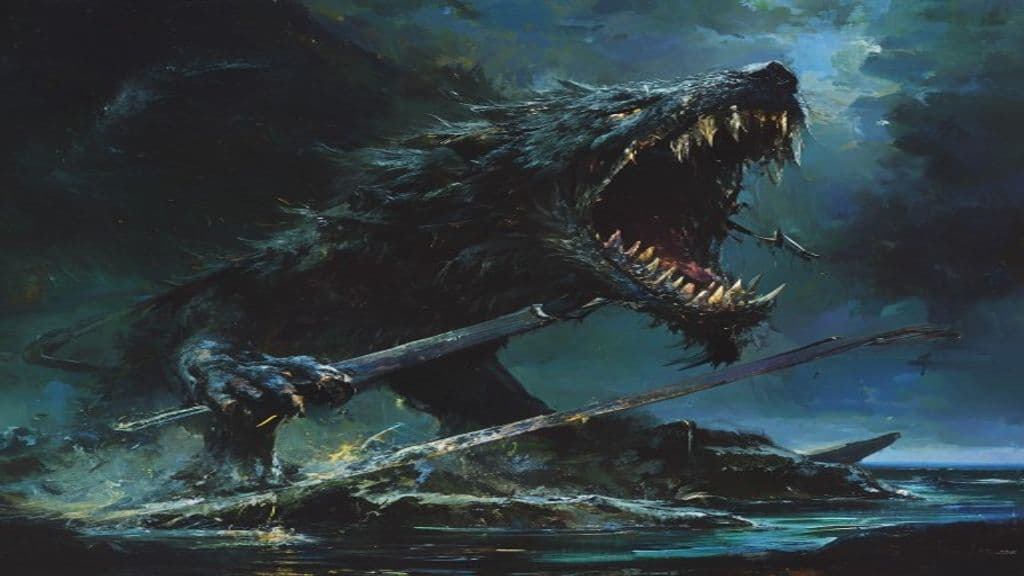
Fenrir
The monstrous wolf son of Loki, bound by the gods with a magical ribbon until Ragnarök — when he will break free and swallow Odin, and the world.

Jörmungandr
In Norse mythology, Jörmungandr is an unfathomably large sea-serpent, the Midgard Serpent or World Serpent, that dwells in the world sea and encircles Midgard, biting its own tail; Jörmungandr releasing his tail is described as one of the signs of the beginning of Ragnarök. The name has been reused in modern astronomy for near-Earth asteroid 471926 Jormungandr (provisional 2013 KN6), discovered 28 May 2013.
Community Record
- [1]Loki - Wikipedia. Wikipedia entry 'Loki' (summary and etymology; references to Poetic and Prose Edda)wiki
- [2]The Elder Eddas of Saemund Sigfusson & The Younger Eddas of Snorre Sturleson (Project Gutenberg). Project Gutenberg edition of the Poetic and Prose Edda (primary Old Norse texts translated/summarized in the provided materials)literary
- [3]Wikidata: Loki. Wikidata item for Loki (metadata and links to cultural adaptations)other