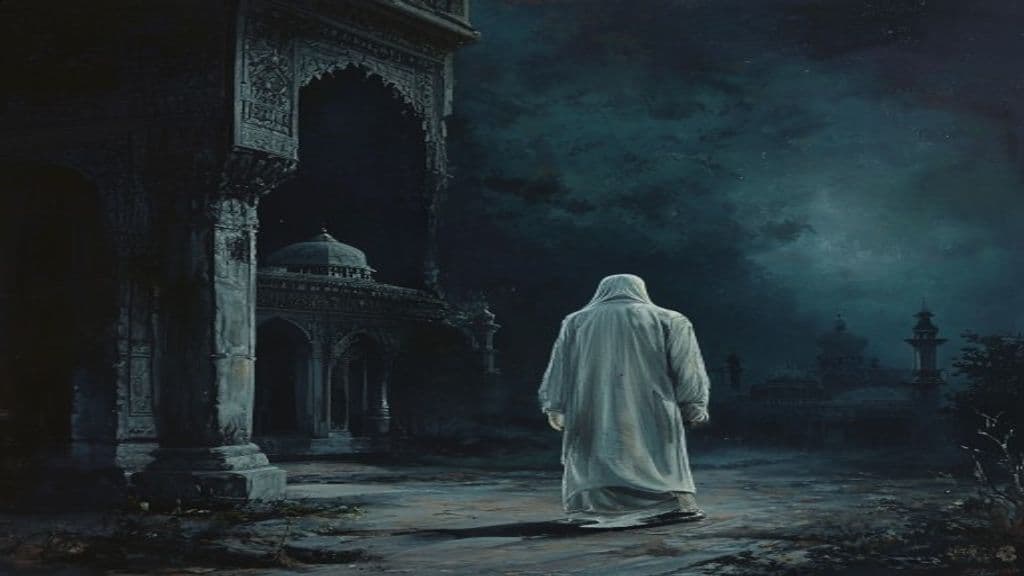
Bengal's unique religious history — centuries of coexistence between Hindu and Muslim communities — produced a supernatural tradition that acknowledges ghosts across religious boundaries. The Mamdo Bhoot is the ghost of a Muslim person in Bengali Hindu folk belief: a recognition that the Muslim dead can also become unquiet spirits, and that these spirits behave somewhat differently from Hindu ghosts.
The Mamdo Bhoot is distinguished from Hindu bhuts by specific behavioural markers: it is said to be active on Thursday nights, to avoid Hindu temples and sacred spaces, and to be particularly associated with old mosques and Muslim graveyards.
The Mamdo Bhoot typically appears in the dress of the person who died — a Muslim man's kurta-pyjama, sometimes with a cap. It tends to appear near mosques, Muslim graveyards, and old dargahs, rather than near Hindu temples or sacred trees.
The Mamdo Bhoot causes the same general class of harm as other Bengali bhuts: illness, disorientation, bad luck. What is distinctive is that Hindu methods (iron nails, Kali invocations, Brahmin priests) are said to be ineffective against it. The traditional resolution involves seeking a Muslim holy man to perform the appropriate appeasement.
Weaknesses
- ritualFatiha recited by a Muslim faqir at the haunted site
Wards
- mantraRecitation of 'Bismillah' at the threshold when passing Muslim sacred spaces at night
Community Record
- [1]Bhoot-pret: The Undead in Bengal. Bandyopadhyay, P. (2001). Bhoot-pret: The Undead in Bengal. Kolkata: Ananda Publishers.folk
- [2]Mamdo Bhoot — Wikipedia. Wikipedia contributors. Mamdo Bhut. Wikipedia, 2024.wiki