
Ancient literary traditions present Melqart as the principal god of Tyre whose cult dates to the city's foundation; Josephus (following Menander) reports that King Hiram I instituted the annual 'awakening' (egersis) festival, and Herodotus describes the temple at Tyre as ancient and richly endowed. These are literary and cultic claims preserved in classical sources and later scholarship rather than a fully documented historical biography.
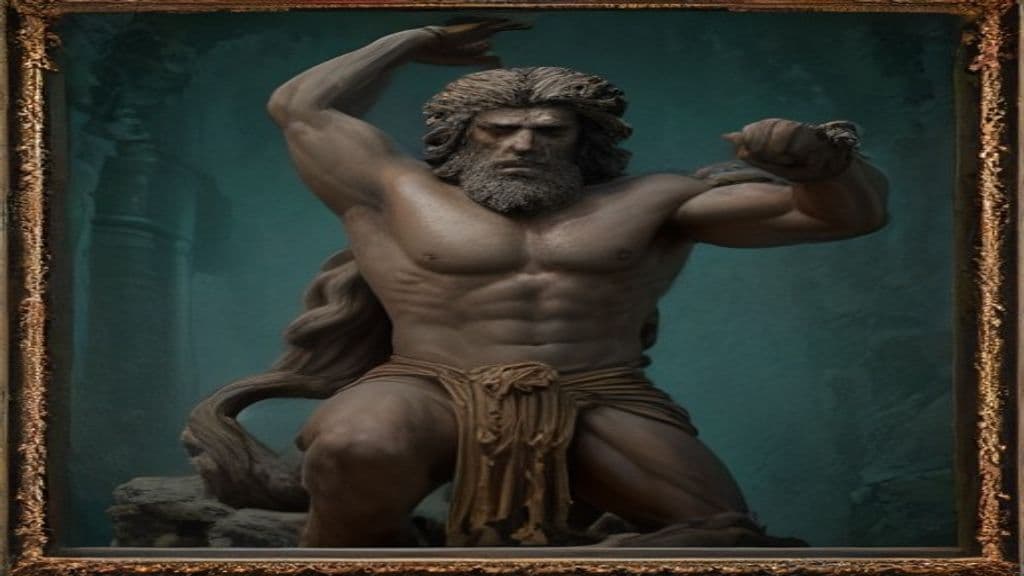
Iconographic detail in the cited sources is limited. Some descriptions note that Melqart was depicted with life-symbols such as an ankh or flower and with a fenestrated axe associated with death, suggesting combined life/underworld associations. Classical reports (e.g., Herodotus) describe richly adorned temples with offerings and monumental pillars, but explicit standardized humanlike depiction beyond the cited symbols is not preserved in the provided excerpts.
Sources portray Melqart primarily as a civic protector and guarantor: patron and guardian of Tyre and its colonies, invoked in oaths that sanctioned contracts, and customarily honored with a temple in newly founded settlements. He is also associated in the literary record with an annual cycle of death and revival — an 'awakening' (egersis) celebrated in a spring festival often interpreted as a dying-and‑rising motif. Through Greco-Roman interpretatio he was identified with Heracles/Hercules, linking him to heroic exploits in some accounts. Temple cult activity included offerings, ornamented sanctuaries, and ecstatic dance in some reports.
Weaknesses
None recorded.
Wards
- ritualTemple foundation and civic cult
Community Record
- [1]Melqart — Wikipedia. Wikipedia, 'Melqart' article (excerpts provided in research notes).wiki
- [2]Melqart — Wikidata Q843408. Wikidata entry Q843408 (concise identifier; cited in research notes).other
- [3]Herodotus, account paraphrase. Paraphrase of Herodotus' report on the temple at Tyre as cited in the provided notes.literary
- [4]Josephus (Menander report) — awakening (egersis). Citation of Josephus' report (following Menander) that Hiram I celebrated the 'awakening' (egersis) of Heracles in the month Peritius, as given in the research notes.literary
- [5]Heliodorus (on ecstatic sailors' cultic dance). Description from Heliodorus quoted in the research notes: worshippers 'leap spiritedly...revolve on them like persons possessed.'literary
- [6]Scholarly etymology (Edward Lipinski). Etymological theory (Edward Lipinski) reconstructing MLK QRT as 'King of the City' provided in the notes.academic