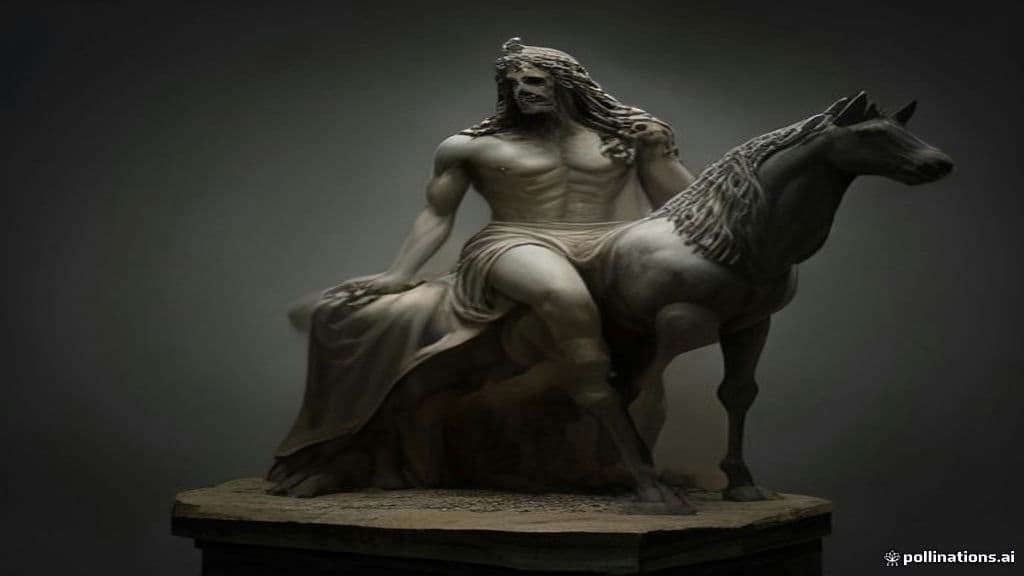
In the mythic tradition Menoeceus appears as a member of the Theban royal-house genealogies — a descendant of the Spartoi — whose death is narrated during the siege of Thebes by the Seven. Sources relate that, in obedience to an oracle (attributed to Tiresias/Delphi), a Menoeceus threw himself from the city walls (or otherwise sacrificed himself) so that Thebes might be saved. Separately, in Hellenistic philosophical literature the name is used as the addressee of Epicurus's ethical epistle ("Letter to Menoeceus"), in which Epicurus addresses a young man named Menoeceus with guidance on seeking wisdom and living well.
No physical description of Menoeceus is preserved in the cited sources. The figures appear in narrative and epistolary texts without surviving details of stature, dress, or other corporeal features in the provided material.
Menoeceus is not represented as a supernatural actor with powers. In mythic accounts a Theban Menoeceus performs a decisive civic-sacrificial act — voluntarily dying (commonly by throwing himself from the walls) in obedience to an oracle so as to avert disaster for Thebes. In the Epicurean context Menoeceus functions as a recipient of philosophical instruction, positioned as a pupil who is exhorted to pursue wisdom.

Community Record
- [1]Menoeceus (Wikipedia). Wikipedia, entry 'Menoeceus'wiki
- [2]Letter to Menoeceus (Ad Menoeceum) — Epicurus. Epicurus, 'Letter to Menoeceus', translation available at The Internet Classics Archiveliterary
- [3]Menoeceus — attalus.org (compiled ancient references). Attalus.org, compilation of ancient references for Menoeceusother
- [4]Pausanias — description cited in secondary summaries. Pausanias (as reported in summaries): account of Menoeceus's tomb and pomegranate-treeliterary
- [5]Statius and Hyginus references to Menoeceus. Summaries of Hyginus and Statius noting Menoeceus's suicide during the Seven against Thebesliterary