
Mitakuye Oyasin is a concept that reflects the Lakota understanding of themselves and their relationship to the natural world. It is composed of two words: 'mitákuye' meaning 'all my relatives' or 'all my people', and 'oyás'iŋ' meaning '(we are) one'. The phrase as a whole embodies the idea of oneness and interdependence among all living beings.
There is no physical description of Mitakuye Oyasin, as it is not a tangible entity. It represents an abstract concept.
Mitakuye Oyasin does not possess any abilities or behaviors in the classical sense. However, it represents a philosophical and spiritual framework for understanding the world. The phrase is often invoked in prayers and ceremonies to acknowledge and honor this interconnectedness.
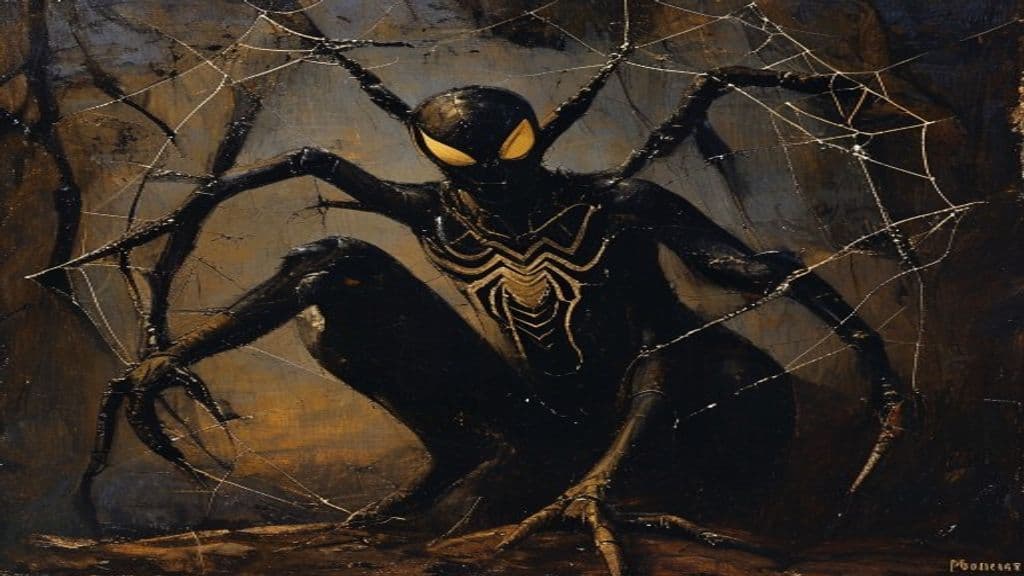
Anansi
The spider trickster god of Akan folklore — cunning, mischievous, and wise. Keeper of stories and teacher of human beings, brought through the slave trade into Caribbean and African-American tradition.

Churel (Chudail)
A South Asian female revenant or vengeful ghost associated with women who die cruelly or unpurified; often said to target male relatives and sometimes described as latching onto trees, producing a tree‑attached tree‑spirit variant in local tales.
Dragon (Long)
Long (龍, "dragon") is a pervasive cultural and artistic motif that appears in Taoist sacred-geographical contexts, Chinese literature, and modern exhibitions; the provided sources treat it as part of the broader mythic imagery present around Taoist sites and ritual scenes rather than as a single, consistently described doctrinal entity.
Ghost Shirt (Lakota Tradition)
A spiritualized object imbued with powers to protect its wearer from harm or possession by malevolent spirits. (Note: 1. Power tier: Primordial (given its association with spiritual visions from the founder, it's reasonable to assume a higher power level) 2. Abilities: The source material doesn't explicitly mention p)
Great Spirit
A supreme, often-immanent life force or creator-being present in the traditional spiritual beliefs of many Indigenous peoples of what is today Canada and the United States; concepts and names vary by nation and may refer to a single creator, a pervasive sacred power, or a collective of mysterious sacred forces.
Happy Hunting Ground (Lakota Tradition)
In the Lakota tradition, the Happy Hunting Ground is a peaceful afterlife realm where the spirits of the deceased live out their lives in happiness and abundance. (Note: - Power tier: Primordial (not Minor Spirit, as it's a cosmic realm) - Summary: Inaccurate - the article describes the Happy Hunting Ground as a peaceful afterlife realm, but doesn't mention its abunda)
Heyókȟa (Heyoka)
A sacred contrarian figure and ceremonial role in Lakota and Dakota (Sioux) traditions, the heyókȟa functions as a sanctioned 'sacred clown' whose deliberate inversion of social norms, satire, and ritualized shame help heal emotional pain and test communal values. Cosmologically the role is tied to visions of the thunder beings (Wakíŋyaŋ) and is sometimes represented in myth as a thunder or lightning spirit.
Iktómi
Iktómi is a spider-associated trickster and culture-hero in Lakota oral tradition. He functions as teacher, entertainer, corrupter, and origin-figure for cultural arts (stories, language, games), embodying the tension between wisdom and folly in Plains narratives.
Iya
A malevolent storm-monster from Lakota mythology, consuming villages and living beings. (Note: 1. Power tier: Downgrade to Ancient (deity-level) - Iya's abilities are not primordial or cosmic in scale. 2. Origin story: Remove "born from the same cosmic energies as his brother Iktomi" - there is)
Minkah (Lakota)
No documented Lakota supernatural being named 'Minkah' is present in the supplied source set. The name appears in the provided materials only as the given name of a contemporary individual (Minkah Fitzpatrick); there are no ethnographic, linguistic, or folkloric sources in the corpus that describe a Lakota entity called Minkah.
Stoneco (Stone people / Rock spirits - lesser-known stone sentinels)
No evidence in the provided sources supports the existence of a Lakota supernatural entity named "Stoneco" or a folkloric tradition of "stone people" or "rock spirits." The materials supplied refer to corporate entities or municipal contractor listings that include the string "Stoneco" or "StoneCo," and an unrelated corporate Wikipedia page; they contain no ethnographic or folkloric information about Lakota stone spirits.
The Great Race
A cosmic event in Lakota creation stories where humans and buffalo competed to establish supremacy, resulting in humans emerging victorious through cunning and strategy. (Note: 1. The power tier should be Primordial instead of Ancient. 2. Add sensory cues: dreams, omens, visions 3. Add weaknesses: loss of trust between humans and buffalo; spiritual disconnection from the nat)
Thunder Butte
A large, isolated hill with cultural significance in Lakota tradition. (Note: 1. Power tier is likely Greater (powerful regional) rather than Primordial (cosmic), as it has cultural significance but doesn't appear to possess supernatural abilities. 2. Abilities should be explic)
Unk Cekula
Unk Cekula is a serpentoid supernatural creature in Lakota mythology identified as responsible for many unexplained disappearances and deaths; a male counterpart is named Unk Tehi. Sources classify the figure as a mythological serpent within Lakota narrative material and note a possible relation to broader North American 'horned serpent' traditions.
Community Record
- [1]