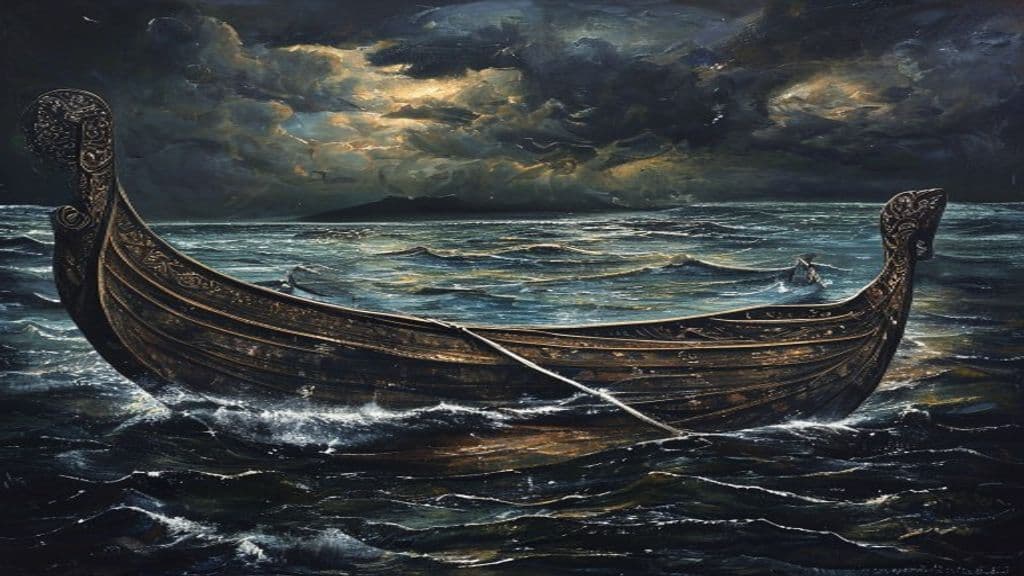
In Māori tradition, waka hourua were not supernatural entities but rather large ocean-going canoes that facilitated the migration of the ancestors to New Zealand from their ancestral homeland Hawaiki.
Physical descriptions of waka hourua are not provided in the source material; however, they were described as large twin-hulled canoes.
Waka hourua were capable of navigating long distances across the Pacific Ocean, indicating advanced navigational skills and knowledge of the stars, winds, and currents.
Te Rangimātoru
A large ocean-going canoe used by Māori ancestors for migration and settlement, playing a significant role in New Zealand's history. (Note: - Power tier: Primordial (as it's one of the great ocean-going canoes, implying a significant, foundational role in Māori history) - Appearance: lacks description; however, according to Source 1, Te R)
Te Wakaringaringa
A legendary great ocean-going canoe in Māori tradition, significant to the migrations that settled New Zealand. (Note: 1. Power tier should be "Ancient" based on its significant role in human migration and settlement. 2. Origin story is missing entirely; it would be helpful to include a brief explanation of how it cam)
Turi (Māori Ancestor)
A revered ancestral figure in Māori tradition, significant to the Taranaki region and descendant of Rata. (Note: - Power tier: Primordial is too high; Turi's significance as a leader and ancestral figure suggests a Greater power tier (powerful regional). - Abilities: "Leadership qualities" and "contributions to )
Waipapa (Canoe)
A great ocean-going canoe significant in Māori tradition, associated with regional migrations. (Note: - Power tier: Should be Ancient (Waipapa is a significant vessel associated with regional migrations) - Appearance: Missing information; add description from source material (none mentioned) - Sensory)
Mākutu
A malevolent occult power possessed by certain individuals in Māori tradition, associated with witchcraft and sorcery. (Note: - Power tier should be Ancient, not Primordial (Primordial is cosmic-level, Ancient is deity-level) - Appearance section needs to be filled - Abilities description lacks specificity and detail; source)
Māmari (vessel)
In Māori tradition, Māmari is a revered ocean-going canoe and symbol of importance in the early migrations that settled New Zealand. (Note: - Power tier: Primordial (as a revered and significant cultural artifact, Māmari's importance is on a cosmic level) - Abilities: Remove "means of transportation" as it does not accurately describe an )
Mānasaputras (Hindu)
In Hinduism, Mānasaputras are considered the 'mind-children' or 'mind-born' sons of Brahma, associated with creation and cosmology. (Note: 1. Power tier should be Ancient (deity-level), as they are associated with creation and cosmology but not necessarily with cosmic or universal forces. 2. Appearance: state that no specific description)
Mānuka (Canoe)
Legendary Māori canoe used for migrations to settle the South Island of Aotearoa. (Note: 1. Power tier: Reduce from Greater to Lesser, as the Mānuka is described as one of the great ocean-going canoes, but not explicitly as a powerful regional entity. 2. Weaknesses: Add sensory cue - "Fai)
Māori Mythological Entities
Supernatural beings in Māori mythology associated with the origins of the world and connected to the whakapapa. (Note: 1. Power tier: should be "Primordial" is correct, but consider rephrasing for clarity. 2. Origin story: should be more specific about what these entities are, rather than just stating they're part of )
Māori Primordial Beings
In the Māori creation story, as depicted in Peter Gossage's book 'In the Beginning', the struggle between Ranginui and Papatūānuku implies the presence of other beings or forces. (Note: 1. Summary is partially accurate, but more specific information should be included. 2. Power tier: Primordial seems plausible given the Māori creation story's focus on primordial parents, but it could)
Māra
Māra is the highest-ranking goddess in Latvian mythology associated with domestic economy, fertility, livestock and the land; she is the female cosmological counterpart to Dievs and was honoured in an annual festival on August 15, a date reflecting later Christian syncretism.
Māra
Māra is a malignant, oppositional figure in Buddhist tradition who personifies and enacts forces that obstruct awakening; he is described both as an actual being of the sensual realm (kāma‑loka) and as the personification of inner defilements (kleśas), death, and conditioned existence.
Community Record
- [1]