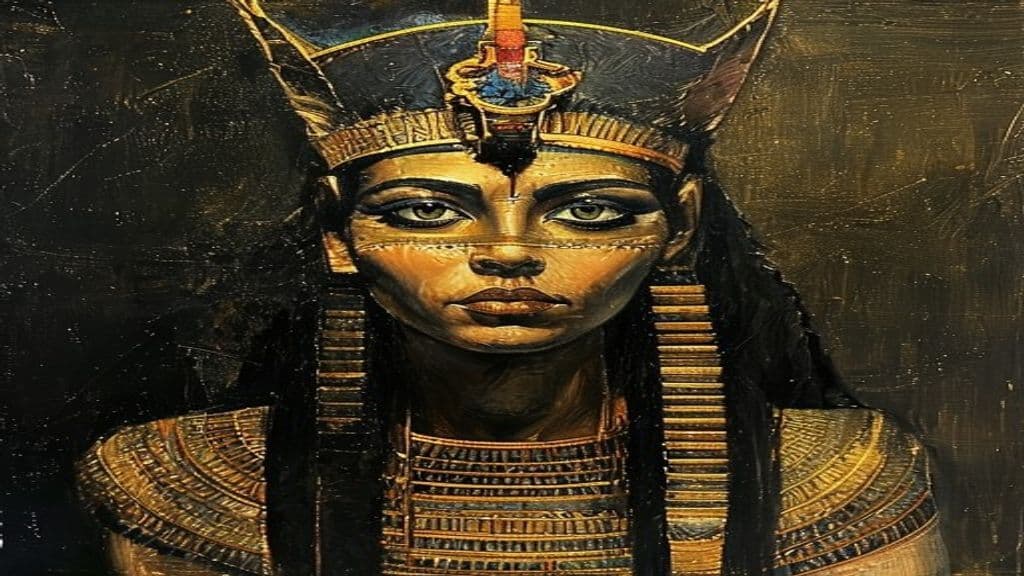
In Theban theological contexts Mut is presented as a primal mother-figure tied to the primeval waters of Nu from which existence arises. Mythic accounts vary: in some Theban cosmogonic strands she emerges from Nu as a serpent and is presented as a generative force; in dynastic theology she becomes part of a family grouping with Amun and Khonsu (the Theban Triad), where relational roles (mother, wife, daughter) shift according to doctrines of divine self-creation and cyclical rebirth.
Iconography varies by context. Mut is commonly depicted as a woman wearing the double crown of the kings of Egypt, signaling sovereign authority. In Theban cosmogony she may be represented as a serpent emerging from the primordial waters. In Eye-of-Ra traditions she can assume feline forms (sacred cat or lioness) during episodes in which the wandering Eye takes wrathful, leonine shape.
Mut embodies primordial creative power linked to Nu and is attributed in some traditions with generating divine life (occasionally by parthenogenetic motifs in certain cosmogonic accounts). As a member of the Theban Triad she functions as consort to Amun and mother to Khonsu, roles that are fluid in Egyptian theologies of cyclical regeneration. Within the Eye-of-Ra cycle Mut can act as an aggressive, wandering 'Eye'—a destructive feminine force that later is pacified or reconciled (narratively calmed in the cycle by figures such as Thoth). Her cult and imagery also serve political functions, legitimating royal power at Thebes.
Weaknesses
- ritualnarrative pacification by Thoth (appeal/cajoling)
Wards
None recorded.
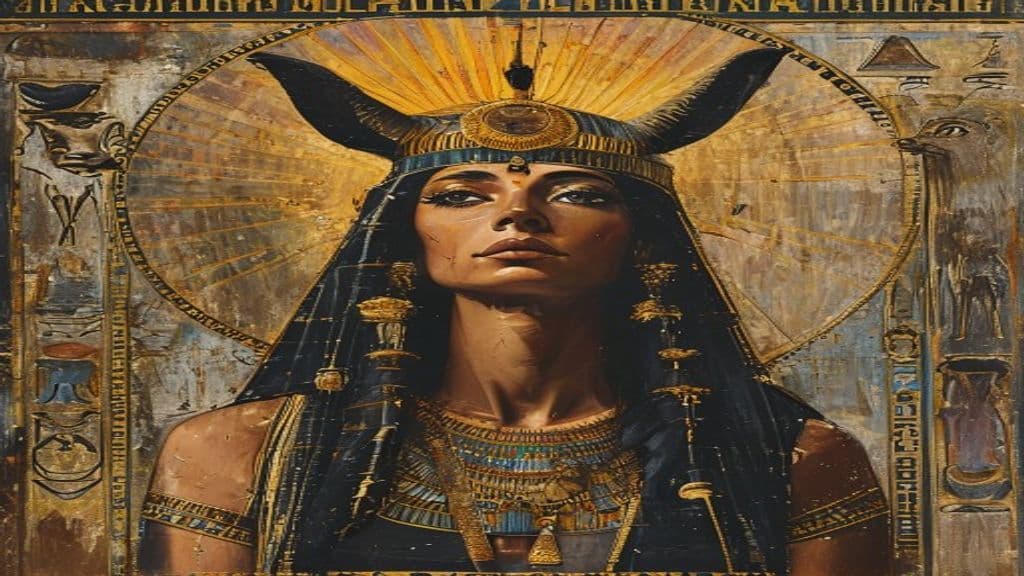
Hathor
Hathor (Ancient Egyptian ḥwt-ḥr, 'House of Horus') is a major polyvalent goddess of ancient Egypt associated with the sky, maternal and royal motherhood, music, joy, fertility, and the Eye of Ra; she appears in multiple local manifestations and assisted the deceased into the afterlife.
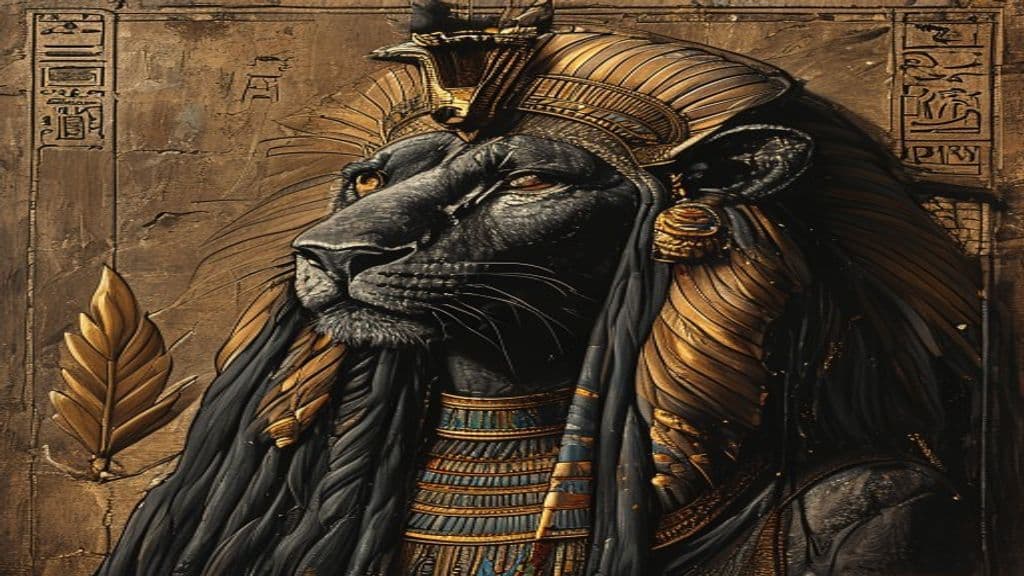
Tefnut
Tefnut is an ancient Egyptian goddess of moisture (moist air, dew, and rain), a leonine and solar-associated member of the Heliopolitan Ennead. She is a primordial offspring of the creator (Atum/Ra), twin and consort of Shu, and mother of Nut and Geb, functioning both as a life-giving moisture deity and as one of the leonine 'Eye of Ra' goddesses who can assume a fiery protective or wrathful aspect.
Community Record
- [1]Mut. Wikipedia entry 'Mut'wiki