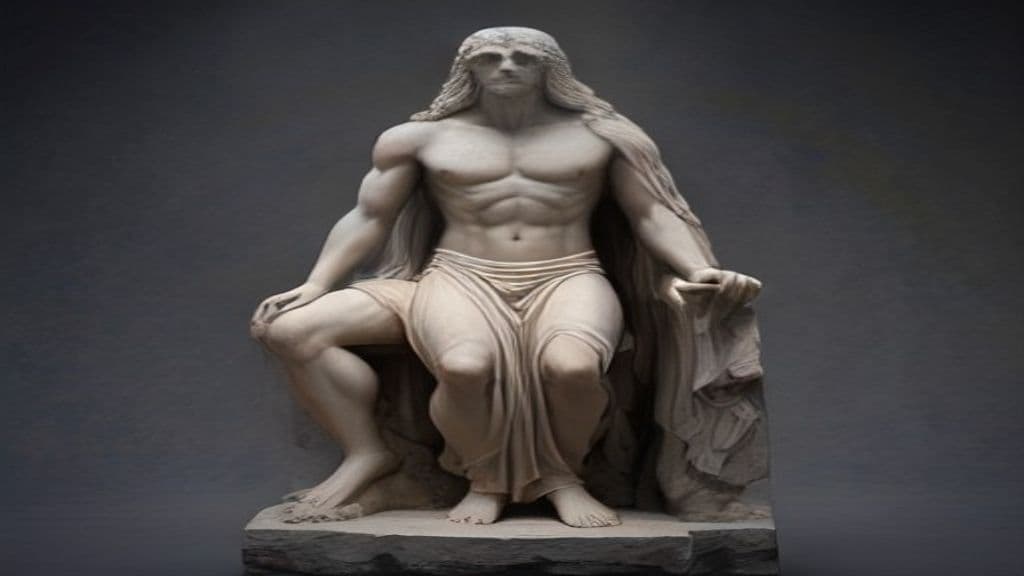
Pelasgus functions in Greek sources as an eponymous progenitor of the Pelasgians and as a founding culture-hero whose specific parentage and career vary by locality. In Argive traditions he is presented as a founder-king of Argos who taught agriculture and received Demeter; in Arcadian accounts he may be described as autochthonous or as descended from local divine/heroic figures; in Thessalian narratives he and his brothers (Phthius and Achaeus) lead a Pelasgian migration from Argos to Thessaly and give their names to districts (Pelasgiotis, Phthiotis, Achaea). These competing local genealogies and foundation tales place Pelasgus in the mythic age of origins rather than offering a single harmonized biography.
Classical and later compendia do not provide standardized physical or iconographic descriptions of Pelasgus. He is treated primarily as a genealogical and civic figure—an eponymous ancestor, king, or culture-bringer—so the sources emphasize lineage, civic acts, and cultic associations rather than corporeal or supernatural appearance.
Across localized traditions Pelasgus is ascribed civilizing and founding roles: teaching agriculture (Argive accounts), founding cities (e.g., Argos, Parrhasia, Thessalian Argos in different localities), receiving or founding the worship of deities (notably receiving Demeter in Argos and being linked in some summaries to the worship of Dodonaean Zeus, Hephaestus, and the Cabeiri), and leading migrations/colonies (Thessalian foundation narrative with Phthius and Achaeus). Homeric reference lists the Pelasgians—named from Pelasgus—among Trojan allies and characterizes Pelasgus as brave, indicating his placement in heroic-age ethnographic and martial contexts.
Community Record
- [1]Pelasgus — Wikipedia. Wikipedia, entry 'Pelasgus' (summary of classical traditions including Argive, Arcadian, and Thessalian accounts; notes on reception of Demeter and listing among Pelasgians).wiki
- [2]Pelasgus (king of Argos) — Wikipedia. Wikipedia, article on the Argive Pelasgus tradition (founder of Argos, teacher of agriculture, receiver of Demeter, tomb shown at Argos in later times).wiki
- [3]Descriptions of Greece (Pausanias excerpts in archive). Archive item containing Pausanias material cited in the research notes regarding local traditions linking Pelasgus to Demeter, Triptolemus-type cultic material, and sanctuary dedications.literary
- [4]Birds & Boar (archive items including Pausanias passages). Archive item noted in the research notes containing Pausanias excerpts and local foundation/cult accounts referencing Pelasgus.literary
- [5]Wikidata: Pelasgus. Wikidata entry for Pelasgus referenced in the research notes.other
- [6]Progressive Ruin: 'Urb no like Pelasgus.'. Web article cited in the research notes (additional commentary on traditions surrounding Pelasgus).other
- [7]Miscellaneous archival and antiquarian notes (Newton Project and other locational tools). Normalized drafts and notes cited in the research material that include references to genealogical and antiquarian traditions where Pelasgus appears.other