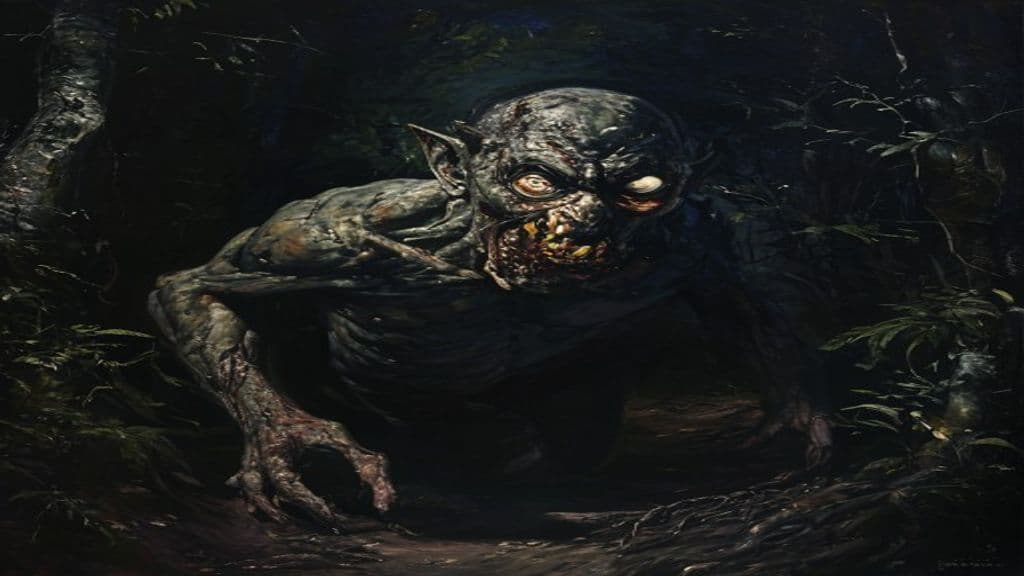
Pishachas arose from the anger of the god Brahma, formed from the drops of water that fell when he washed his feet, according to some Puranas. Others say they are the spirits of those who died as drug addicts, meat-eaters who violated sacred animals, or those murdered treacherously.
They dwell in the periphery — the places where civilization meets the wild — and feed on the living flesh of those too far from protection.
The provided material does not offer a detailed physical description of pishachas. Beyond being described as 'flesh-eating,' there are no specifics about their size, coloration, form, or distinguishing features in the source. The only implication about appearance comes indirectly from the label 'flesh-eating,' which indicates predatory behavior, but the source supplies no further visual or corporeal details.
According to the source, pishachas are 'flesh-eating demons' and are characterized as malevolent beings. The source further asserts that they 'have often been referred to as the very manifestation of evil.' Other than their flesh-eating nature and general malevolence, the source does not enumerate additional powers, such as possession, shapeshifting, or magical abilities, nor does it describe specific methods by which they interact with humans.
Weaknesses
- mantraAtharva Veda exorcism hymns
- substanceAsafoetida (hing) burned as incense
Wards
- ritualExorcism by a qualified tantric priest
- symbolShiva lingam near the home
Community Record
- [1]The Vishnu Purana. Vishnu Purana. c. 4th century CE. (Wilson, H.H., trans. 1840)literary
- [2]Demonology in Indian Tradition. Chattopadhyay, Kshitish Chandra. 1948. Studies in Indian Folklore. Rabindra Bharati.academic
- [3]Pishacha (Flesh-eating Demon). Wikipedia: Pishacha (Flesh-eating Demon)wiki