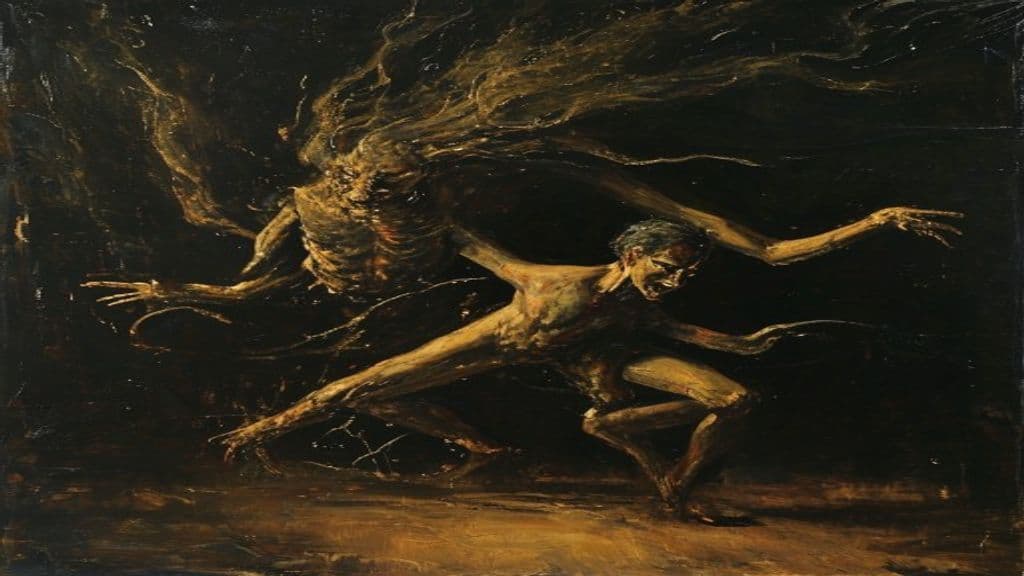
The Charaka Samhita and other classical Ayurvedic texts name several grahas (graspers) that cause mental and behavioural disorders, of which Pishacha-graha is one. It is distinguished from the ordinary Pishacha by the manner of affliction: it does not merely haunt a place but enters the body.
Often said to seize those who eat forbidden foods, violate ritual purity, or sleep in unclean places such as cremation grounds. The possession is treated both medically (with herbs) and spiritually (with mantras).
Has no form of its own — recognisable only by what it does to the possessed. The victim's features may sharpen, skin darkens, eyes grow hollow, and appetites turn toward raw meat and ash.
Full bodily possession. Causes the possessed to speak in unknown tongues. Grants unnatural strength and endurance but destroys the host's mind over time. Resistant to ordinary exorcism.
Weaknesses
- mantraAtharva Veda exorcism hymns
- ritualBhoota-vidya (Ayurvedic branch of psychiatric/spiritual medicine)
Wards
- substanceMedicated ghee with herbs (vacha, kushtha) prescribed by Ayurvedic physicians
- ritualMaintaining ritual purity in daily life

Community Record
- [1]Charaka Samhita. Charaka. c. 1st–2nd century CE. Charaka Samhita. Nidana Sthana and Chikitsa Sthana, chapters on graha and unmada.literary
- [2]Ayurveda and the Mind. Frawley, David. 1997. Ayurveda and the Mind. Lotus Press.academic