Classical Vedic and Purāṇic accounts locate the pitṛs in the earliest layers of religious literature. The Rigveda treats ancestral and divine realms in overlapping terms; later texts and Purāṇas (e.g., Vayu, Brahmanda, Vishnu Purāṇas as summarized in the sources) elaborate classes of pitṛs and genealogies that trace some pitṛs to the Prajapatis (progenitors). Manuṣruti and Purāṇic summaries describe manuṣyāḥ pitaraḥ (human forefathers) who by righteousness may attain the status of divine pitṛs (devāḥ pitaraḥ) and dwell in Svarga or Devaloka; other scriptural narratives (e.g., stories of Jaratkaru, Pururavas, Bhagiratha) present rites, procreation, or austerities as remedial acts that restore ancestral welfare. These accounts frame pitṛs as an enduring cultic category in Hindu cosmology rather than a single origin myth.
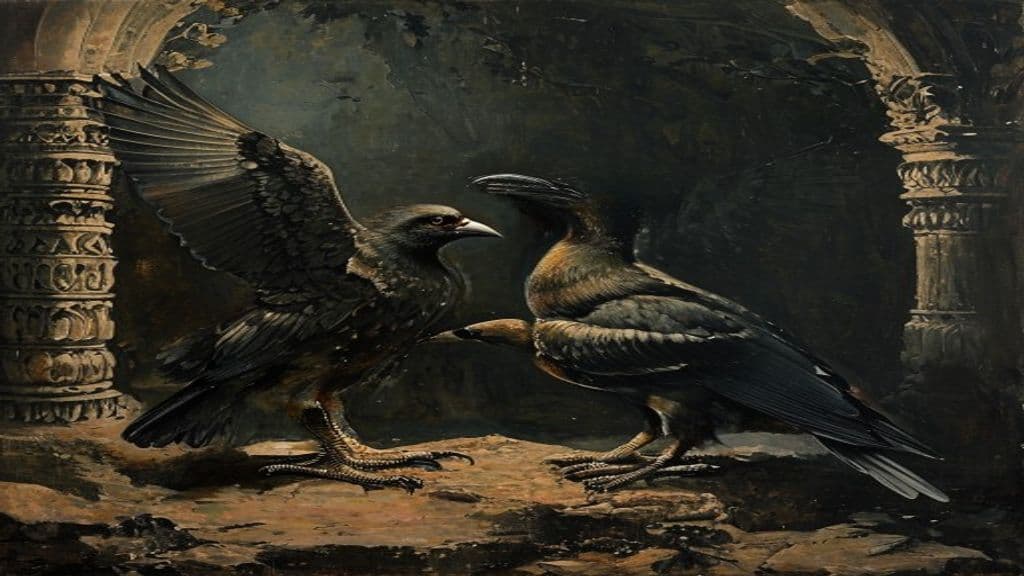
Classical sources do not give a single uniform physical description of pitṛs. Some ritual and legal texts liken pitṛs to birds—the Baudhayana tradition explicitly states pitṛs assume bird-like forms and this imagery underlies practices such as feeding birds during funeral rites. Purāṇic and Brāhmaṇa summaries recognize different classes or origins (divine pitṛs, human ancestors, primordial progenitors) implying variable forms or stations, but the excerpts do not provide a systematic anthropomorphic typology.
In Hindu traditional accounts pitṛs occupy an ontological role rather than functioning chiefly as hostile monsters: they are the recipients of ritual sustenance (piṇḍa, śrāddha) and are believed to influence the fortunes of living descendants. Texts such as the Mahābhārata describe performance of rites for pitṛs producing merit and worldly returns (offspring, wealth, longevity) for the living; conversely, failure to perform antyesti or śrāddha is said to leave the deceased wandering as a preta or cause ancestral suffering (hunger, thirst) as in Skanda Purāṇa summaries. Purāṇic and Smṛti material attribute to some pitṛs the possibility of dwelling in Devaloka or Pitrloka and of elevation to divine status by righteousness—descriptions presented as traditional belief in scripture rather than empirical claims.
Weaknesses
- conditionfailure of sustaining rites (leads to preta-state rather than pitṛ status)
Wards
- ritualantyesti (funeral rites)
- ritualśrāddha (ancestor rites)
- ritualpiṇḍa offerings (balls of rice) / feeding birds
- time-markerobservances on amāvásya and Pitri Paksha

Community Record
- [1]Pitri. Wikipedia article 'Pitri' (summarizing Vedic, Smṛti, Purāṇic, and epic accounts)wiki
- [2]Wikidata: Pitri (Q112801005). Wikidata entry summarizing identifier data related to Pitriother
- [3]Matri Pitri Poojan 2012 Edition (Hindi). Archive catalogue entry for a devotional/practical booklet on ancestor veneration (listed among provided materials; excerpts do not add detailed liturgical formulas in the supplied notes)other
- [4]Girishchadra Banga-natyashalar Itihas Sambalito. Archive catalogue item included among provided materials; cited in research notes as not contributing ritual specificity in the excerpts providedother
- [5]Pitrs (Wikidata). Wikidata entry Q2076136 for Pitrs. Accessed source provided in research notes.other