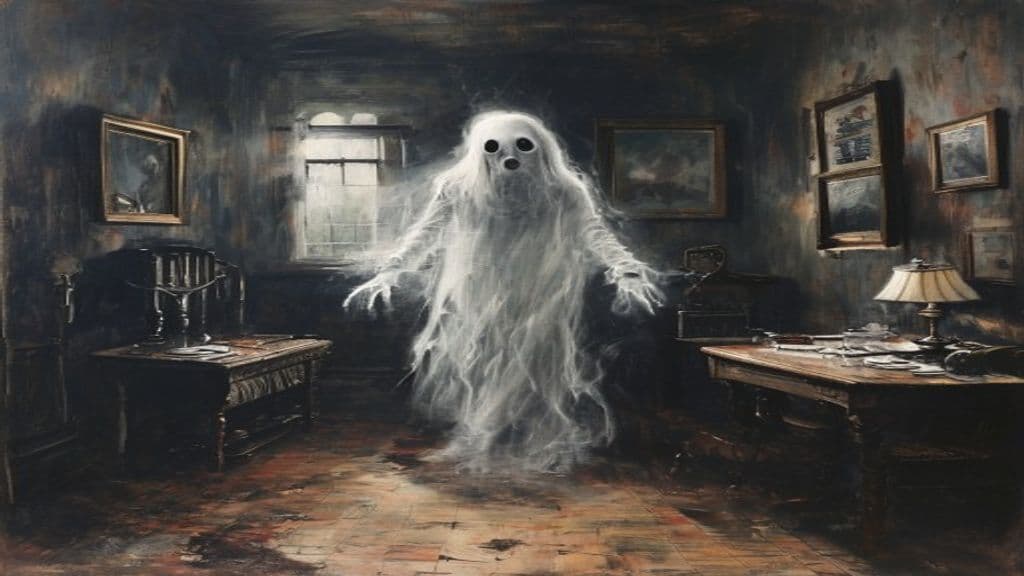
The label derives from German ghostlore: poltergeist (from poltern 'to make sound, to rumble' + Geist 'ghost, spirit') and in modern literature has been applied by psychical researchers and popular accounts to a range of noisy, object-moving disturbances found in many countries. Sources summarize a historiography of case investigations (e.g., Stockwell, Ballechin House, Enfield) and note that the modern category emerged in German-speaking contexts and was subsequently used broadly by investigators and the media rather than representing a single, canonical mythic origin.
Accounts summarized in the sources report no consistent, stable visible form; poltergeists are primarily known by their effects. Descriptions and fictional portrayals attribute quasi-physical actions—pinching, biting, hitting, tripping people—and capacity for moving or levitating furniture, cutlery and small objects. The literature therefore emphasizes sensory and kinetic manifestations (knockings, objects hurled, spontaneous fires, electrical flicker, foul odours) rather than an anthropomorphic or regularly visible entity.
Reported abilities in case summaries and popular descriptions include producing loud noises (knockings, rumblings), moving/levitating/throwing objects (furniture, cutlery, mirrors), causing physical assaults on persons (pinching, biting, tripping), producing foul smells and spontaneous fires, and provoking electrical disturbances (flickering lights). Investigators and skeptics cited in the sources attribute many of these effects to alternative causes—hoax or juvenile trickery, psychological projection or dissociation (e.g., Nandor Fodor's psychoanalytic reading), and natural physical mechanisms such as downdrafts, building vibrations or underground water—so the literature presents a plurality of possible mechanisms alongside reports of the phenomena themselves.
Weaknesses
- conditionno consistent folkloric vulnerability recorded in sources
- othermany documented episodes are susceptible to secular explanations (hoax, human agency) and to mitigation by addressing environmental causes (seal drafts, structural inspection)
Wards
- otherinvestigative containment and scrutiny (monitoring for hoax, observation, securing occupants)
- conditionpsychological/therapeutic intervention when phenomena are interpreted as psychogenic (psychoanalytic or psychiatric care as proposed by some researchers)
- otherenvironmental remediation (seal chimneys, correct drafts, inspect for underground water or structural stress)
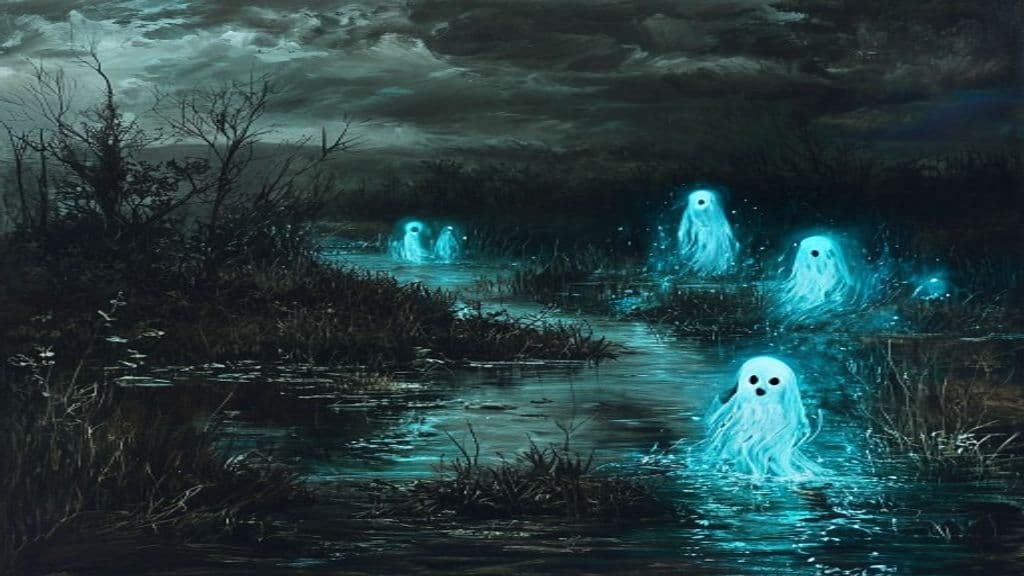
Poemenius
Poemenius (Ancient Greek: Ποιμένιος, Poimenios) is a personal name of Greek origin borne by multiple historical and literary figures in Late Antiquity and later periods. In the supplied sources it functions as a proper name for distinct human persons — most prominently a mid-4th-century Roman officer who seized Trier, several Christian clerics/bishops attested in patristic correspondence, and an attested name-entry as a leader of satyrs in a mythological name-list — rather than a single supernatural being.
Pohjola
Location in Finnish mythology and a central figure in the Kalevala epic. (Note: 1. Summary should mention that Pohjola is a central figure in the Kalevala epic, but also clarify that it is a location, not just a character. 2. Power tier: Lesser (not Greater), as Pohjola does not )
Polevik
A Slavic field spirit associated with cultivated fields and agricultural labour. Traditional accounts depict Polevik as a field-dwelling being encountered by peasants and travellers (especially at noon or sunset) that can mislead, punish, or occasionally be negotiated with by offerings.
Polkan
Polkan (Полкан, Палкан) is a legendary East Slavic folktale hybrid—variously half-human/half-horse or half-human/half-dog—known from the Bova Korolevich (Buovo) narrative cycle as an exceptionally powerful warrior who first opposes and then becomes the sworn companion and protector of the hero.
Polly Plummer
Polly Plummer is a fictional human character created by C. S. Lewis who appears as a child in The Magician's Nephew (set 1900) and later as an adult in The Last Battle. She is a practical, emotionally steady companion to Digory Kirke, participates in inter-world travel via Uncle Andrew's rings and the Wood between the Worlds, and after her death in The Last Battle is transported to Aslan's country.
Polong
A Malay familiar spirit produced from human blood and kept in a bottle by a human owner; it is deployed to afflict victims by possessing them, typically preceded by a smaller insect-like helper (pelesit). Victims are cured when the spirit is called off by its owner or through a shamanic exorcism that forces the polong to name its human 'parent.'
Poludnitsa (Lady Midday / Noonwraith)
A Slavic folkloric personification of the dangers of the midday hour, depicted as a young woman who appears in agricultural fields at noon and is held responsible for heat-related collapse, neck pains, and occasional madness.
Polyboea
Polyboea (Ancient Greek Πολύβοια) is a name applied to several related personae in Greek myth and local cult — most notably a maiden of Amyclae (sister of Hyacinthus) who died a virgin and was reputed to have been taken to Elysium or admitted into the train of Artemis. The same name appears elsewhere in mythic genealogies and, in modern taxonomy, as a genus of Asian nursery-web spiders.
Polybotes
Polybotes (Ancient Greek: Πολυβώτης) is one of the Gigantes in Greek myth, an earth-born giant who fought the Olympian gods during the Gigantomachy and — in the most attested tradition — was pursued by Poseidon and crushed beneath an island (Nisyros or, in some variants, Cos). He appears in literary summaries and in archaic and classical vase imagery as a named combatant opposing Poseidon or Zeus.
Polybule
Polybule is a named female figure in ancient Greek myth presented in classical sources as the Boeotian mother of the Argonaut Leitus by Alector in one genealogical tradition; other sources give alternative parentages for Leitus (Lacritus and Cleobule, or autochthony as a son of Gaea). She functions as a mortal ancestral/progenitorial figure within regional heroic genealogies rather than as a supernatural being.
Polybus
Polybus (Πόλυβος) is a personal name in ancient Greek tradition borne by multiple mortal figures; most prominently he is the king of Corinth who, with his wife (variously named Periboea, Merope, or Medusa), fostered the exposed infant Oedipus. He is portrayed as a human actor — a benign, paternal king — rather than a supernatural being.
Polycaon
Polycaon is a proper name in ancient Greek tradition borne by at least two mytho-historical individuals: one a son of Lelex associated with the foundation of Messenia alongside his wife Messene, and another a son of Butes who married into the descendants of Heracles. The name also appears as a modern biological genus homonym in taxonomic records.
Community Record
- [1]Poltergeist — Wikipedia. Wikipedia, 'Poltergeist'wiki
- [2]Poltergeist — Wikidata. Wikidata entry for Poltergeistother
- [3]The Battersea Poltergeist (podcast reference). The Folklore Podcast, 'The Battersea Poltergeist'other
- [4]Will-o'-the-wisp — Wikipedia. Wikipedia, 'Will-o'-the-wisp' (comparative folkloric phenomenon)wiki
- [5]Archive: Case and media references. Archive holdings referenced in research notes (media/case coverage)other