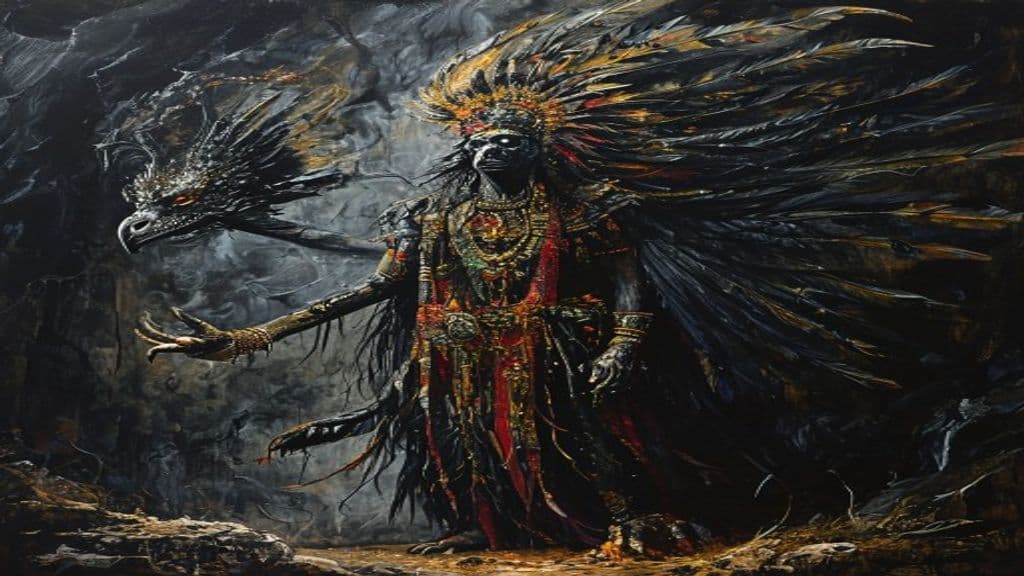
In Q'ero oral literature the figure Inkarrí (Inkarri) is a mythic ancestor and founder associated with the sun (Inti). According to the tradition, Inkarrí was violently killed during the Spanish conquest, withdrew to the sanctuary of Paititi, and is expected to return in a future age (Taripay Pacha) to bring about a Pachakuti or cosmic transformation that will separate good and evil and inaugurate Hanaq Pacha (heaven for the righteous). These accounts are presented as Q'ero myth and cosmology rather than historical fact.
Q'ero refers to a human community rather than a supernatural appearance: small, remote high-altitude villages (six principal settlements, including Hatun Q'ero and Hapu Q'ero above 4,000 m), modest one-room clay-and-stone houses with hard-grass roofs, and temporary seasonal huts (chuklla) in lower zones. Subsistence includes cultivation of maize and potatoes where climate permits and the herding of llamas and alpacas (community census figures in the sources indicate roughly 600 people and ~6,000 camelids).
As a cultural-religious tradition the Q'ero maintain active oral literature and shamanic/mystical practices. Specialist practitioners, paqos (including ranked roles altumisayuq and pampamisayuq), perform trance-based healing and diagnostic work using medicinal plants, drumming, dancing, and meditation. In Q'ero myth the apus (mountain spirits, e.g., Apu Ausangate and Salkantai) and Pachamama are agents capable of intervening in human affairs — for example, apus are said to have caused an earthquake and rockslide that buried Spanish invaders near Wiraquchapampa — and Inkarrí is ascribed a prophetic role in future world transformation.
Weaknesses
None recorded.
Wards
- ritualayni (reciprocity)
- ritualpaqos' trance and healing practices
Community Record
- [1]Q'ero (Wikipedia). Wikipedia: Q'erowiki
- [2]Wikidata: Q'ero (Q113947627). Wikidata: Q'eroother
- [3]UNS QUEROS 1 RA PARTE (Archive.org transcript). Archive: UNS QUEROS 1 RA PARTEother